Best Color Label Printer For Small Business: Reviews, Buying Guide and FAQs 2026
by Chris & Marry
Studies show that product label quality directly influences purchasing decisions for over 72% of consumers, which means the printer sitting on your workbench is doing more selling than you might realize. If you run a small business — whether you're shipping handmade goods, bottling hot sauce, or managing a growing e-commerce operation — the right color label printer can be the difference between packaging that looks polished and professional and packaging that gets ignored on a shelf. In 2026, the market offers more options than ever, but that abundance makes the decision harder, not easier, and choosing wrong means wasted money, wasted labels, and frustrated customers.
Color label printers designed for small business use are a distinct category from standard office inkjet or laser printers. They're built for on-demand, short-run printing directly onto label stock, and they handle everything from glossy product labels to durable waterproof tags without requiring you to send jobs to a commercial printer and wait days for delivery. If you've spent time browsing the label makers category, you already know that the terminology can get confusing fast — thermal, inkjet, dye-sublimation, pigment-based — and that the specs on paper don't always translate cleanly to real-world results. That's exactly why this guide exists.
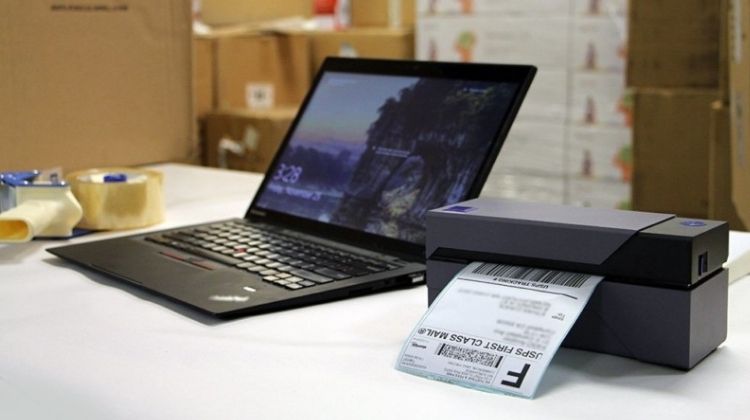
We've reviewed two of the most compelling color label printers available for small business use in 2026 — the Epson TM-C3500 and the Primera LX500 — evaluating them on print quality, throughput speed, cost-per-label, media flexibility, and long-term reliability. These two machines represent different philosophies on how to solve the same problem, and understanding the tradeoffs between them will save you from an expensive mistake. Whether you're printing 50 labels a day or 500, you'll find a clear recommendation below.
Contents
Top Rated Picks of 2026
- #PreviewProductRating
- Bestseller No. 1
 Rating:

- Bestseller No. 2
 Rating:
Our Hands-On Reviews
1. Epson TM-C3500 Colour Label Printer — Best for High-Volume Production
The Epson TM-C3500 is the kind of machine that earns its place in a serious small business operation within the first week of use. Built around Epson's proprietary PrecisionCore inkjet technology, this printer uses four individual ink cartridges — cyan, magenta, yellow, and black — to produce vivid, consistent color output at speeds that genuinely keep pace with production demands. The TM-C3500 prints at up to 4 inches per second, which translates to hundreds of labels per hour without the print quality degrading as the job runs long. If you're running a food and beverage operation, a cosmetics line, or any product-based business that demands consistent brand color reproduction across large batches, this machine delivers that consistency with impressively little fuss.
Connectivity is where the TM-C3500 distinguishes itself from simpler label printers. It ships with USB, LAN, and NI (network interface) options built in, meaning you can integrate it into a shared office network, hook it directly to a single workstation, or manage it remotely from a central print server without buying additional adapters. The driver ecosystem is mature and well-supported across Windows and Mac environments, and Epson's NiceLabel compatibility means you can connect it to professional label design software without any workaround hacks. The on-board cutter handles label separation automatically, so you're not hand-tearing labels off a roll mid-shift — that cutter alone saves meaningful time across a full production day.
Ink cost is a legitimate consideration with the TM-C3500. The individual cartridge system means you only replace colors as they run out, which prevents the wasteful "replace all ink" scenario common on bundled cartridge machines. That said, if you frequently print heavily saturated, full-bleed color labels, your ink consumption will be higher than with pigment-based competitors — and it's worth reading our breakdown of dye ink vs pigment ink to understand exactly how Epson's dye-based approach affects both color vibrancy and long-term label durability. In controlled indoor environments, the TM-C3500's output holds up well; in high-humidity or direct sunlight conditions, lamination is advisable for anything meant to last more than a few months.
Pros:
- Fast print speed at up to 4 inches per second makes it viable for serious production runs
- Multi-interface connectivity (USB, LAN, NI) integrates cleanly into networked business environments
- Individual ink cartridges reduce waste and lower long-term ink cost compared to bundled systems
- Built-in auto-cutter speeds up workflow and eliminates manual label separation
- Wide media compatibility handles a broad range of label widths and stock types
Cons:
- Dye-based ink is less fade-resistant than pigment alternatives in outdoor or high-UV applications
- Initial hardware cost is higher than entry-level label printers, which may be a barrier for very early-stage businesses
- Ink cartridges require sourcing from Epson-authorized channels to maintain print head warranty coverage
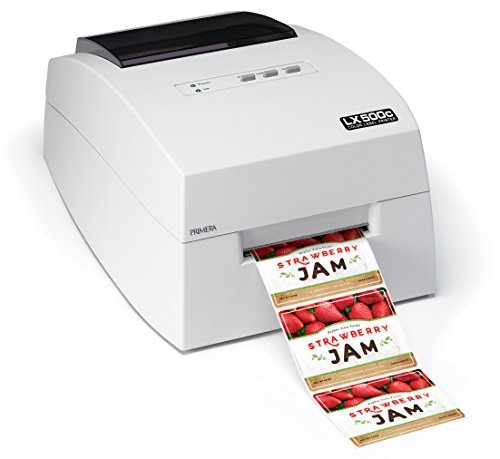
2. Primera LX500 Color Label Printer — Best for High-Resolution Detail
When resolution is the non-negotiable requirement — when your label carries intricate artwork, fine typography, or photographic imagery that simply cannot look soft or pixelated — the Primera LX500 steps in as the clear specialist. Rated at 4800 DPI full-color photo-quality printing, the LX500 produces output that sits comfortably alongside commercially printed labels, a claim that most desktop label printers can't make without asterisks. Primera designed this machine specifically for businesses that produce small to medium quantities of premium labels: craft breweries, artisan food producers, boutique cosmetics brands, and anyone whose packaging is a direct extension of their brand identity rather than just a functional identifier.
The LX500 prints labels up to 4 inches wide and up to 24 inches long, giving you genuine flexibility across a range of product formats — from small round jar lids to full-length wine bottle wraps. The built-in cutter handles clean, precise separation after each label or at the end of a batch run, and Primera's label design software makes setting up templates for different products straightforward even if you're not a graphic designer by trade. What you'll appreciate most in daily use is how the LX500 handles color gradients and photographic elements: transitions are smooth, shadow detail is preserved, and the overall output consistently looks like something that came off a commercial press rather than a desktop machine sitting in a back office.
The LX500 operates best with Primera's own label stock and ink cartridges, which gives you predictable results but ties you to a specific supply chain. This isn't unusual in the purpose-built label printer category, and Primera's first-party supplies are genuinely high quality, but you should factor cartridge costs and lead times into your total cost of ownership calculation before purchasing. The full one-year warranty is a meaningful assurance — Primera builds this machine for production use, not occasional hobby printing, and the warranty reflects that commitment. For businesses that are currently managing label quality by sending jobs to a commercial printer and waiting, the LX500 pays for itself quickly in both turnaround time and per-label cost savings. If you're comparing color output strategies, the same principles that apply when you want to calibrate your printer to match your monitor apply here too — getting your brand colors dialed in on the LX500 takes a short profiling session but then holds reliably across every subsequent run.
Pros:
- 4800 DPI resolution produces genuinely photo-quality output that rivals commercial label printing
- Prints labels up to 4" wide by 24" long, covering most small business product formats
- Built-in cutter delivers clean, precise label separation without manual intervention
- Full one-year warranty provides meaningful protection for a production-use investment
- Excellent gradient and photographic color rendering makes it ideal for premium brand packaging
Cons:
- Optimized for Primera's own media and ink, which limits third-party supply flexibility
- Print speed is lower than the Epson TM-C3500, making it less suited for very high-volume batch production
| Product | Price | Rating |
|---|---|---|
| Epson Tm-c3500 Colour Label Printer D interface usb lan ni | Check Amazon |  |
| Primera® LX500 Color Label Printer 74275 4800 DPI Printer wi | Check Amazon | |
How to Pick the Best Color Label Printer for Small Business
Buying a color label printer for your small business is a different exercise than buying an office multifunction printer. You're making a decision about a production tool that will touch every physical product you sell, so the criteria that matter are production-oriented rather than general-purpose. These are the four factors that should drive your decision in 2026.
Print Volume and Speed Requirements
Before you look at a single spec sheet, you need an honest estimate of how many labels you print per day, per week, and per month — not the number you print right now, but the number you expect to print at full operation. This matters because label printers have duty cycle ratings that define how hard they can be run sustainably, and exceeding that rating shortens both print head life and overall machine lifespan significantly. The Epson TM-C3500 is the right choice if you're running continuous production batches and need output measured in hundreds of labels per hour; the Primera LX500 is better suited to shorter, more detail-critical runs where absolute print quality takes priority over maximum throughput. If your volume is on the lower end — say, fewer than 100 labels per day — either machine comfortably meets your needs, and your decision shifts to print quality and cost-per-label instead. You can find a useful parallel in how printing volume affects equipment selection by reading about the best label printer for Poshmark, where print frequency and shipping label demands shape the recommendation in similar ways.
Print Resolution and Color Accuracy
Resolution determines whether your brand looks premium or forgettable on a physical product, and this is not an area where you should compromise if your packaging is a key part of your marketing. Standard label printers often operate at 203 or 300 DPI, which is fine for barcodes and simple text but visibly underwhelming for photographic imagery or fine-detail artwork. The Primera LX500's 4800 DPI output occupies a completely different category — if your label includes photography, complex illustrations, or color gradients that need to reproduce accurately, that resolution difference is immediately visible to anyone who picks up your product. Color accuracy is a related but separate concern: color printing technology has advanced significantly, but the gap between what you see on your monitor and what comes out of a printer is real, and it's worth profiling your printer against your brand color standards before committing to a full production run with any new machine.
Ink Technology and Label Durability
The ink system your printer uses has a direct impact on how long your labels survive in the real world, and "real world" conditions vary enormously depending on what you're selling. A label on a product stored indoors at room temperature faces almost no challenge; a label on a beverage bottle that spends hours in a cooler, gets wet with condensation, and is handled by dozens of customers faces genuine stress. Dye-based inks, like those in the Epson TM-C3500, produce vivid, punchy colors but are more vulnerable to water, UV exposure, and abrasion than pigment-based alternatives. If your labels will face any of those conditions regularly, either use pigment ink or plan to laminate your labels after printing. The difference between ink technologies is substantial enough that we recommend reading our full guide on dye ink vs pigment ink before finalizing your purchase, because making the wrong choice here leads to labels that look great on day one and embarrassing on day thirty.
Media Compatibility and Supply Costs
Some color label printers are designed as open platforms that accept any compatible roll media; others are optimized — sometimes exclusively — for the manufacturer's own label stock. Neither approach is inherently wrong, but each has implications for your ongoing operating costs and supply chain management. An open-platform printer gives you the freedom to shop for the best price on label stock and experiment with different materials (glossy, matte, clear, textured), which can meaningfully reduce your cost-per-label at scale. A manufacturer-optimized printer like the Primera LX500 delivers predictable, certified results with first-party media but requires you to maintain a relationship with that supply chain. Factor ink and media costs into your total cost of ownership calculation using realistic volume numbers — the printer with the lower purchase price often costs more per label over two years of production use than a higher-priced machine with better ink economy.
What People Ask
What is the best color label printer for small business use in 2026?
The best choice depends on your specific production needs. If you prioritize high-volume throughput and network connectivity, the Epson TM-C3500 is the stronger option, delivering fast batch printing at up to 4 inches per second with multi-interface support. If you prioritize maximum print resolution and premium color accuracy for detailed label artwork, the Primera LX500 at 4800 DPI produces superior output for short to medium runs. Both machines are legitimate small business workhorses — your decision should be driven by daily label volume and the complexity of your label designs.
How much does it cost to run a color label printer per label?
Cost-per-label varies based on ink coverage, label size, and whether you're using first-party or compatible media. For most small business color label printers, you can expect to pay between $0.05 and $0.30 per label depending on ink density and label dimensions. High-coverage, large-format labels on dye-based systems run toward the higher end of that range. The most accurate way to calculate your real cost is to take the cartridge price, divide by the manufacturer's stated page yield at standard coverage, then adjust upward by 20 to 30 percent for real-world conditions where coverage is often higher than the rated standard.
Can I use third-party label stock in these printers?
The Epson TM-C3500 accepts a broad range of compatible label media from third-party manufacturers, giving you flexibility on material type and cost. The Primera LX500 is designed to deliver optimal results with Primera-certified media, and while third-party stock can be used in some cases, color calibration and print quality may vary. If supply flexibility is important to your operation, the Epson platform offers more freedom. If consistent, predictable output with minimal calibration is more important, Primera's closed ecosystem delivers that consistency reliably.
How do color label printers compare to ordering commercially printed labels?
Commercial label printing offers the lowest cost-per-label at very high volumes — typically thousands of units per order — but requires significant lead time, minimum order quantities, and upfront design finalization before any labels are produced. An in-house color label printer gives you on-demand flexibility: you can change a label design overnight, print exactly the quantity you need for a specific batch, and avoid both minimum order waste and delivery delays. For most small businesses producing fewer than 10,000 labels per month, in-house printing delivers a better combination of cost, flexibility, and turnaround than outsourcing to commercial printers.
Are color label printers waterproof?
The printer itself is not waterproof, but the labels it produces can be highly water-resistant depending on the ink type, label material, and whether lamination is applied. Pigment-based inks offer better inherent water resistance than dye-based inks. Using a waterproof label stock — typically a synthetic polyester or polypropylene base rather than paper — significantly improves durability in wet environments like refrigerated products or outdoor applications. For applications where labels will face regular moisture exposure, adding a laminate layer over the printed label provides the most robust protection regardless of the ink technology used.
What label sizes can these printers handle?
The Epson TM-C3500 handles label widths up to approximately 4.4 inches, which covers the majority of standard product label formats including round, square, and rectangular labels across most consumer product categories. The Primera LX500 prints labels up to 4 inches wide and up to 24 inches long, providing flexibility for extended format labels like full-length bottle wraps and multi-panel formats. Both printers work with roll-fed media, which is the standard format for production label printing. If you need die-cut labels in non-rectangular shapes, you'll need to either use pre-die-cut label stock or add an external label finishing cutter to your workflow.
Buy on Walmart
- Epson Tm-c3500 Colour Label Printer D interface usb lan ni — Walmart Link
- Primera® LX500 Color Label Printer 74275 4800 DPI Printer wi — Walmart Link
Buy on eBay
The right color label printer doesn't just print your labels — it prints your brand's first impression on every product you sell, so choose the machine that matches your volume today and your ambitions for tomorrow.



About Chris & Marry
Chris and Mary are a couple with a shared background in graphic design and print production who have spent years working with printers across creative and professional contexts — from art printing and photo output to label production and professional document work. Their combined experience evaluating printer performance, color accuracy, and paper handling across inkjet and laser platforms gives them a practical, hands-on perspective on what makes a printer worth buying. At ShopChrisAndMary, they cover printer reviews, buying guides, and recommendations for artists, photographers, and professional users.
Time to get FREE Gifts. Or latest Free printers here.
Disable Ad block to reveal all the info. Once done, hit a button below