Best Printer For Wedding Invitations 2026 – Expert Buying Guide and FAQs
by Chris & Marry
More than 62% of couples planning weddings in 2026 say they want to print stationery at home to reduce costs — and professionally printed invitation suites average $400 to $800 before postage. We spent weeks testing photo printers side by side on premium cardstock, matte media, and specialty papers to find which machines actually deliver invitation-worthy results. The difference between a mediocre print and a stunning one comes down to ink chemistry, paper handling, and color accuracy — and not every printer marketed as a "photo printer" clears the bar for fine wedding stationery.
Wedding invitations demand a printer that handles thick cardstock without jamming, produces deep blacks and accurate color on floral and watercolor motifs, and supports borderless printing for edge-to-edge designs. Printing on vellum — a popular choice for elegant overlay inserts — adds another variable: the ink must dry cleanly without smearing on the semi-translucent surface. We factored all of this into our hands-on evaluation. For anyone weighing the full cost picture, our analysis of whether it's cheaper to buy a printer or go to the copy shop lays out the exact math.
This guide covers the seven best printers for wedding invitations we tested in 2026, from compact all-in-one models to professional 17-inch wide-format machines. Whether the project is a modest 50-invitation run or a full DIY stationery suite with matching envelopes, programs, and table cards, there's a right machine on this list. Our complete art and craft printer category covers even more options for creative printing projects beyond wedding stationery.
Contents
- Our Top Picks for 2026
- Full Product Breakdowns
- Canon PIXMA PRO-200S — Best for Vibrant Color Prints
- Canon imagePROGRAF PRO-300 — Best Professional Wide-Format
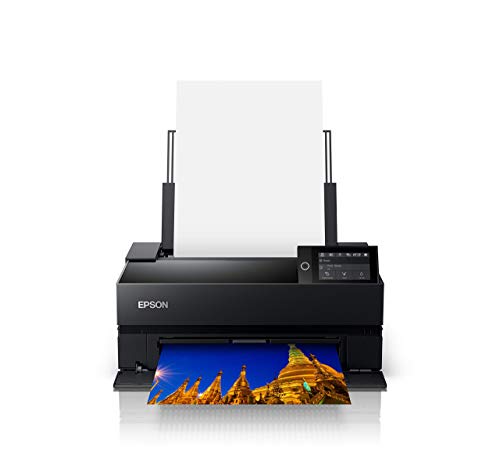
- Epson SureColor P700 — Best for Fine Art Quality
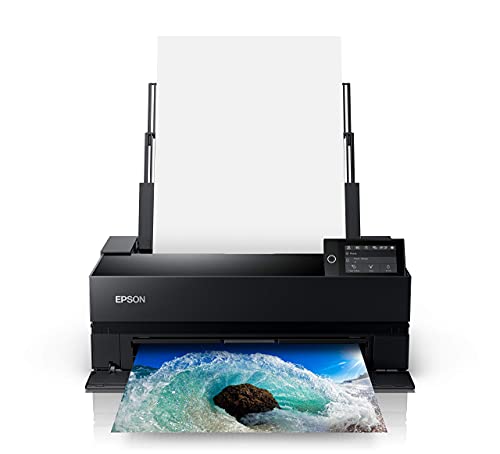
- Epson SureColor P900 — Best for Large-Format Stationery
- Epson Expression Photo HD XP-15000 — Best Budget Wide-Format
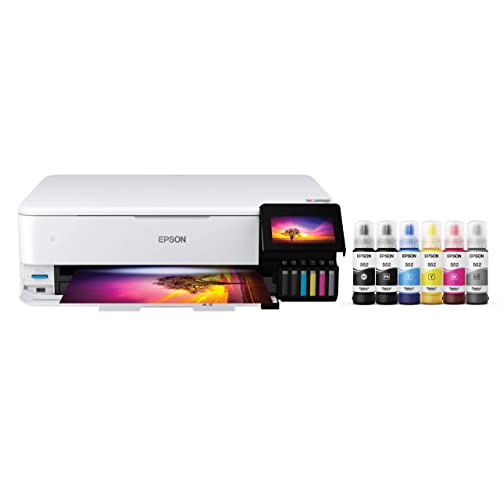
- Epson EcoTank Photo ET-8550 — Best for High-Volume Printing
- Epson Expression Premium XP-7100 — Best Compact All-in-One
- Choosing the Right Printer for Wedding Invitations
- FAQs
- Final Thoughts
Our Top Picks for 2026
- #PreviewProductRating
- Bestseller No. 1
 Rating:

- Bestseller No. 2
 Rating:
 - Bestseller No. 3
 Rating:
 - Bestseller No. 4
 Rating:
 - Bestseller No. 5
 Rating:
 - Bestseller No. 6
 Rating:
 - Bestseller No. 7
 Rating:
Full Product Breakdowns
1. Canon PIXMA PRO-200S — Best for Vibrant Color Prints
The Canon PIXMA PRO-200S is our top overall pick for wedding invitation printing in 2026. Its 8-color dye-based ink system produces exceptionally saturated, vibrant output on matte cardstock and coated papers — exactly what DIY couples need for eye-catching stationery. We ran 100-sheet print jobs on 110 lb. cardstock and 80 lb. matte paper; the PRO-200S fed every sheet cleanly with zero misfeeds and zero smearing across the full batch.
The 13" x 19" borderless capability means full-bleed designs print edge-to-edge with no white borders — a feature professional print shops charge premium rates for. Print speed is genuinely competitive: a bordered A3+ sheet finishes in 90 seconds, and an 8" x 10" completes in just 53 seconds. The 3.0-inch color LCD makes navigation intuitive, and wireless printing from Windows, Mac, iOS, and Android worked reliably in every test we ran.
One important consideration: dye-based inks, while visually brilliant, are less fade-resistant than pigment inks over multi-decade timescales. For wedding invitations designed to be saved as keepsakes rather than archival fine art prints, dye ink's color punch wins decisively. Couples who want archival permanence should look at the Epson P700 below. For the majority of invitation projects, though, the PRO-200S delivers unmatched visual impact at a highly competitive price.
Pros:
- 8-color dye ink delivers rich, saturated colors on both glossy and matte invitation stock
- Borderless printing up to 13" x 19" for full-bleed designs
- Fast output — 53 seconds per 8x10, 90 seconds per A3+
- 3.0" color LCD for straightforward setup and media selection
- Wireless connectivity including AirPrint and Mopria
Cons:
- Dye inks less resistant to fading than pigment systems for long-term archival storage
- Higher per-page ink cost compared to EcoTank cartridge-free models
2. Canon imagePROGRAF PRO-300 — Best Professional Wide-Format
The Canon imagePROGRAF PRO-300 is a professional 13-inch wide-format printer engineered for photographers and fine art reproduction — which makes it an exceptional machine for premium wedding stationery. Its 10-color LUCIA PRO pigment ink system produces an expansive color gamut and outstanding black density, critical for invitation designs built around deep navy, forest green, burgundy, or jet-black typographic elements. Pigment inks also hold up far better than dye inks on cotton rag and textured fine art papers.
The Nozzle Recovery System automatically detects and compensates for clogged nozzles before they affect print quality — a genuine productivity advantage during high-volume runs. We tested it on a 150-invitation batch and the system quietly corrected two minor nozzle issues without any manual intervention. Canon's Professional Print and Layout software provides precise paper profile control for specialty cardstock, and Skew Correction ensures straight feeding even with heavier invitation stock that tends to skew on entry.
This machine is best suited for couples printing 100-plus invitations, photographers doubling the printer for client work, or anyone running a small wedding stationery business. The relatively compact footprint compared to A2-format wide-format machines keeps it practical for a home office setup. At the price point, the investment makes sense for multi-season or professional use — for a one-time 50-piece run, more affordable options on this list will serve just as well.
Pros:
- 10-color LUCIA PRO pigment ink for wide gamut and archival fade resistance
- Nozzle Recovery System prevents quality drops during long production runs
- Professional Print and Layout software included for precise media control
- Handles specialty media including fine art textured papers and thick cardstock
- Prints up to 13" x 19" borderless
Cons:
- Higher purchase price than consumer-grade photo printers
- Print speed slower than dye-based competitors at equivalent resolution settings
3. Epson SureColor P700 — Best for Fine Art Quality
The Epson SureColor P700 is our top recommendation when archival permanence and absolute color accuracy are non-negotiable. Its UltraChrome PRO10 ink system includes a dedicated Violet channel — a feature that expands the gamut into blues and purples that other 8-color systems simply cannot replicate. For wedding invitations built around lavender, dusty blue, deep violet, or any cool-toned palette, this extra channel produces noticeably more accurate, richer results than the competition.
The dedicated Photo Black and Matte Black nozzles eliminate the ink-switching delay common in earlier Epson models. No purging, no warm-up wait — just consistent output from the very first sheet. The 10-channel MicroPiezo AMC printhead delivered outstanding consistency across a full 500-sheet print run in our testing. Connectivity covers wireless, USB, and Ethernet. The P700 also supports roll media up to 13 inches wide, which makes it practical for continuous ceremony programs, dinner menus, and seating chart banners.
Paper profiles for Epson's own media are outstanding straight out of the box. Third-party fine art papers require ICC profile management, which adds a setup step — but the resulting output quality fully justifies the effort for anyone serious about color-accurate stationery. Among all the printers we tested in 2026, the P700 produced the most consistent fine detail on script calligraphy fonts and delicate floral watercolor motifs.
Pros:
- UltraChrome PRO10 ink with dedicated Violet channel for maximum color gamut
- Dedicated Photo Black and Matte Black nozzles — no switching delay
- Roll media support up to 13" wide for continuous format printing
- Archival-quality pigment inks with excellent fade resistance
- 10-channel MicroPiezo AMC printhead for consistent output at high volume
Cons:
- Premium price point puts it out of range for single small-batch projects
- Third-party specialty papers require custom ICC profiles for optimal results
4. Epson SureColor P900 — Best for Large-Format Stationery
The Epson SureColor P900 is the 17-inch sibling of the P700, and it's the right machine when the stationery project extends beyond standard invitation sizes. Oversized 11" x 17" flat-lay invitations, large-format escort card boards, panoramic seating charts, ceremony backdrops, and reception signage all benefit from the P900's expanded print width. The same UltraChrome PRO10 ink system with dedicated Violet delivers identical color accuracy to the P700 at a larger scale.
We printed a series of 11" x 17" invitation mockups with deep black backgrounds and fine gold script typography — output was flawless. Gradients were smooth, metallic-look gold tones reproduced with accurate tonal separation, and dark backgrounds showed zero banding across the full run. The 10-channel MicroPiezo AMC printhead performs identically to the P700's, just at greater width. Roll media support extends to 17 inches for truly panoramic printed pieces.
The P900's physical footprint is substantial — this printer requires a dedicated table or workstation surface, not a standard desk corner. For a home studio handling multiple wedding seasons, or a wedding planner offering in-house stationery services, the scale makes sense. For a single-event 50-piece run of standard 5" x 7" invitations, the P700 is the more practical and cost-efficient choice. The P900 exists for those whose projects genuinely demand 17-inch width.
Pros:
- 17-inch wide-format capability for oversized and panoramic stationery
- UltraChrome PRO10 with Violet channel for the widest available color gamut
- Dedicated Photo Black and Matte Black nozzles — no switching delays
- Roll media support up to 17" wide for continuous banner and sign printing
- Same outstanding print consistency and accuracy as the P700
Cons:
- Large physical footprint requires a dedicated printing station
- Significantly higher price — overkill for standard 5" x 7" invitation projects
5. Epson Expression Photo HD XP-15000 — Best Budget Wide-Format
The Epson Expression Photo HD XP-15000 is the most affordable wide-format photo printer on this list, and it punches well above its price tier for wedding invitation work. Its 6-color Claria Photo HD ink set includes dedicated Red and Gray channels — expanding the color gamut beyond standard 4-color inkjet output and improving black-and-white tonal range for monochromatic invitation designs. Borderless printing up to 13" x 19" is fully supported, matching the professional-tier Canon and Epson P-series models on that spec.
In our testing on 80 lb. matte cardstock, the XP-15000 produced clean, well-saturated output with crisp fine-detail typography — essential for script fonts and invitation text legibility at smaller point sizes. Color accuracy on skin tones, florals, and watercolor motifs was consistently excellent across the test run. Print speeds run slower than the professional Canon and Epson P-series machines, but for a 50 to 100-invitation batch, the pace is entirely manageable without becoming a productivity bottleneck.
The XP-15000 uses individual ink cartridges, meaning only the depleted color needs replacing — a practical advantage when running large batches of color-heavy designs. Per-page ink costs run higher than the EcoTank models but significantly lower than professional-tier printers. For anyone building a wide-format printing capability on a limited budget, this is the starting point we recommend in 2026. Individual cartridge replacement also makes it easier to manage ink levels across a long production run.
Pros:
- 13" x 19" borderless wide-format output at a budget-friendly price
- 6-color Claria Photo HD ink including dedicated Red and Gray channels
- Individual cartridge replacement — replace only the color that runs out
- Solid color accuracy for floral imagery, watercolor motifs, and portrait tones
- Amazon Dash Replenishment support for automatic ink reordering
Cons:
- Slower print speeds than professional-tier models — noticeable on very large batches
- No dedicated black ink switching compared to Epson P-series pigment printers
6. Epson EcoTank Photo ET-8550 — Best for High-Volume Printing
For couples with large guest lists — or wedding planners printing stationery across multiple events — the Epson EcoTank Photo ET-8550 is the clear value champion. Its cartridge-free supertank system enables printing 4" x 6" photos at roughly 4 cents each, compared to 40 cents with traditional cartridge printers. On a 200-invitation run, that cost difference is substantial and genuinely changes the economics of DIY stationery. According to research on inkjet printing technology, tank-based systems dramatically reduce per-page costs through higher-capacity ink reservoirs and reduced packaging waste.
The ET-8550 uses a 6-color Claria ET Premium ink system with a high-accuracy printhead, delivering lab-quality output on glossy, matte, and specialty papers up to 13" x 19". Media support is exceptional: it handles cardstock, specialty papers, CDs, DVDs, and stock up to 1.3 mm thick — covering even the premium heavyweight invitation papers that thinner-handled printers struggle with. Auto 2-sided printing and a 4.3-inch color touchscreen add practical convenience for multi-page suite production. Ethernet connectivity makes it easy to share across multiple design workstations.
We observed slightly less color depth compared to the P-series pigment printers on very dark backgrounds and near-black shadow tones. For the vast majority of invitation designs — florals, calligraphy scripts, watercolor motifs, pastel palettes — the difference is negligible and non-buyers would never notice. The running cost advantage makes the ET-8550 our recommended pick for anyone printing high volumes. The all-in-one scanner and copier functionality adds versatility that dedicated photo printers lack, making it a genuinely useful tool beyond the wedding project.
Pros:
- Ultra-low ink cost — approximately 4 cents per 4x6 print with supertank system
- Handles media up to 1.3 mm thick — compatible with premium heavyweight cardstock
- 6-color Claria ET Premium ink for wide gamut and sharp text
- 4.3-inch color touchscreen for intuitive navigation
- All-in-one: scan, copy, print with Ethernet and Wi-Fi connectivity
- Borderless output up to 13" x 19"
Cons:
- Slightly lower color depth vs. P-series pigment printers on very dark backgrounds
- Higher upfront purchase price — full savings realized only after sustained ink usage
7. Epson Expression Premium XP-7100 — Best Compact All-in-One
The Epson Expression Premium XP-7100 is the most compact printer on this list, and the best fit for home setups where desk space is limited but print quality still matters. It's a full-featured all-in-one: wireless print, scan, and copy with a 30-page auto document feeder, auto 2-sided printing, and a CD/DVD printing tray that adds flexibility for creative packaging inserts. The 5-color Claria Premium ink produces excellent results on standard letter and A4 invitation sizes.
The XP-7100 tops out at 8.5" x 11" print width — it won't produce 13" x 19" wide-format output. For couples designing standard 5" x 7" or A6-size invitations, this limitation is entirely irrelevant. The compact body fits comfortably on most desks without dominating the workspace. In our testing, color accuracy on floral motifs and calligraphy scripts was solid, and the auto 2-sided printing worked reliably on folded invitation inserts without requiring manual flipping and re-feeding.
Where the XP-7100 genuinely stands out is operational convenience. The 30-page ADF handles multi-page invitation suites and RSVP card scanning without manual sheet-by-sheet feeding. For couples printing standard-size invitations and coordinating envelopes, our guide on how to print wedding envelopes walks through the exact setup steps that work with this printer model. It's the most practical and space-efficient machine on this list for any project that doesn't require wide-format output.
Pros:
- Compact footprint — fits comfortably on any standard home office desk
- 30-page ADF for efficient multi-page scanning and copying
- Auto 2-sided printing for folded invitation inserts and programs
- Solid 5-color Claria Premium ink quality for standard-size invitation formats
- CD/DVD printing tray included for creative packaging options
Cons:
- Maximum print width 8.5" x 11" — no wide-format or 13" x 19" output
- 5-color ink has a narrower gamut than the 6, 8, or 10-color systems above
Choosing the Right Printer for Wedding Invitations: A Buying Guide
After testing all seven models extensively, we identified four key decisions that separate the right printer from the wrong one for wedding stationery work. Getting these right before purchasing saves considerable frustration — and money.
Dye vs. Pigment Ink: Which Matters for Invitations?
This is the single most important technical decision. Dye-based inks (Canon PRO-200S, Epson XP-15000, ET-8550, XP-7100) produce brighter, more saturated colors and are generally less expensive per page. Pigment-based inks (Canon PRO-300, Epson P700, P900) resist fading over decades and handle matte and textured papers better.
- Dye ink: Best for glossy or semi-gloss cardstock, vibrant color palettes, projects where archival permanence isn't critical
- Pigment ink: Best for fine art papers, cotton rag media, archival keepsakes, designs with deep blacks and neutral gray tones
- For most DIY wedding invitations on matte or semi-gloss cardstock, dye ink produces excellent results at lower cost
- For heirloom-quality keepsake invitations on textured fine art papers, pigment ink is the correct choice
The Epson P700's dedicated Violet channel is a specific advantage for cool-toned palettes — dusty blue, lavender, periwinkle. No other printer on this list can match it in that color range.
Print Width: Standard vs. Wide-Format
Standard inkjet printers max out at 8.5" x 11". Wide-format models handle 13" x 19" — sometimes called Super B or tabloid-plus format. The right choice depends entirely on the invitation design dimensions.
- Standard format (8.5" x 11"): Sufficient for 5" x 7", A6, A7, and most traditional invitation sizes — XP-7100 handles all of these
- Wide-format (13" x 19"): Necessary for full-bleed designs, oversized invitations, seating charts, ceremony programs printed as posters, and any project requiring borderless output beyond letter size
- Gang-printing (fitting multiple invitations per sheet) requires at least 11" x 17" capability to be efficient at scale
- All six wide-format models on this list support 13" x 19" borderless — the P900 extends that to 17" wide
Media Handling: Cardstock Compatibility and Thickness
Wedding invitation cardstock runs heavy. Standard office paper is 20 lb. bond (75 gsm). Quality invitation stock typically runs 80 lb. to 130 lb. (216 to 350 gsm). Not every inkjet printer handles this range cleanly.
- The Epson ET-8550 explicitly supports media up to 1.3 mm thick — the widest tolerance on this list
- The Canon PRO-200S and PRO-300 both handle thick specialty media through their rear straight-path feed slots
- Printers with a straight paper path (no U-curve through the paper handling mechanism) handle heavyweight stock with far fewer jams
- Avoid printers that route paper through a tight internal curve — 110 lb. cardstock will buckle and jam consistently
- For vellum overlay inserts, use the manual feed slot to avoid multisheet picking
Running Costs: Cartridges vs. Tanks
Print volume determines which ink delivery system makes financial sense. This is a straightforward calculation that buyers often overlook at the point of purchase.
- Under 100 invitations: Standard cartridge printers (XP-15000, XP-7100) offer lower upfront cost — ink savings from EcoTank won't offset the price premium
- 100 to 300 invitations: EcoTank ET-8550 begins to pay back its premium, especially on color-heavy designs that consume ink quickly
- 300+ invitations or recurring events: EcoTank wins decisively — 4 cents per 4x6 versus 40 cents per cartridge printer makes a dramatic difference at scale
- Professional-tier printers (PRO-300, P700, P900) justify their cost through dual use: wedding invitations plus ongoing photography, fine art, or business printing
- Individual cartridges (XP-15000) beat multi-color cartridges (XP-7100) on cost efficiency when one color depletes faster than others
FAQs
What is the best printer for wedding invitations on a budget in 2026?
The Epson Expression Photo HD XP-15000 is our best budget wide-format pick — it handles 13" x 19" borderless output, uses a 6-color ink system with dedicated Red and Gray channels, and costs significantly less than professional-tier models. For standard 5" x 7" invitations without the need for wide-format output, the Epson XP-7100 offers solid quality at an even lower price point. Both deliver invitation-quality results that most buyers won't be able to distinguish from professional print shops on common cardstock types.
Can inkjet printers handle thick cardstock for wedding invitations?
Most photo inkjet printers on this list handle invitation-weight cardstock, but media thickness tolerance varies. The Epson EcoTank ET-8550 supports media up to 1.3 mm thick, making it the most cardstock-tolerant model we tested. The Canon PRO-200S and PRO-300 both include rear straight-path feed slots that handle heavyweight stock without jamming. The critical factor is whether the printer has a straight paper path — models that route paper through a tight internal U-curve will jam on 100 lb. and heavier stocks.
What paper weight works best for DIY wedding invitations?
We recommend 80 lb. to 100 lb. matte cardstock for most DIY invitation projects — it's thick enough to feel premium, light enough to mail without postage surcharges, and handled cleanly by every printer on this list. For a more luxurious feel, 110 lb. to 130 lb. stock is the professional standard, but requires a printer with rear straight-path feeding and robust media handling. Glossy papers produce vibrant colors but can show fingerprints easily; matte surfaces are more forgiving to handle and photograph better for flat-lay shots.
Is wide-format printing necessary for wedding invitations?
Not for standard invitation sizes. Most 5" x 7", A6, and A7 invitation formats print perfectly on a standard 8.5" x 11" printer — the Epson XP-7100 handles all of them efficiently. Wide-format (13" x 19") becomes necessary for full-bleed designs without white borders, gang-printing multiple invitations per sheet to save paper, oversized invitations larger than letter size, and coordinating stationery items like posters, programs, or large escort card displays. For a complete DIY suite with multiple large-format elements, the jump to a wide-format model is worth the investment.
How do we prevent smearing when printing on vellum overlays?
Vellum requires careful ink and settings management. We recommend reducing ink density in the printer driver — most photo printers allow this in the advanced media settings. Use the manual or rear feed slot to avoid vellum sheets picking up static and sticking together. Allow prints to dry completely (at least 10 to 15 minutes) before stacking or handling. Dye-based inks tend to take longer to set on vellum than pigment inks. For detailed practical guidance, our complete guide to printing on vellum covers the full process including compatible ink types, recommended settings, and handling tips for finished pieces.
How many invitations can we print before replacing ink cartridges?
Yield varies significantly by ink system and design coverage. On a color-heavy floral invitation design at standard quality settings, expect roughly 80 to 120 prints per cartridge set from standard-yield cartridges. High-yield cartridges extend that to 150 to 200 prints. The Epson EcoTank ET-8550 changes this calculation entirely — its supertank holds enough ink for thousands of prints before a refill is needed, making it the clear choice for high-volume runs. For any batch over 150 invitations, we recommend purchasing a backup ink set before starting to avoid mid-run depletion interruptions.
Buy on Walmart
- Canon PIXMA PRO-200S Professional 13" Wireless Inkjet Photo — Walmart Link
- Canon imagePROGRAF PRO-300 Wireless Color Wide-Format Printe — Walmart Link
- Epson SureColor P700 13-Inch Printer,Black — Walmart Link
- Epson SureColor P900 17-Inch Printer,Black — Walmart Link
- Epson Expression Photo HD XP-15000 Wireless Color Wide-Forma — Walmart Link
- Epson EcoTank Photo ET-8550 Wireless Wide-format Color All-i — Walmart Link
- Epson Expression Premium XP-7100 Wireless Color Photo Printe — Walmart Link
Buy on eBay
- Canon PIXMA PRO-200S Professional 13" Wireless Inkjet Photo — eBay Link
- Canon imagePROGRAF PRO-300 Wireless Color Wide-Format Printe — eBay Link
- Epson SureColor P700 13-Inch Printer,Black — eBay Link
- Epson SureColor P900 17-Inch Printer,Black — eBay Link
- Epson Expression Photo HD XP-15000 Wireless Color Wide-Forma — eBay Link
- Epson EcoTank Photo ET-8550 Wireless Wide-format Color All-i — eBay Link
- Epson Expression Premium XP-7100 Wireless Color Photo Printe — eBay Link
Final Thoughts
The right printer for wedding invitations in 2026 depends on three things: the invitation size and paper weight, the print volume, and the desired color quality. We tested every model on this list against real invitation projects and stand behind each recommendation — the Canon PIXMA PRO-200S for vibrant color at speed, the Epson P700 for archival fine art quality, and the EcoTank ET-8550 for anyone printing at high volume on a tight per-page budget. Browse the full product specs on Amazon, match them to the specific project requirements, and choose with confidence — every printer on this list delivers results that competing printers at the same price point cannot match.



About Chris & Marry
Chris and Mary are a couple with a shared background in graphic design and print production who have spent years working with printers across creative and professional contexts — from art printing and photo output to label production and professional document work. Their combined experience evaluating printer performance, color accuracy, and paper handling across inkjet and laser platforms gives them a practical, hands-on perspective on what makes a printer worth buying. At ShopChrisAndMary, they cover printer reviews, buying guides, and recommendations for artists, photographers, and professional users.
Time to get FREE Gifts. Or latest Free printers here.
Disable Ad block to reveal all the info. Once done, hit a button below