You can return a package without a printer by showing a QR code or digital label at a UPS Store, FedEx Office, USPS location, or participating retail drop-off point — they handle the printing for you. Knowing how to print return label without printer access is a genuinely useful skill, and the good news is that most major carriers and retailers already support it. For more practical advice on everyday print tasks, explore our printing tips section.
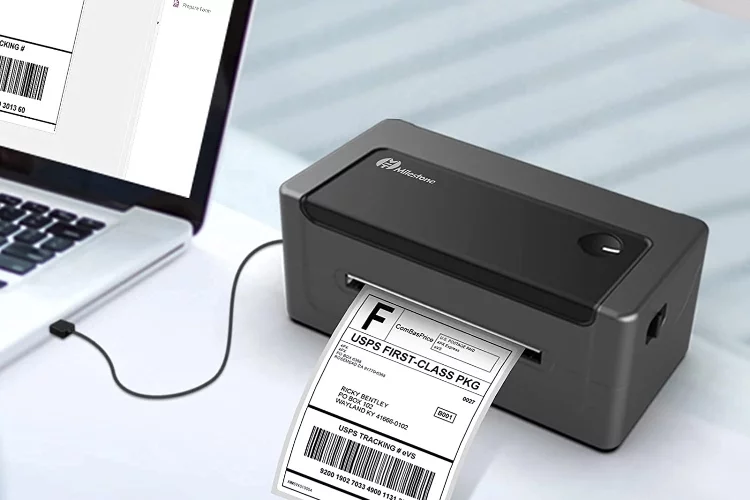
Most major retailers and shipping carriers have adapted to the reality that not everyone owns a working printer. Whether you're returning something to Amazon, Target, Walmart, or a smaller online shop, there's almost always a way to complete the process without printing a single page yourself. The key is knowing which method your specific retailer supports and which carrier they use.
This guide covers every practical option, clears up the myths that tend to create unnecessary confusion, and helps you figure out which approach fits your situation best. By the time you're done reading, handling any return — with or without a printer — should feel straightforward.
Contents
- Quick Tricks for Getting a Return Label Printed Without Your Own Printer
- Making the Label-Free Return Process Go Smoothly
- Clearing Up Confusion About Printerless Returns
- The Spots and Services That Print Labels for You
- When Going Without a Printer Is the Right Call — and When It Isn't
- Building a Return Routine That Works Every Time
- Frequently Asked Questions
- Next Steps
Quick Tricks for Getting a Return Label Printed Without Your Own Printer
The fastest route is almost always through the retailer's own app or website. Most large retailers now generate a QR code or barcode when you initiate a return online. You show that code at the carrier's counter, they scan it, print the label, and attach it to your package. You never touch a piece of paper yourself.
Tap the Retailer's App Before You Do Anything Else
Open the retailer's app or website and navigate to your order history. Find the item you want to return and look for a "Start Return" or "Return Items" button. Most systems will ask you to select a reason, then offer you a choice between printing a label and getting a QR code for a carrier drop-off. Always choose the QR code option if you don't have a printer.
Amazon's app, for example, generates a QR code you can show at a UPS Store, Whole Foods, Kohl's, or Amazon Hub Locker. Target's app links to UPS drop-off locations. Walmart often works through FedEx or their own in-store return counters. The specific options depend on the retailer, but the starting point is always the same: initiate the return digitally first.
Forward Your Label Email to a Print-on-Demand Service
If the retailer sends you a PDF label by email instead of a QR code, you still have options. UPS Store locations accept emailed labels — you walk in, show them your email on your phone, and they print it for you. FedEx Office offers the same service. Some locations let you send the PDF directly to a store-specific email address and pick it up ready to attach.
If you're someone who regularly prints things from your phone — coupons, documents, photos — you may already know about services that handle this. Take a look at our guide on how to print coupons from your phone for a broader look at mobile printing options that carry over to this kind of task.
Making the Label-Free Return Process Go Smoothly
The printerless return process is genuinely easy once you've done it a couple of times. But the first time, small gaps in preparation can slow you down. A few habits help a lot.
Gather Everything You Need Before Leaving Home
Before you head to any drop-off location, make sure your phone is charged and you have the confirmation email or app notification accessible. You'll need the QR code or PDF label, your order number, and sometimes the original packaging. Some carriers will provide a box if you don't have one, but that usually costs extra.
If you're returning to Amazon specifically, knowing your return confirmation number can speed up the process at the counter. Staff will often ask for it if the QR code doesn't scan cleanly. Keep it in a screenshot on your phone just in case.
Pro tip: Screenshot your QR code before leaving home — carrier locations sometimes have spotty Wi-Fi, and a saved image loads instantly even without a signal.
Confirm the Return Method With the Retailer First
Not every retailer supports QR code drop-offs. Some smaller online stores still require a printed label. Before you drive anywhere, check the return policy page or contact customer service to confirm what's available. This takes two minutes and prevents a wasted trip.
Pay attention to the return window. If you're close to the deadline, don't assume a drop-off counts as "returned" on the day you leave it at the carrier. Some retailers count the date the label is scanned; others count when they receive the package. The difference can matter if you're cutting it close.
Clearing Up Confusion About Printerless Returns
A lot of people still believe they're stuck if they don't have a printer. That belief is outdated — but it's understandable, because the options weren't always this widely available. Here's what's actually true.
Myth: You Always Need a Printer for Returns
This was largely true several years ago. Today, it isn't. The United States Postal Service, UPS, and FedEx all have programs that allow label-free drop-offs for major retailers. The carrier scans a code, generates the label on their end, and attaches it. You hand over the package and walk away.
The shift happened because carriers recognized that requiring customers to own and operate a printer was a friction point that hurt return completion rates. Reducing that friction is good for the whole ecosystem — retailers get their goods back faster, customers finish returns more easily, and carriers handle more volume.
Myth: Only Amazon Offers Printerless Options
Amazon is the most visible example because they were early to roll it out at scale. But they're far from the only one. Walmart, Target, Best Buy, Chewy, Zappos, and many apparel retailers now offer some form of label-free return. The specific carriers and drop-off locations vary, but the option exists across a much wider range of retailers than most people realize.
If you're unsure whether a specific retailer supports it, the return flow in their app or website is the fastest way to find out. Just start the return process and see what options appear. You're not committed to anything until you confirm.
The Spots and Services That Print Labels for You
Understanding where you can actually go — and what each location supports — makes the whole process feel less abstract. Here's a practical breakdown.
National Carrier Locations
UPS Store locations are among the most flexible. They accept QR codes for Amazon returns, print emailed PDF labels for many retailers, and will package your item if you bring it in loose. FedEx Office offers similar services for FedEx-carrier returns. USPS post offices handle label-free returns for retailers who use USPS, and many also participate in Amazon's return program.
Hours vary by location, so it's worth checking before you go. UPS Store locations are often in strip malls and shopping centers with later evening hours. USPS offices typically close in the early afternoon on Saturdays and are closed Sundays.
Retail Partners and Kiosks
Beyond dedicated carrier locations, a growing number of retail chains have become drop-off partners. Amazon returns, for instance, can be handled at Kohl's, Whole Foods, and Staples locations in addition to UPS Stores. Some locations use Happy Returns kiosks, which are small staffed or self-service counters inside retail stores that accept returns from multiple different brands at once.
| Location | Print Cost | Typical Hours | Works With |
|---|---|---|---|
| UPS Store | Free (with UPS label) | Weekdays + Sat, varies | UPS, Amazon, many retailers |
| FedEx Office | Free (with FedEx label) | Weekdays + weekends, varies | FedEx, many retailers |
| USPS Post Office | Free (with USPS label) | Mon–Sat, closes early Sat | USPS, Amazon, select retailers |
| Kohl's | Free | Store hours, 7 days | Amazon only |
| Whole Foods | Free | Store hours, 7 days | Amazon only |
| Staples | Free or small fee | Weekdays + Sat | UPS, FedEx, Amazon |
| Happy Returns Kiosks | Free | Host store hours | Multiple retailers |
If you regularly deal with printing and returning documents of all kinds — from purchase receipts to shipping confirmations — our guide on how to print an Amazon receipt covers the digital paper trail side of things in useful detail.
When Going Without a Printer Is the Right Call — and When It Isn't
Printerless returns work well in most common situations, but there are a few cases where having access to a printer is still genuinely helpful. Knowing the difference saves you from a last-minute scramble.
Situations Where Printerless Works Best
If you're returning to a major retailer that uses UPS, FedEx, or USPS — and you live near any of those drop-off points — going without a printer is usually simpler and faster than printing at home. You skip the ink, the paper, the cutting, and the taping. You just hand over the box.
It also works well when you're in a hurry. Walking into a UPS Store with a QR code on your phone is often a two-minute transaction. Printing at home, especially if your printer is slow or needs a cartridge check, can easily eat fifteen minutes. For routine retail returns with standard carriers, the printerless path is usually the more efficient one.
Times When a Printer Is Still Worth Finding
Some situations do require a physical label. International returns often involve customs documentation that must be printed. Certain specialty retailers — particularly in electronics, furniture, or B2B supply — may issue labels that aren't compatible with carrier QR code systems. And if you're dealing with a freight return for a large item, you'll almost certainly need printed documentation.
There are also cases where the retailer's app or website generates only a PDF with no QR code alternative. In those situations, your best move is to email the PDF to a nearby UPS Store or FedEx Office and ask them to print it before you arrive. It takes an extra step, but it still gets you there without owning a printer. If you've ever had to figure out how to get a document printed from a phone, our guide on how to print free printables at home covers some overlapping approaches worth knowing about.
Building a Return Routine That Works Every Time
The people who rarely stress about returns tend to have a simple system. They don't scramble because they've already thought through the basics in advance. You can do the same with a few small habits.
Keep Digital Records of Every Purchase
Create a folder in your email — or a dedicated folder in a notes app — where you save order confirmations as they arrive. When a return situation comes up, you have everything in one place: the order number, the original confirmation, and any return instructions that came with the purchase. This matters more than people expect, because retailers sometimes require the original order details to generate a return label.
The same logic applies to anything you might need to reference later. Keeping a clean digital trail for purchases — especially ones from categories like electronics, tools, or apparel where returns are common — is one of those habits that pays off quietly over time.
Identify Your Nearest Print Spot Before You Need It
Do a quick search right now for the nearest UPS Store, FedEx Office, USPS post office, and Kohl's or Whole Foods to your home and workplace. Note the hours. Having this information ready before a return deadline hits removes a major source of last-minute stress.
If none of those are convenient, look up whether any local libraries, office supply stores, or shipping centers in your area offer printing services. Many do, and some will print from your email or a USB drive for a small fee per page. Knowing your options in advance means you're never caught off guard when a return comes up unexpectedly. For a broader view of what printing tasks can be handled remotely or digitally, our guide on how to print a web page touches on tools that apply across many similar situations.
Frequently Asked Questions
Can I return a package to UPS without printing a label?
Yes. If your retailer supports UPS label-free returns, you'll receive a QR code when you initiate the return online or in the app. Bring that QR code to any UPS Store and they'll scan it, print the label, and attach it to your package at no charge.
Does USPS print labels for you?
USPS post offices can print labels for certain return programs, particularly for Amazon returns and retailers that use USPS as their return carrier. Not every post office location offers this, so it's worth calling ahead or checking the retailer's return instructions for specific USPS options.
What if the retailer only sends a PDF label and no QR code?
Email the PDF to a nearby UPS Store or FedEx Office and ask them to print it before you arrive. Many locations accept emailed PDFs and will have it ready when you walk in. Confirm by calling the location first to make sure they offer this service.
Do I need the original packaging to return without a printer?
Most carrier locations don't require original packaging for label-free returns, but your retailer might. Check the return policy for packaging requirements before you go. UPS Stores and FedEx Office locations can provide boxes, though there may be a charge for the packaging materials.
Can I return Amazon items without a printer at Kohl's?
Yes. Kohl's is one of Amazon's most widely used drop-off partners. You show the QR code from your Amazon app at the Kohl's customer service counter, they print the label and handle the rest. No box is required for most Amazon returns at Kohl's.
How long does a printerless return take to process?
Processing time is generally the same as a standard printed-label return once the package is accepted. The carrier scans the item into their system at drop-off, and the retailer typically processes the refund within a few business days of receiving the scan confirmation.
What should I do if my QR code won't scan at the carrier location?
Adjust the brightness on your phone screen to maximum and make sure the code isn't partially obscured. If it still won't scan, ask the staff to try entering the code manually — most QR codes have a numeric string underneath. As a backup, have your order number and confirmation email accessible so staff can look up the return another way.
Next Steps
- Open the app or website for any retailer you've recently purchased from and locate the return flow — confirm whether they offer a QR code option so you know before you need it.
- Search for the UPS Store, FedEx Office, and USPS post office locations closest to your home and workplace, and note their hours.
- Create a dedicated folder in your email for order confirmations so your return documentation is always in one place and easy to find fast.
- If your nearest drop-off options are inconvenient, identify at least one local library, Staples, or shipping center that offers print services as a backup.
- The next time you initiate a return, choose the label-free QR code path and walk through the process once — after that first time, it becomes second nature.



About Chris & Marry
Chris and Mary are a couple with a shared background in graphic design and print production who have spent years working with printers across creative and professional contexts — from art printing and photo output to label production and professional document work. Their combined experience evaluating printer performance, color accuracy, and paper handling across inkjet and laser platforms gives them a practical, hands-on perspective on what makes a printer worth buying. At ShopChrisAndMary, they cover printer reviews, buying guides, and recommendations for artists, photographers, and professional users.
Time to get FREE Gifts. Or latest Free printers here.
Disable Ad block to reveal all the info. Once done, hit a button below