Have you ever attempted to print a web page only to receive a printout covered in navigation bars, advertisements, and broken columns? The solution is well within reach. How to print web pages effectively is a skill that saves paper, ink, and frustration — and this guide covers every method available across major browsers and operating systems. Whether you are preserving a boarding pass, archiving a research article, or saving a client confirmation page, the techniques here produce clean, professional results every time. For demanding output requirements, explore our dedicated printer for professionals resource hub.
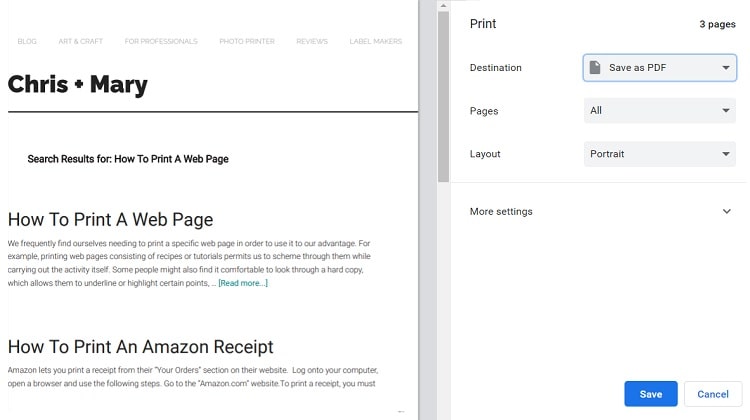
The default Ctrl+P shortcut opens your browser's print dialog, but accepting every default setting is a mistake most users make. Print preview controls, background graphics toggles, margin adjustments, and scale settings are all available in modern browsers — and ignoring them leads to wasted supplies and incomplete printouts. Understanding each option takes only a few minutes and pays dividends on every print job.
This guide addresses every scenario: printing a single article, capturing a full-page receipt, converting a web page to PDF, and handling pages that refuse to format correctly. By the end, you will have a complete, repeatable process for every situation.
Contents
- Step-by-Step: How to Print Web Pages in Any Browser
- Shortcuts That Make Web Page Printing Faster
- Selecting the Right Printer and Browser Tools
- Formatting Best Practices for Cleaner Printouts
- Real-World Scenarios Where Web Page Printing Matters
- Breaking Down the Cost of Printing Web Pages
- When Printing Makes Sense — and When It Does Not
Step-by-Step: How to Print Web Pages in Any Browser
Printing in Google Chrome
Google Chrome offers the most comprehensive print controls of any mainstream browser. Follow these steps for a clean result:
- Open the web page you wish to print.
- Press Ctrl+P (Windows/Linux) or Cmd+P (Mac) to open the print dialog.
- Review the print preview panel on the right side before making any adjustments.
- Click More settings to access paper size, margins, scale, and background graphics options.
- Set the scale to "Default" or adjust it manually to 80–90% if content is being clipped.
- Enable "Background graphics" only when the page uses meaningful color-coded elements.
- Select your destination printer, or choose "Save as PDF" for a digital archive.
- Click Print.
Before committing to a full print run on a new device, always print a test page on your HP printer to confirm ink levels and mechanical alignment are acceptable.
Printing in Mozilla Firefox
- Press Ctrl+P to open Firefox's full print preview interface.
- Use the left-side panel to adjust orientation, page range, margins, and scale.
- Toggle "Print backgrounds" if the site uses critical color-coded visual elements.
- Select your printer and click Print.
Printing in Microsoft Edge
- Press Ctrl+P to open Edge's print dialog.
- Click "More settings" for advanced options including custom margins and headers/footers.
- Select "Print using system dialog" to access all printer-specific hardware features.
- Click Print when ready.
Printing in Apple Safari
- Press Cmd+P to open the print dialog on macOS.
- Click "Show Details" to reveal paper size, orientation, scale, and header/footer controls.
- Use the preview thumbnail to verify layout before sending the job to the printer.
- Click Print.
Shortcuts That Make Web Page Printing Faster
Essential Keyboard Shortcuts
Speed up your workflow with these cross-platform shortcuts:
- Ctrl+P / Cmd+P — Open the print dialog in any browser instantly.
- Ctrl+A then Ctrl+P — Select all content first, then use "Selection" print mode to capture the full page text only.
- F5 — Reload the page before printing to ensure you have the most current version.
- Ctrl+Shift+I / Cmd+Option+I — Open Developer Tools to manually hide unwanted elements before printing.
Using Reader Mode for Cleaner Output
Both Firefox and Edge include a Reader Mode that strips navigation menus, advertisements, and sidebars from articles before you print. Enable it by clicking the book icon in the address bar, then press Ctrl+P. The result is a clean, single-column layout that consumes far less ink and paper.
Pro Tip: Always activate Reader Mode before printing long articles — it routinely reduces page count by 30–50% by eliminating decorative and navigational page elements.
Print to PDF as a First Step
Printing to PDF before sending a job to a physical printer lets you inspect the exact output without using a single sheet of paper. Select "Save as PDF" or "Microsoft Print to PDF" as your destination, open the resulting file, and verify the layout. Print only the physical pages that require a hard copy.
Selecting the Right Printer and Browser Tools
Choosing a Printer for Web Page Output
Not every printer handles web page content with equal quality. Match the printer type to your predominant use case:
- Laser printers — Ideal for text-heavy web pages such as documentation, articles, and financial records. Fast, sharp, and cost-effective at volume. A quality duplex laser printer eliminates the need to manually flip pages for two-sided output, halving paper consumption automatically.
- Inkjet printers — Better suited for pages containing photographs, color charts, or rich graphics where tonal accuracy matters.
- All-in-one printers — A practical choice for home offices that also need scanning and copying alongside regular web page printing.
Browser Extensions for Advanced Control
Several browser extensions push web page printing beyond native browser capabilities:
- Print Friendly & PDF — Removes ads and navigation automatically before printing; available for Chrome and Firefox.
- GoFullPage — Captures a full-page screenshot for pages that do not render completely in standard print mode.
- ilovepdf — Converts web content to optimized PDF files with compression and page-range controls.
According to Wikipedia's overview of printing technology, the gap between screen rendering and print output stems from the fundamentally different layout systems involved — screen-based CSS and paper-based pagination are designed for different media, which is why browser print tools exist to bridge them.
Paper and Print Settings
Selecting the correct paper size and orientation resolves the majority of layout problems:
- Use Letter (8.5×11 in) for standard documents in the United States.
- Use A4 for international documents and correspondence.
- Switch to Landscape orientation for wide tables, data dashboards, or comparison charts.
- Reduce margins to 0.5 inches when content is being cut off at the edges of the printout.
Warning: Setting margins to zero rarely works as intended — most printers have a physical non-printable border of 0.1–0.25 inches. Use 0.5 inches as your safe minimum margin to prevent content from being cut off.
Formatting Best Practices for Cleaner Printouts
Removing Unwanted Page Elements
Web pages are designed for screen display, not paper. Apply these techniques to eliminate clutter before every print job:
- Activate Reader Mode in Firefox or Edge to strip non-essential page elements from article pages.
- Use Print Friendly & PDF to remove advertisements and navigation bars in a single click.
- Right-click specific elements and select "Inspect" to identify and temporarily hide them via the browser's developer tools.
- Use the "Selection only" print option after highlighting precisely the content you need — nothing more.
Managing Scale and Margins
- Set scale to 80–90% if content is slightly too wide for the page.
- Enable "Fit to page width" where available to prevent content from being clipped at the right margin.
- Disable headers and footers in the print dialog to remove URL and timestamp text when a clean layout is required.
- Print a single test page before running a large batch to confirm settings are correct.
If your printer consistently produces light, faded output regardless of web page settings, review the recommendations in our guide on how to make your printer print darker before assuming the problem lies with the page's design.
Color vs. Monochrome Printing
For most web page printing tasks, monochrome output is entirely sufficient and far more economical. Reserve color printing for pages where visual information — charts, product photographs, color-coded data tables — is essential to comprehension. Selecting grayscale in the print dialog before printing text-only pages can reduce per-page costs by 60–80%.
Real-World Scenarios Where Web Page Printing Matters
Travel and Booking Confirmations
Printed boarding passes, hotel confirmations, and rental car agreements serve as reliable backup documents when mobile connectivity is unavailable or unreliable. Airlines, hotels, and car rental agencies universally accept printed confirmations as valid identification documents. A single printed copy eliminates dependency on battery life and cellular signal.
Legal and Financial Records
Court filings, tax references, bank statements, and regulatory guidance pages frequently require physical copies for official submissions, audits, and compliance reviews. Printing these pages directly from authoritative government or financial institution websites ensures accuracy, verifiability, and a clear chain of documentation.
Research and Reference Materials
Researchers, students, and professionals routinely print technical documentation, academic abstracts, and product specifications for annotation and physical review. Printed pages allow margin notes, color highlighting, and physical organization in binders or project folders that digital files do not replicate for every workflow.
Users who require professional-grade print quality for client-facing documentation and technical reference materials should review the solutions available at our printer for professionals hub, which covers laser, wide-format, and high-volume production options.
Breaking Down the Cost of Printing Web Pages
What Drives Printing Costs
Understanding the variables that influence cost allows you to make informed decisions about when to print and when to archive digitally. The table below compares typical per-page costs for laser and inkjet printers:
| Cost Factor | Laser Printer | Inkjet Printer |
|---|---|---|
| Cost per black & white page | $0.01 – $0.03 | $0.03 – $0.06 |
| Cost per color page | $0.06 – $0.15 | $0.10 – $0.25 |
| Paper cost per sheet | $0.005 – $0.01 | $0.005 – $0.01 |
| Typical web page output length | 2–4 pages | 2–4 pages |
| Estimated total cost per web page | $0.03 – $0.13 | $0.07 – $0.25 |
Strategies to Reduce Printing Costs
- Print only the selection — Highlight the relevant paragraph or table, then use "Print Selection" to avoid printing full-page navigation and footers.
- Use duplex printing — Double-sided output halves paper consumption on any multi-page document.
- Print in draft quality — Reduces ink or toner usage by 20–40% with minimal visible impact on text-only pages.
- Convert to PDF first — Review the digital copy; send only the specific pages that require a physical record to the printer.
- Batch similar jobs — Group multiple web page print tasks together to avoid repeated printer warm-up cycles, which consume toner and energy.
When Printing Makes Sense — and When It Does Not
Situations Where Printing Is the Right Choice
- The document requires a physical signature, official stamp, or notarization.
- You are traveling or working in locations without reliable internet access and need reference material on hand.
- The document requires physical filing, client presentation, or review by multiple parties in the same room.
- A legal process, institution, or compliance requirement mandates a printed copy with a date of access.
Situations Where Digital Archiving Is Preferable
- The content is subject to frequent updates — a printed page becomes outdated the moment the source changes.
- You need searchable, shareable, or annotatable text — PDF files, cloud notes, or reading apps serve this purpose more effectively.
- The page contains embedded video, interactive forms, or dynamic data that lose all value in a static printout.
- Cost and environmental considerations outweigh the convenience of a physical copy for non-critical reference material.
Digital Alternatives to Printing
- Pocket / Instapaper — Save articles for clean offline reading without printing a single page.
- Browser bookmarks and reading lists — Archive the URL for future access with a single keystroke.
- Print to PDF — Produce a permanent, searchable snapshot of the page at its current state, stored at zero per-page cost.
- Full-page screenshots — Capture a complete visual record for pages with non-standard layouts that do not convert cleanly to PDF.
Frequently Asked Questions
How do I print only part of a web page?
Highlight the specific text or content you want to print, press Ctrl+P, and select "Selection" under the Pages or Print Range option. This sends only the highlighted content to the printer, eliminating the need to print the full page.
Why does my web page print with content cut off at the edges?
This occurs when the page uses a fixed-width layout wider than your paper. Reduce the print scale to 80–90% in the More Settings panel, or switch to Landscape orientation to accommodate wider content columns.
Can I print a web page without background colors and images?
Yes. In the print dialog, navigate to More Settings and uncheck "Background graphics." This removes background colors and decorative images while preserving all foreground text and content, saving significant ink.
How do I save a web page as a PDF instead of printing it?
Open the print dialog with Ctrl+P and change the destination printer to "Save as PDF" (Chrome/Edge) or "Print to PDF" (Firefox/macOS). Click Save, choose a file location, and the PDF is created without using any paper or ink.
Why does my printed web page show the URL and date at the top or bottom?
Browsers add headers and footers to printouts by default. In the print dialog's More Settings section, locate the Headers and Footers toggle and disable it to produce a clean printout without those annotations.
How do I print a web page in black and white to save ink?
In the print dialog, locate the Color option or access your printer's properties directly. Select "Black and White" or "Grayscale." On laser printers this option is typically labeled "Monochrome" and delivers the greatest per-page savings.
Which browser produces the best results when printing web pages?
Google Chrome offers the most comprehensive print preview and settings panel of any mainstream browser, including granular scale, margin, background graphics, and paper size controls. Firefox is a strong alternative, particularly for article printing via its built-in Reader Mode.
What should I do if a web page actively blocks printing?
Use the Print Friendly & PDF browser extension to capture and reformat the page content independently of the site's native print restrictions. Alternatively, use the GoFullPage extension to take a full-page screenshot, then print the resulting image file.
Key Takeaways
- Use your browser's built-in print preview and "More Settings" panel to control scale, margins, and background graphics before every print job.
- Reader Mode and dedicated extensions such as Print Friendly & PDF eliminate page clutter and reduce printed page count by up to 50%.
- Laser printers deliver the lowest cost per page for text-heavy web content; inkjet printers are the better choice for color-rich pages with photographs or charts.
- When a permanent record is the goal but a physical copy is not required, "Save as PDF" is a cleaner, more cost-effective, and more sustainable alternative to printing.



About Chris & Marry
Chris and Mary are a couple with a shared background in graphic design and print production who have spent years working with printers across creative and professional contexts — from art printing and photo output to label production and professional document work. Their combined experience evaluating printer performance, color accuracy, and paper handling across inkjet and laser platforms gives them a practical, hands-on perspective on what makes a printer worth buying. At ShopChrisAndMary, they cover printer reviews, buying guides, and recommendations for artists, photographers, and professional users.
Time to get FREE Gifts. Or latest Free printers here.
Disable Ad block to reveal all the info. Once done, hit a button below