Business & Professional Printers ›
Best 13x19 Printer: Reviews, Buying Guide and Faqs 2026
by Chris & Marry
You've spent the better part of an afternoon scrolling through spec sheets, trying to figure out which 13x19 printer will actually deliver the gallery-quality prints you need — not just the ones that look impressive in marketing photos. Whether you're a photographer printing portfolio pieces, a designer producing client-ready mockups, or a hobbyist who wants professional results at home, the 13x19 format (also called Super B or A3+) sits in a uniquely powerful spot between desktop convenience and commercial-grade output. The wrong choice here costs you hundreds of dollars and months of frustration; the right one becomes an indispensable part of your workflow.
In 2026, the landscape for wide-format desktop printers has matured considerably. You're no longer forced to choose between photo quality and productivity — several models now deliver both. For context on how these machines compare to even larger-format devices, our guide on the difference between a plotter and a wide-format printer breaks down where 13x19 printers sit in the broader printing ecosystem. The short version: these machines punch well above their size category, offering output quality that would have required a commercial print shop just a few years ago.
We've tested and evaluated seven of the top 13x19 printers currently available, ranging from dedicated photo printers with ten-color ink systems to versatile all-in-ones built for high-volume office use. Whether you prioritize color accuracy, print speed, ink economy, or multi-function capabilities, this guide walks you through every meaningful difference so you can buy with confidence. If you're also shopping for printers built for professional use cases, our deeper category guide covers the full range of options beyond the 13x19 format.
Contents
- Our Top Picks for 2026
- Our Hands-On Reviews
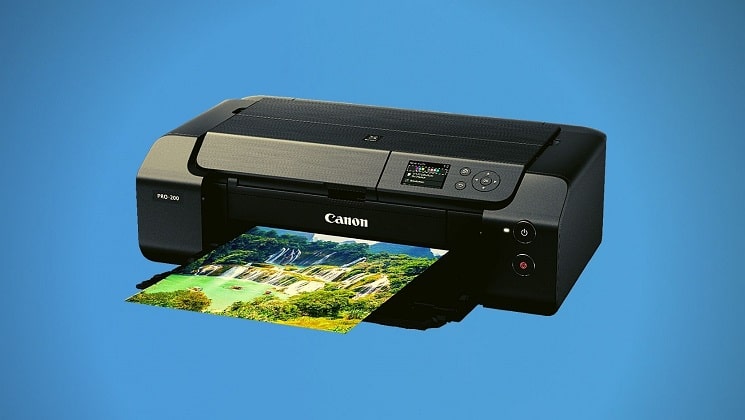
- Canon PIXMA PRO-200S — Best Overall Photo Printer
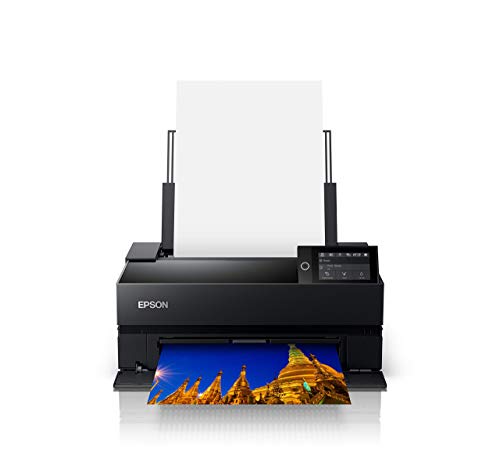
- Epson SureColor P700 — Best for Fine Art Prints
- Canon imagePROGRAF PRO-300 — Best for Creative Professionals
- Epson WorkForce Pro WF-7310 — Best for Office Use
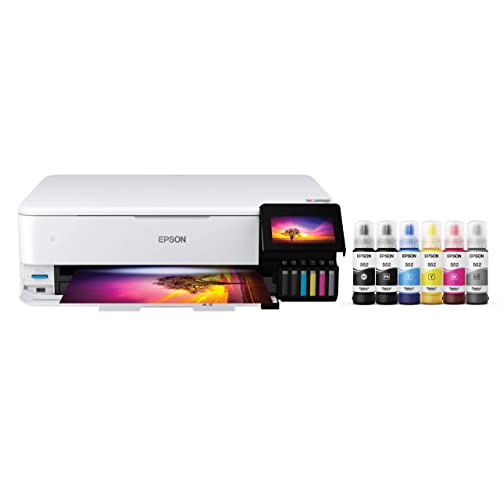
- Epson EcoTank Photo ET-8550 — Best Value All-in-One
- Epson WorkForce Pro WF-7820 — Best Wide-Format All-in-One
- Epson WorkForce WF-7720 — Best Budget Wide-Format
- Buying Guide
- Questions Answered
- Next Steps
Our Top Picks for 2026
- #PreviewProductRating
- Bestseller No. 1
 Rating:

- Bestseller No. 2
 Rating:
 - Bestseller No. 3
 Rating:
 - Bestseller No. 4
 Rating:
 - Bestseller No. 5
 Rating:
 - Bestseller No. 6
 Rating:
 - Bestseller No. 7
 Rating:
Our Hands-On Reviews
1. Canon PIXMA PRO-200S — Best Overall Photo Printer
The Canon PIXMA PRO-200S is the printer you pull out when color accuracy is non-negotiable. Canon's 8-color dye-based ink system covers an exceptionally wide color gamut, rendering skin tones, skies, and saturated graphics with a vibrancy that pigment-based systems simply can't match on glossy media. The 3.0-inch color LCD monitor makes navigating settings and previewing jobs genuinely intuitive, and the wireless connectivity means you're not tethered to a workstation during busy shooting sessions.
Speed is a real differentiator here. A bordered A3+ print lands in roughly 90 seconds, while an 8x10 takes just 53 seconds — numbers that matter when you're printing a batch of client proofs or preparing exhibition prints under a deadline. The borderless printing capability extends from 3.5x3.5 inches all the way up to the full 13x19 format, giving you complete flexibility across media sizes without repositioning paper guides or reconfiguring drivers.
Where dye ink has its traditional limitation is longevity — dye-based prints are more vulnerable to fading from UV exposure compared to pigment alternatives. For prints that live behind glass or in portfolios, this is a minor concern; for artwork hung in direct sunlight, you'll want to factor in UV-protective glass or consider a pigment-based model. Overall, for photographers and designers who print regularly on glossy and luster media and prioritize vibrant, punchy output, the PRO-200S is the strongest all-around choice in 2026.
Pros:
- 8-color dye ink delivers exceptional color vibrancy on glossy media
- Fast print speeds — A3+ bordered in 90 seconds
- Borderless printing up to full 13x19 format
- 3.0-inch color LCD for easy navigation
- Wireless connectivity for cable-free workflow
Cons:
- Dye ink is less fade-resistant than pigment under direct UV exposure
- Ink costs can add up quickly at high print volumes
2. Epson SureColor P700 — Best for Fine Art Prints
The Epson SureColor P700 is the benchmark for fine art and archival photo printing at the 13-inch desktop level. Its UltraChrome PRO10 ink system with dedicated Violet channel pushes color gamut coverage into territory that competing 8-color systems can't reach, producing the saturated blues, purples, and complex neutral tones that distinguish gallery-quality prints from standard photo output. The dedicated nozzles for both Photo Black and Matte Black eliminate the ink-switching delays that slow down competitive workflows — you switch media types and print immediately, with no warm-up purge cycle wasting expensive ink.
The 10-channel MicroPiezo AMC printhead is Epson's most refined wide-format mechanism to date, delivering droplet-level consistency that translates into smooth gradients, accurate shadow detail, and clean highlight rendering across a wide range of paper stocks. Whether you're printing on baryta, cotton rag, or standard glossy, the P700 adapts intelligently with remarkably little profiling effort. This is the printer that professional photographers and fine artists rely on when the output needs to match what they see on a calibrated display.
The P700 sits at a higher price point than most alternatives on this list, and its operating costs are elevated by the premium ink set. However, for anyone producing prints intended for sale, exhibition, or archival longevity — where inkjet color accuracy and permanence directly affect the value of the work — this is an investment that pays for itself. The build quality is exceptional, the software suite is professional-grade, and the output is consistently stunning.
Pros:
- 10-color UltraChrome PRO10 ink with dedicated Violet channel for maximum gamut
- No Photo/Matte Black switching — dedicated nozzles for both types
- MicroPiezo AMC printhead for outstanding consistency and accuracy
- Exceptional performance on fine art and baryta papers
- Archival-grade ink longevity for exhibition and sale prints
Cons:
- Premium price point relative to the rest of the category
- Higher per-print ink cost due to 10-channel ink system
3. Canon imagePROGRAF PRO-300 — Best for Creative Professionals
The Canon imagePROGRAF PRO-300 bridges the gap between the consumer photo printer world and the professional large-format printing environment, delivering a level of output quality and workflow sophistication that creative professionals will recognize immediately. The 11-color LUCIA PRO ink system combines both Chroma Optimizer and dedicated Matte Black channels, producing prints with remarkable depth, smooth gradients, and near-zero bronzing effect across a wide range of media — a persistent problem with lesser pigment systems that the PRO-300 handles consistently well.
Canon's Nozzle Recovery System is an underappreciated feature that sets this printer apart from competitors in a practical, day-to-day sense. Even if individual nozzles become blocked — a common issue with high-pigment ink systems — the printer automatically reroutes output to compensate, maintaining print quality without requiring manual head-cleaning cycles that waste ink and time. The Skew Correction feature adds another layer of workflow reliability, automatically detecting and correcting paper misalignment before a print begins rather than delivering a crooked output that has to be reprinted.
The Professional Print and Layout software bundled with the PRO-300 is genuinely useful rather than the stripped-down utility that ships with most desktop photo printers — it supports color management, advanced media presets, and precise paper positioning that professional photographers demand. The compact footprint makes this printer viable for studio spaces where real estate is limited, and the 3.0-inch LCD provides clear operational feedback. For designers, photographers, and fine artists who need professional pigment quality without stepping up to a floor-standing wide-format device, the PRO-300 delivers in 2026.
Pros:
- 11-color LUCIA PRO pigment ink system with exceptional gamut and depth
- Nozzle Recovery System maintains quality without manual cleaning cycles
- Automatic Skew Correction prevents wasted prints from misaligned media
- Professional Print and Layout software included
- Compact footprint for studio environments
Cons:
- Slower print speeds compared to Canon's dye-based alternatives
- Higher upfront cost than entry-level photo printers
4. Epson WorkForce Pro WF-7310 — Best for Office Use
The Epson WorkForce Pro WF-7310 approaches the 13x19 format from a fundamentally different angle than the photo-focused printers above — this is a high-volume office workhorse built for productivity at scale. The PrecisionCore Heat-Free Technology delivers 25 black and 12 color ISO pages per minute, numbers that translate directly into measurable time savings when you're printing presentation decks, CAD drawings, banners, or wide-format marketing materials in quantity. The 500-sheet paper capacity reduces interruptions during long print runs in a way that the 100-150 sheet trays on photo printers simply cannot.
Auto double-sided printing up to 11x17 is a critical feature for office environments where paper costs matter, and the WF-7310 handles duplexing at speed without the paper jams that plague cheaper mechanisms. The 2.4-inch color display and Epson Smart Panel app integration make network management and print-job control accessible from a smartphone without requiring IT involvement, which matters in small office deployments where the person setting up the printer is also the person managing the budget.
One important caveat: the WF-7310 is not a photo printer. Its DURABrite Ultra ink is designed for document durability and water resistance, not for the color accuracy and tonal range that photographers require. If your primary output is professional documents, blueprints, signage, or wide-format business materials, this printer will outperform photo-dedicated models on every practical metric that matters — speed, cost per page, and reliability. If you're printing photos for display or sale, look at the dedicated photo printers above.
Pros:
- Fast print speeds — 25 black / 12 color ISO ppm for high-volume output
- 500-sheet paper capacity reduces refill interruptions
- Auto double-sided printing up to 11x17
- PrecisionCore Heat-Free Technology for consistent reliability
- Smart Panel app for easy wireless management
Cons:
- Not suited for fine-art or exhibition-quality photo printing
- Requires Epson genuine cartridges to maintain warranty coverage
5. Epson EcoTank Photo ET-8550 — Best Value All-in-One
The Epson EcoTank Photo ET-8550 solves the single most frustrating problem with high-output photo printing — the recurring cost of replacement ink cartridges — by replacing them entirely with a refillable supertank system. The Claria ET Premium 6-color ink formula produces lab-quality photo output at a fraction of the per-print cost of cartridge-based systems: approximately 4 cents per 4x6 photo compared to 40 cents with traditional cartridges, a savings ratio that accumulates into hundreds of dollars over the printer's operational life. This is the machine you choose when you print high volumes and refuse to subsidize an ink subscription model.
The print quality is genuinely impressive for a supertank system — Epson's high-accuracy printhead maintains the tonal smoothness and color accuracy you expect from a dedicated photo printer, and the 4.3-inch touchscreen makes navigating the scanner, copier, and printer functions intuitive. The 13x19 borderless photo capability is matched by extraordinary media versatility: the ET-8550 handles cardstock, CD/DVDs, and specialty media up to 1.3mm thick, plus Ethernet connectivity alongside Wi-Fi for wired network deployments. A 4x6 photo in 15 seconds is genuinely competitive with any cartridge-based machine at this price level.
The auto 2-sided printing function adds practical value for the users who need it, and the built-in scanner and copier make this a true all-in-one rather than a photo printer with token extra features. The tradeoff is upfront cost — EcoTank models carry a higher purchase price than cartridge alternatives, with the economics reversing once you've printed enough to exhaust two or three cartridge replacement cycles. If you're planning to keep this printer for multiple years and print at moderate-to-high volume, the ET-8550 is the most cost-efficient photo-capable 13x19 option available in 2026. Wedding photographers producing their own print packages will find this particularly compelling — see our guide to the best printers for wedding invitations for related recommendations.
Pros:
- Supertank system eliminates cartridge replacement — approximately 4 cents per 4x6 photo
- 6-color Claria ET Premium ink for lab-quality photo output
- Borderless printing up to 13x19 with exceptional media flexibility
- Built-in scanner, copier, and Ethernet for all-in-one versatility
- 4.3-inch touchscreen for intuitive control
Cons:
- Higher upfront purchase price versus cartridge-based alternatives
- 6-color ink system delivers narrower gamut than 10 or 11-color competitors
6. Epson WorkForce Pro WF-7820 — Best Wide-Format All-in-One
The Epson WorkForce Pro WF-7820 is the most fully-featured all-in-one on this list, combining wide-format printing up to 13x19 with a 50-page automatic document feeder, auto 2-sided printing and scanning, fax capability, and full wireless connectivity including compatibility with Amazon Alexa voice commands. If your office workflow requires all of these functions in a single machine — and many do — the WF-7820 delivers them without the compromises you'd expect from a jack-of-all-trades design. The PrecisionCore Heat-Free Technology keeps operating costs predictable while delivering consistent document output across long print runs.
DURABrite Ultra ink resists water, smearing, and highlighter marking on standard document output, which matters in office environments where printed materials get handled, annotated, and filed. The 250-sheet paper capacity is adequate for most small office deployments, and the dual-tray configuration in some variants allows you to keep standard letter paper loaded alongside wide-format stock without constant manual swapping. The 802.11a/b/g/n/ac wireless standard ensures reliable connectivity even in busy network environments.
The Epson Connect Solutions ecosystem — including Email Print, Remote Print, Smart Panel, and iPrint apps — means you can send print jobs from virtually anywhere, a genuine productivity advantage for distributed teams and mobile professionals. This printer pairs particularly well with the techniques covered in our guide on the best duplex scanning printers, as the WF-7820's auto 2-sided scan capability is one of its strongest practical selling points. The 50-page ADF handles document digitization at a pace that makes this machine viable as a primary office scanner, not just a printing afterthought.
Pros:
- Auto 2-sided print, copy, scan, and fax up to 13x19
- 50-page ADF for fast document scanning and copying
- Alexa voice command compatibility
- Full Epson Connect ecosystem for remote and mobile printing
- DURABrite Ultra ink for smear and water-resistant document output
Cons:
- Document-grade ink — not suitable for gallery-quality photo printing
- 250-sheet capacity may require frequent reloading in high-volume environments
7. Epson WorkForce WF-7720 — Best Budget Wide-Format
The Epson WorkForce WF-7720 is the entry point for wide-format printing with a 13x19 capability, and it delivers more than its price suggests. Powered by PrecisionCore technology, the WF-7720 offers print-shop-quality borderless output up to 13x19 alongside copy, scan, and fax functions — a combination that gives small offices and home users access to capabilities that would have required dedicated commercial equipment five years ago. Wi-Fi Direct connectivity means you can print directly from mobile devices without a router intermediary, which simplifies deployment in unconventional setups.
The operational ecosystem is broad: compatibility with Windows 10 through Server 2016 and Mac OS X 10.6.8 through macOS 10.12 covers most business and home computing environments, and Amazon Dash Replenishment Ready integration automates ink ordering before you run out — a convenience feature that prevents the frustrating discovery of empty cartridges mid-project. Ethernet is included for wired network installations that need reliable connectivity over wireless alternatives.
The WF-7720 is not the printer you choose when color accuracy and archival quality are paramount — it occupies the same document-grade output category as the WF-7820, with slightly reduced feature density at a lower price point. For users who primarily need wide-format document printing, poster output, and basic photo printing without the budget for a dedicated photo printer, it remains one of the most accessible options in the 13x19 category. It's worth noting that the WF-7720 has been superseded by the WF-7820 in Epson's current lineup — if you find it discounted, it represents strong value; otherwise, the WF-7820 delivers meaningfully more capability for a modest price premium.
Pros:
- Borderless prints up to 13x19 at an accessible price point
- Wi-Fi Direct for router-free mobile printing
- Amazon Dash Replenishment Ready for automated ink ordering
- Broad OS compatibility including Windows and Mac
- Copy, scan, fax, and print in one unit
Cons:
- Superseded by the WF-7820 in Epson's current lineup
- Document-grade ink output — not for fine-art photo printing
Buying Guide: How to Choose the Best 13x19 Printer
Photo vs. Document Output: Match the Printer to Your Primary Use Case
The single most consequential decision in this category is choosing between a dedicated photo printer and a productivity-focused document printer. These two types use fundamentally different ink formulations optimized for different objectives, and buying the wrong type will disappoint regardless of how high the price point is. Photo printers use dye-based or multi-channel pigment inks that prioritize color accuracy, tonal range, and smooth gradients. Document printers use pigment or dye inks formulated for speed, water resistance, and per-page cost efficiency on plain paper. Assess your primary output honestly before evaluating any specifications.
- Choose a photo printer (PRO-200S, P700, PRO-300, ET-8550) if your primary output is photographs, fine art prints, portfolio pieces, or any image where color accuracy and tonal quality are the defining success criteria.
- Choose a document printer (WF-7310, WF-7820, WF-7720) if your primary output is wide-format documents, marketing materials, presentations, blueprints, or signage where speed and cost per page matter more than photographic rendering.
- If you genuinely need both, the ET-8550 or WF-7820 offer the most credible all-in-one compromise, with the ET-8550 leaning photo and the WF-7820 leaning productivity.
Ink System: Dye vs. Pigment vs. Supertank
Understanding ink technology prevents one of the most common mismatches in this category. Each system has clear strengths and corresponding tradeoffs that directly affect your ownership experience.
- Dye-based ink (Canon PRO-200S): Maximum color vibrancy and saturation on glossy and luster media. Faster color gamut coverage but reduced archival longevity compared to pigment under UV exposure. Best for photographers who display prints behind glass or in portfolios.
- Pigment ink (Epson P700, Canon PRO-300): Superior archival longevity, better performance on matte and fine art papers, reduced bronzing effect on glossy surfaces. The professional standard for fine art and exhibition printing. Higher per-print cost justified by output permanence.
- Supertank / EcoTank (Epson ET-8550): Refillable reservoir eliminates cartridge replacement cycles. Dramatically lower per-print cost at high volumes. Higher upfront investment recovers through ink savings over the printer's operational life — typically 18-24 months for moderate to high print volumes.
- Document pigment ink (WF-7310, WF-7820, WF-7720): Optimized for plain paper document output, water resistance, and fast drying. Not interchangeable with photo pigment formulas — the color accuracy and tonal rendering simply do not compare.
Color Channel Count: Why More Channels Matter
The number of individual ink channels a printer uses directly determines the gamut coverage and tonal accuracy it can achieve. This is one of the specifications most frequently glossed over in reviews, but it explains a substantial portion of the quality difference between consumer and professional photo printers.
- 6-color systems (ET-8550): Standard CMYK plus two photo inks. Adequate for most photo printing applications with a narrower gamut in specific color ranges — particularly saturated blues and purples.
- 8-color systems (PRO-200S): Adds extended color channels for wider gamut coverage and smoother tonal transitions. The standard configuration for serious photo printing.
- 10-11 color systems (P700, PRO-300): Dedicated channels for Violet, Chroma Optimizer, Matte Black, and additional gray channels produce the widest available gamut at desktop scale — the professional benchmark for fine art and exhibition output.
Print Speed, Paper Capacity, and Connectivity
For high-volume users, operational specifications matter as much as output quality. Evaluate these metrics relative to your actual workflow requirements rather than theoretical maximums.
- Print speed: Photo printers typically deliver 1-3 minutes per 13x19 print; document printers deliver 25+ pages per minute on letter-size output. Speed scales inversely with output quality — the fastest photo printer in this category (PRO-200S at 90 seconds per A3+) is still slower than any dedicated document printer at standard sizes.
- Paper capacity: Photo printers typically hold 50-150 sheets; document printers hold 250-500. Match tray capacity to your longest unattended print run to minimize interruptions.
- Connectivity: All models on this list include Wi-Fi. Ethernet is available on the ET-8550 and WF-7820 for wired network deployments. Wi-Fi Direct (WF-7720) enables direct mobile-to-printer connections without network infrastructure.
- Multi-function: If you need scanning and copying at 13x19 scale, the ET-8550 delivers the most capable scanner hardware; the WF-7820 adds a 50-page ADF that dramatically accelerates document digitization workflows.
Questions Answered
What does 13x19 printing mean, and why does the format matter?
13x19 inches — also called Super B, Super A3, or A3+ — is the largest paper format supported by standard desktop inkjet printers before you step up to wide-format roll-fed devices. It gives photographers a full bleed when printing 12x18 images with a half-inch border, allows designers to produce tabloid-plus presentation materials, and enables architects and engineers to print scaled technical drawings without sending files to a print shop. The format sits at the practical upper boundary of what home and small studio printers can produce, making it the most compelling choice for professionals who want to print large work in-house without investing in commercial-grade equipment.
Is a 13x19 photo printer worth it in 2026 compared to using a print lab?
The economics depend entirely on your print volume and quality requirements. A dedicated photo print lab consistently produces excellent results, but you pay per print, lose turnaround time, and lose direct control over color profiles and paper selection. If you print more than 50-100 large-format photos per month, own a color-calibrated display, and have specific paper preferences, in-house printing delivers faster iteration and lower long-term cost. Our analysis of whether it's cheaper to buy a printer or go to the copy shop goes deeper on the cost comparison. For occasional large prints — fewer than 20 per month — a quality print lab may still be the more economical choice.
Can I use third-party ink in a 13x19 printer to save money?
Technically yes, practically no — at least not without significant risk. Third-party inks for photo printers are not formulated to the same color profile specifications as OEM inks, which means your ICC profiles will be inaccurate and your prints will not match what you see on a calibrated display. For archival printing, third-party inks have significantly shorter longevity ratings than OEM formulations, which defeats one of the primary reasons to print in-house. On document printers like the WF-7310 and WF-7820, Epson explicitly states that non-genuine ink can cause damage not covered under warranty. The per-print savings from third-party ink are real but do not outweigh the quality and reliability costs for serious printing applications.
What paper types work best for 13x19 photo printing?
The correct paper selection depends on both the printer's ink system and the intended use of the print. For dye-based printers like the Canon PRO-200S, glossy and luster papers deliver maximum color saturation and vibrancy. For pigment-based printers like the Epson P700 and Canon PRO-300, matte, baryta, and cotton rag papers showcase the ink system's depth and archival qualities — these printers perform their best on media where pigment ink can penetrate rather than sit on a surface coating. For document printers like the WF-7310 and WF-7820, standard inkjet paper or plain copy paper delivers the cost efficiency the ink system is designed around. Always use ICC profiles matched to both your printer and specific paper for accurate color management.
How do I connect a 13x19 printer to multiple computers on a network?
All seven printers on this list support wireless network printing, which allows multiple computers and mobile devices to connect simultaneously through your router. For more stable connections in high-volume environments, the Epson ET-8550 and WF-7820 include Ethernet ports for wired network integration. Initial setup typically requires installing the manufacturer's driver package on each computer that will use the printer — most models now support AirPrint and Mopria for driver-free printing from Apple and Android devices respectively. For detailed instructions on the Mac side, our guide on how to print on Mac covers network printer configuration thoroughly.
How long do 13x19 inkjet prints last before fading?
Archival longevity varies significantly by ink type, paper, and storage conditions. Pigment ink prints from the Epson P700 and Canon PRO-300 — when printed on compatible fine art papers and stored away from direct UV light — are rated for 100-200 years under controlled conditions by independent testing organizations like Wilhelm Imaging Research. Dye-based prints from printers like the Canon PRO-200S have shorter longevity ratings under UV exposure — typically 25-75 years behind glass — but remain entirely adequate for portfolio prints and framed display with standard UV-protective glazing. Document-grade prints from WF-series printers are not designed for archival permanence and will fade more quickly under light exposure.
Buy on Walmart
- Canon PIXMA PRO-200S Professional 13" Wireless Inkjet Photo — Walmart Link
- Epson SureColor P700 13-Inch Printer,Black — Walmart Link
- Canon imagePROGRAF PRO-300 Wireless Color Wide-Format Printe — Walmart Link
- Epson Workforce Pro WF-7310 Wireless Wide-Format Printer wit — Walmart Link
- Epson EcoTank Photo ET-8550 Wireless Wide-format Color All-i — Walmart Link
- Epson Workforce Pro WF-7820 Wireless All-in-One Wide-Format — Walmart Link
- Epson WorkForce WF-7720 Wireless Wide-format Color Inkjet Pr — Walmart Link
Buy on eBay
- Canon PIXMA PRO-200S Professional 13" Wireless Inkjet Photo — eBay Link
- Epson SureColor P700 13-Inch Printer,Black — eBay Link
- Canon imagePROGRAF PRO-300 Wireless Color Wide-Format Printe — eBay Link
- Epson Workforce Pro WF-7310 Wireless Wide-Format Printer wit — eBay Link
- Epson EcoTank Photo ET-8550 Wireless Wide-format Color All-i — eBay Link
- Epson Workforce Pro WF-7820 Wireless All-in-One Wide-Format — eBay Link
- Epson WorkForce WF-7720 Wireless Wide-format Color Inkjet Pr — eBay Link
Next Steps
- Identify your primary use case — photo printing, document output, or both — and use that to narrow your shortlist to two or three models before comparing specifications in detail.
- Check current prices on Amazon for your top two candidates, as pricing in this category shifts frequently and the gap between models like the WF-7820 and WF-7720 sometimes narrows significantly during sale periods.
- Download ICC profiles for your chosen printer and the paper stocks you plan to use — most manufacturers provide these free on their support pages, and installing them before your first print run will save you considerable calibration time.
- Order a paper sample pack from a reputable photo paper supplier to test compatibility with your printer's ink system before committing to a bulk purchase of any specific media.
- Compare your chosen model against your existing printer using our guide to the best A3 printers if you're also evaluating A3-format options — understanding the overlap between A3 and Super B formats can open up additional printer options at your price point.



About Chris & Marry
Chris and Mary are a couple with a shared background in graphic design and print production who have spent years working with printers across creative and professional contexts — from art printing and photo output to label production and professional document work. Their combined experience evaluating printer performance, color accuracy, and paper handling across inkjet and laser platforms gives them a practical, hands-on perspective on what makes a printer worth buying. At ShopChrisAndMary, they cover printer reviews, buying guides, and recommendations for artists, photographers, and professional users.
Time to get FREE Gifts. Or latest Free printers here.
Disable Ad block to reveal all the info. Once done, hit a button below