The HP Sprocket Select is the best zink printer you can buy in 2026 — it prints 30% larger photos than the original Sprocket and pairs with a genuinely useful app. If you want to print pocket-sized memories on the go without ink cartridges, messy ribbons, or a power outlet, a zink printer is exactly what you need.
Zink (short for "zero ink") is a printing technology that uses heat to activate color crystals already embedded in the paper itself. No ink. No toner. No cartridges to replace. You just load the special Zink paper, connect your phone via Bluetooth, and tap print. The results are smudge-proof, water-resistant snapshots that stick to almost anything — notebooks, laptops, lockers, you name it. For more on how modern printing technologies work, Wikipedia has a solid breakdown of the Zink process.
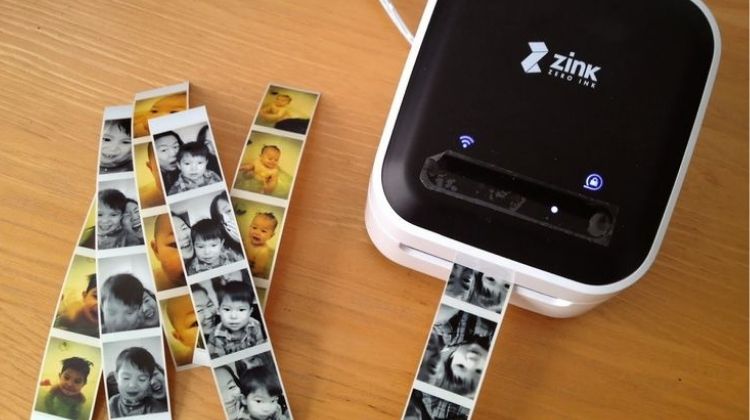
We've tested and researched every major zink printer on the market for 2026, and the lineup has settled into a clear hierarchy. Whether you want the best photo size, the most portable option, or a budget-friendly pick for occasional printing, there's a model in this guide for you. If you're also shopping for other specialty printers, check out our printer reviews section for more in-depth comparisons. Now let's get into it.
Contents
Best Choices for 2026
- #PreviewProductRating
- Bestseller No. 1
 Rating:

- Bestseller No. 2
 Rating:
 - Bestseller No. 3
 Rating:
In-Depth Reviews
1. HP Sprocket Select 2.3x3.4 — Best Overall Zink Printer
The HP Sprocket Select is the clear winner in 2026's zink printer market. The 2.3x3.4-inch print size is a meaningful upgrade over the original Sprocket's smaller output — you actually notice the difference when you hold the photos side by side. It's not a huge sheet, but it's large enough to show real detail in a portrait or landscape shot.
Connecting to your phone takes about 30 seconds via Bluetooth and the HP Sprocket app (available for both iOS and Android). Once you're paired, you can browse your camera roll, apply frames and filters, drop stickers, and hit print. One underrated feature: you can photograph your own hand-drawn doodles and turn them into custom stickers. Kids and artists will love this. The sticky-backed paper means prints double as stickers right out of the box — peel and stick anywhere.
Print speed is around 50 seconds per photo, which is completely reasonable for a device this small. The build quality feels sturdy without being heavy. It charges via micro-USB and holds a solid charge for a full afternoon of printing at a party or event. If you're comparing it to other specialty photo formats, our sublimation printer guide covers higher-volume options for when you need a step up in print size.
Pros:
- Prints 30% larger than original HP Sprocket (2.3x3.4 inches)
- Sticky-backed Zink paper — prints become stickers instantly
- Excellent app with filters, frames, stickers, and custom doodle stickers
- Works with iOS and Android via Bluetooth
- Smudge-proof, water-resistant prints
- Compact enough to slip in a jacket pocket
Cons:
- Zink paper costs more per print than traditional photo paper methods
- Print quality won't satisfy anyone expecting DSLR-level sharpness
- Charges via micro-USB, not USB-C
2. HP Sprocket 2-in-1 Portable Photo Printer & Instant Camera — Best Camera + Printer Combo
The HP Sprocket 2-in-1 is the wild card in this lineup. It's not just a printer — it's also a built-in instant camera. You point it at something, snap a shot, and it prints right then and there. No phone required. That's a genuinely different use case from the other Sprocket models, and it's a legitimate reason to choose this one over the Select if you want a standalone device for events.
The print size is 2x3 inches, which is a bit smaller than the Sprocket Select's output. If print size matters to you, that's worth knowing. But the convenience factor is real — pull it out at a birthday party, pass it around, and let people print without messing with their phones or a Bluetooth connection. It still supports Bluetooth printing via the HP Sprocket app when you do want to print from your phone, so you get both options.
The form factor is almost identical to a large smartphone — it fits in a back pocket without a problem. Battery life is decent for a day trip. The prints come out on 2x3-inch sticky-backed Zink paper, same as the rest of the Sprocket line, so you can stick them anywhere. If you're someone who loves making memory books or decorating journals, pair this with the right paper — our sticker paper guide covers compatible options worth knowing about.
Pros:
- Built-in instant camera — no phone required to print
- Truly pocket-sized, about the size of a large smartphone
- Bluetooth printing from your phone still works via the app
- Sticky-backed Zink paper included
- Great for parties, events, and gifting
Cons:
- Smaller 2x3-inch prints vs. 2.3x3.4 from the Sprocket Select
- Built-in camera is basic — don't expect smartphone photo quality
- HP Sprocket app required for phone-to-printer Bluetooth printing
3. VuPoint IP-P10-VP Color Photo Printer — Best for Color Depth
The VuPoint IP-P10-VP takes a different technical approach. While the HP Sprockets use Zink (zero-ink) technology, the VuPoint uses dye sublimation thermal transfer — a process where heat vaporizes dye and fuses it directly into the paper. The result is noticeably richer color reproduction. If you print photos where accurate color matters — portraits, landscapes, product shots — you'll see the difference compared to a standard Zink output.
The print resolution is 300x300 DPI with 256 gradations and 16.7 million color support (the same color depth specification used in professional photo labs). It supports JPEG format, which covers every photo you'd take on a modern smartphone or camera. This is a more "serious" compact printer than the Sprocket lineup — it's built less for creative sticker-making and more for people who want decent photo quality from a small device.
It's an older model, and it shows in the connectivity department — it doesn't have the slick Bluetooth + smartphone app ecosystem of the HP Sprockets. Setup is more manual. But if you want the best color fidelity in this size class, the VuPoint delivers it. It's worth noting that dye sublimation is also the technology behind many of the best sublimation printers we've reviewed — the process just scales up from pocket to desktop. This is the smallest and most affordable entry point into that technology.
Pros:
- Dye sublimation printing — richer, more accurate colors than Zink
- 300x300 DPI with 16.7 million color support
- JPEG photo support — works with any modern photo source
- Good for people who prioritize photo quality over sticker features
Cons:
- Older model — less polished smartphone app/Bluetooth integration
- Not as "fun" or creative-feature-rich as the HP Sprocket line
- Replacement dye ribbon + paper packs can be harder to source
- Setup feels dated compared to modern plug-and-print options
Choosing the Right Zink Printer: A Buying Guide
Not every zink printer is the right fit for every person. Here's what actually matters when you're deciding which one to buy.
Print Size and Paper Format
This is the first thing to nail down. The standard Zink print size is 2x3 inches — about the size of a business card. The HP Sprocket Select bumps that up to 2.3x3.4 inches, which sounds small but genuinely feels larger in your hand. If you're printing keepsake photos to frame or display, the extra size matters. If you're printing wallet photos or stickers to slap on a water bottle, the 2x3 format is perfectly fine. Also check whether the printer uses sticky-backed paper — most Zink printers do, which turns every print into a sticker automatically.
Connectivity and App Experience
All modern zink printers connect via Bluetooth. The real differentiator is the app. HP's Sprocket app is one of the best in the category — it lets you pull photos from your camera roll, social media, or Google Photos, apply creative edits, add frames and stickers, and print in seconds. A bad app ruins an otherwise good printer. If the app crashes, lags, or forces you through three menus to print a single photo, you'll stop using the printer within a week. Check recent app reviews on the App Store or Google Play before you buy — apps update frequently and quality can shift.
Print Technology: Zink vs. Dye Sublimation
Most compact photo printers in this size class use one of two technologies:
- Zink (Zero Ink): Color crystals are embedded in the paper. Heat activates them. No cartridges. Very convenient. Prints are water-resistant and smudge-proof but color depth is slightly limited.
- Dye sublimation: Heat vaporizes dye from a ribbon and fuses it to the paper. Richer color gradients, more photorealistic output, but you need to replace the ribbon as well as the paper.
For casual fun printing — events, travel, gifting — Zink wins on convenience. For anyone who cares deeply about color accuracy, dye sublimation is worth the extra complexity. It's the same technology behind full-size units covered in our best sublimation printer review.
Running Costs and Paper Availability
The printer itself is usually affordable. The real cost is the paper. Zink paper packs run roughly $0.25–$0.50 per print depending on the brand and pack size you buy. That adds up if you print heavily. Before committing to a printer, check that replacement paper is easy to find and reasonably priced on Amazon. Some older or discontinued models have paper that's harder to source — avoid those if you plan to print more than occasionally. Also check whether the printer uses a proprietary paper size or a standard one that third-party brands can supply.
FAQs
What is a Zink printer?
A Zink printer (short for "zero ink") is a type of photo printer that doesn't use ink cartridges. Instead, the color is already embedded in the special Zink paper as heat-sensitive crystals. When the printer applies heat to the paper, those crystals activate and produce the full-color image. The result is a smudge-proof, water-resistant print — and most Zink paper has a peel-and-stick backing so your print doubles as a sticker.
How long do Zink prints last?
Zink prints are rated to last several years without noticeable fading under normal indoor conditions. They're smudge-proof and water-resistant right out of the printer, which helps durability. However, they won't last as long as archival inkjet or dye-sublimation prints if exposed to direct sunlight for extended periods. For everyday keepsakes, scrapbooks, and stickers, the longevity is more than adequate.
Do all Zink printers use the same paper?
No — and this is important. Different Zink printers use different paper sizes. The standard HP Sprocket (original and 2-in-1) uses 2x3-inch paper. The HP Sprocket Select uses 2.3x3.4-inch paper. These are not interchangeable. Always buy the exact paper format specified for your printer model. Using the wrong size will either not load properly or produce misaligned prints.
Can I print from any phone with a Zink printer?
Most modern Zink printers — including the HP Sprocket line — support both iOS and Android devices via Bluetooth and a companion app. The HP Sprocket app is available for free on both platforms. The one exception in this guide is the VuPoint IP-P10-VP, which uses older connectivity and doesn't have the same modern app ecosystem. Always check iOS and Android compatibility for your specific phone OS version before purchasing.
What's the difference between Zink printing and dye sublimation?
Zink embeds color crystals directly in the paper and uses heat to activate them — no separate ink or ribbon needed. Dye sublimation uses a separate color ribbon that gets heated until the dye vaporizes and bonds to the paper. Dye sublimation generally produces richer, more photorealistic color output, while Zink wins on convenience because there's nothing to replace except the paper itself. For serious photo quality in a compact form factor, dye sub edges it out. For fun, casual printing on the go, Zink is simpler and more practical.
Is a Zink printer worth buying in 2026?
Yes, for the right use case. If you want to print wallet-sized photos, custom stickers, or instant keepsakes at parties and events without dealing with ink cartridges or a power outlet, a Zink printer delivers genuine value. It won't replace a full photo printer for large prints or high-volume work — but that's not what it's designed for. The HP Sprocket Select in particular remains one of the best fun-printing gadgets you can carry in a bag in 2026.
Buy on Walmart
- HP Sprocket Select 2.3x3.4 Instant Photo Printer, Print Pict — Walmart Link
- HP Sprocket 2-in-1 Portable Photo Printer & Instant Camera, — Walmart Link
- VuPoint IP-P10-VP Color Photo Printer — Walmart Link
Buy on eBay
Buy the HP Sprocket Select and stop overthinking it — the bigger print, the better app, and the sticker-ready paper make it the only zink printer most people will ever need.



About Chris & Marry
Chris and Mary are a couple with a shared background in graphic design and print production who have spent years working with printers across creative and professional contexts — from art printing and photo output to label production and professional document work. Their combined experience evaluating printer performance, color accuracy, and paper handling across inkjet and laser platforms gives them a practical, hands-on perspective on what makes a printer worth buying. At ShopChrisAndMary, they cover printer reviews, buying guides, and recommendations for artists, photographers, and professional users.
Time to get FREE Gifts. Or latest Free printers here.
Disable Ad block to reveal all the info. Once done, hit a button below