A few weeks ago, we were putting together printed price tags for a small online shop — and halfway through the design, someone asked, "Should we add a QR code?" We had never actually learned how to make QR codes for printing properly, so we winged it. The result? Blurry, unscannable codes and a wasted print run. Here's everything we've since figured out so you don't have to go through the same headache.
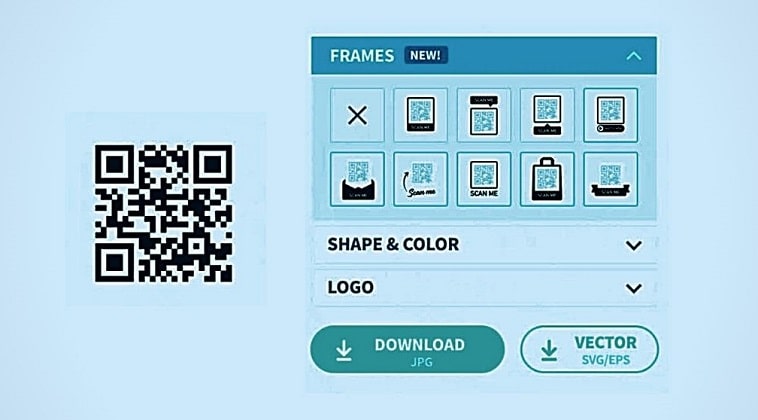
A QR code (Quick Response code) is a two-dimensional barcode that any smartphone camera can read instantly. Unlike a traditional barcode, it stores URLs, plain text, contact information, Wi-Fi credentials, and more. According to Wikipedia's overview of QR codes, the format was originally developed in 1994 for tracking automotive parts and has since become one of the most widely used barcodes in the world. When printed correctly, a QR code connects your physical materials — flyers, product labels, event signage — directly to anything digital.
This guide walks you through every step: picking the right generator, exporting for print quality, avoiding the most common mistakes, and building a strategy that holds up over time. If you also need hardware to print crisp, scannable labels and codes, our label makers category has recommendations that pair perfectly with this kind of work.
Contents
Where Printed QR Codes Actually Shine
Before you generate your first code, it helps to know where QR codes genuinely earn their keep in print. Not every printed item benefits from one — but in the right application, a QR code adds real value without adding clutter.
Business Cards and Flyers
Business cards are one of the best formats for a printed QR code. A single small code can link to your full portfolio, booking calendar, contact page, or social profiles — no typing required from the recipient. If you're designing your own cards from scratch, our guide on how to design and print your own business cards walks through the full layout process, including where to position a QR code for maximum visibility and scannability.
Flyers work well too, especially when you want to track engagement from a specific campaign or print run. Common destinations for flyer QR codes include:
- Event registration or RSVP pages
- Discount codes or exclusive landing pages
- Video demonstrations or trailers
- Downloadable resources (PDFs, guides, forms)
Product Labels and Packaging
Small product labels especially benefit from QR codes because you can pack significantly more information into less physical space. Print the essentials directly on the label — name, key specs, price — and let the QR code handle everything else.
Useful destinations for product label QR codes:
- Full ingredient or material lists
- Care and usage instructions
- Warranty registration pages
- Customer review submission forms
- Video setup guides or tutorials
Step-by-Step: How to Make QR Codes for Printing
Here's the core of it. Knowing how to make QR codes for printing the right way — not just generating one quickly — is the difference between a code that scans reliably every time and one that frustrates people. The process has five key steps.
Choosing the Right QR Code Generator
For print purposes, you need a generator that outputs high-resolution vector files (SVG or EPS). Raster images (PNG, JPG) pixelate when scaled up. Here's a comparison of the most reliable options:
| Generator | Free Tier | SVG / EPS Export | Dynamic Codes | Best For |
|---|---|---|---|---|
| QR Code Monkey | Yes | Yes (SVG) | No | One-off print projects |
| Canva | Yes | Limited | No | Quick design integration |
| QR Tiger | Yes (limited) | Yes | Yes | Marketing campaigns |
| Beaconstac | Trial only | Yes | Yes | Enterprise or bulk printing |
| Adobe Express | Yes | Yes | No | Design-focused projects |
For most personal and small business print projects, QR Code Monkey is the default choice. It's completely free, produces clean SVG exports, requires no account, and gives you full color and logo customization options.
Exporting in the Right File Format
This step is where most beginners go wrong. Follow these steps exactly:
- Enter your destination URL or content into your chosen generator.
- Set the error correction level to H (High) — this allows up to 30% of the code to be damaged or obscured and still scan correctly. It's essential for printed materials that may get worn or dirty.
- Download in SVG or EPS format for vector-quality output.
- Open the file in a design tool (Illustrator, Inkscape, or Affinity Designer) and place it at the correct final print size.
- If you absolutely must use PNG (for simpler workflows), export at a minimum of 300 DPI at the final printed size — not at screen size.
- Always preserve the quiet zone — a clear white border of at least 4 module widths (one "cell" of the code pattern) on all four sides. Crowding the edges is one of the most common causes of scan failure.
Test before you print: scan the code at the exact intended print size on screen before sending the file to the printer — a code that looks perfect at 100% screen zoom can fail completely when printed at one inch square.
When Printed QR Codes Make Sense (And When They Don't)
QR codes are a tool, not a default requirement. Using them in the right context makes them powerful. Using them everywhere makes them visual noise that people ignore.
Smart Use Cases
- Menus and price lists — update the linked page without reprinting physical materials
- Event tickets and name badges — verify check-in with a single scan
- Retail packaging — share extended product information without cluttering the physical label
- Direct mail campaigns — track response rates from specific geographic or demographic segments
- Instruction manuals — link to video tutorials instead of printing extra pages
- Loyalty programs — send customers directly to a sign-up or points-redemption page
If you're printing custom labels or cards for any of these uses, the printer you choose matters as much as the code itself. Check out our recommendations for the best printers for business cards — many of those models handle small-format label and card printing with excellent resolution for fine QR code detail.
When to Skip the QR Code
There are situations where a QR code adds friction instead of value. Be honest with yourself about these:
- The destination URL is short and simple enough to type in five seconds
- Your audience is unlikely to have a smartphone readily available
- The print surface is curved, reflective, or textured in a way that interferes with camera focus
- You can't commit to keeping the linked page live and relevant long-term
- The code would be printed smaller than 0.8 inches on each side
A dead or broken QR code is worse than no code at all. It signals neglect and erodes trust with your audience — especially for professional or branded materials.
Print Mistakes That Kill Scan Quality
Most unscannable printed QR codes aren't a generator problem — they're a print problem. These are the most common ways a perfectly good code gets ruined.
Size and Contrast Errors
Size is the single most important variable. A QR code that's too small simply cannot be resolved by most smartphone cameras, regardless of how good the source file is. Use these minimums as your baseline:
- Business cards: minimum 0.8 × 0.8 inches (approximately 2 × 2 cm)
- Product labels: minimum 1 × 1 inch
- Flyers viewed at arm's length: at least 1.5 × 1.5 inches
- Signage or posters: apply the 10:1 rule — divide the expected scanning distance in inches by 10 to get the minimum code size in inches
Contrast is equally critical. The standard is dark modules on a light background, and it's standard for good reason. Never print a QR code with low-contrast color combinations — dark blue on black, gray on white, or yellow on cream are all common failures. If you're using brand colors, test contrast ratios before finalizing.
File Format and Design Mistakes
Beyond size and contrast, these are the file-level mistakes that quietly destroy scan quality:
- Exporting as a low-resolution JPG and scaling it up inside a layout program
- Adding a drop shadow or glow effect that bleeds into the quiet zone border
- Printing over a busy or patterned background without sufficient contrast separation
- Using a gradient fill inside the QR code pattern — some modules become visually indistinct
- Letting text, borders, or design elements crowd within the quiet zone
- Applying automatic image compression in your design software's PDF export settings
If your design program is applying auto-compression or effects on export, check those output settings specifically. A high-quality source file can be degraded significantly by default export options in tools like Canva or Google Slides.
QR Code Myths You Should Stop Believing
There's a lot of outdated and just plain wrong information about printed QR codes. Here are the most common myths — and the actual truth behind each one.
Myth 1: QR codes must be black and white.
False. You can absolutely use brand colors — as long as the modules (dark elements) contrast strongly against the background (light elements). Test before committing to a full print run.
Myth 2: Adding a logo to the center makes it unscannable.
Not true. QR codes are engineered with error correction built in — up to 30% of the code can be obscured at Level H and still read correctly. A centered logo covering no more than 20–25% of the code area is completely fine. Countless major brands do this successfully every day.
Myth 3: Smaller looks cleaner and more professional.
Wrong. Size directly controls scannability. A "clean" code that doesn't scan is purely decorative. Function comes before aesthetics — always.
Myth 4: QR codes are a fading trend.
The data says the opposite. Adoption accelerated sharply and has stayed elevated across restaurants, retail, healthcare, and events worldwide. They are a firmly established part of print communication.
Myth 5: All QR generators produce equivalent results.
No. Some generators add unnecessary pattern complexity, making codes slower or harder to scan. Others compress output automatically. Use a reputable generator, download in vector format, and always test the printed output.
Protecting Your Printed QR Codes Over Time
You've generated a high-quality code and printed it correctly. Now you need it to keep working. Physical materials degrade — and a faded, scratched, or moisture-damaged QR code is an unscannable one.
Lamination and Surface Coatings
The right protection depends entirely on where and how your printed material lives:
- Indoor signage: matte or gloss lamination both work — gloss creates glare under direct overhead lighting, so matte is often the better call for wall-mounted or countertop signs
- Outdoor signage: UV-resistant laminate is non-negotiable; unprotected prints fade and delaminate within months from sunlight and moisture exposure
- Product labels: a clear overlaminate or varnish coat protects against repeated handling and moisture without affecting scan quality
- Reusable event materials: laminate anything that gets handled frequently — menus, badges, table cards, display inserts
- Single-use materials: no coating needed — focus your budget on print quality instead
Watch for one specific issue with high-gloss finishes: strong overhead lighting creates reflective hotspots that can confuse phone cameras. Always test your laminated final output in the actual lighting environment where it will be displayed, not just on your desk.
Replacing Outdated Codes
Static QR codes are permanent. Once printed, the destination URL is fixed. If the linked page changes, the code is dead. Here's how to handle this proactively:
- For one-time or short-lifespan materials (event flyers, single-use coupons, seasonal promotions), a static code is perfectly appropriate.
- For anything reprinted regularly or used long-term, use a dynamic QR code — the printed code points to a redirect URL you can update at any time, without reprinting anything.
- Build a review cadence: every time you reorder printed materials, verify that every QR code destination is still live, loads correctly, and points to the right content.
- If a destination URL moves, update the dynamic redirect immediately or reprint with a corrected static code — don't leave broken codes in the field.
Building a Long-Term QR Code Strategy
Treating each QR code as a standalone one-off project eventually creates chaos — dead links, inconsistent branding, no data on what's actually working. A simple strategy prevents all of that.
Dynamic vs. Static QR Codes
This is the most important strategic decision you'll make when you start scaling your use of printed QR codes:
- Static codes are free, permanent, and require no subscription or ongoing service. Use them for stable, evergreen destinations — your homepage, a fixed PDF download, a permanent contact card.
- Dynamic codes typically cost a monthly fee but let you change the destination anytime without reprinting. Use them for seasonal promotions, campaign-specific landing pages, or any destination that evolves.
For most small businesses, a hybrid approach works best: static codes for evergreen materials (business cards, product packaging, permanent signage) and dynamic codes for campaign-specific or time-sensitive prints.
Tracking and Measuring Performance
Dynamic QR code platforms give you real scan analytics — scan volume by date, location data, device type, and time of day. This data is genuinely useful for making smarter print decisions:
- Compare scan rates across different physical placements (countertop display vs. window cling vs. product packaging)
- Identify which campaign materials drive meaningful engagement vs. which are ignored
- Time your reprints based on actual scan activity rather than guesswork
- Test different QR code designs, sizes, or calls-to-action with simple A/B print runs
Even if you're using free static codes, adding UTM parameters to your destination URLs routes scan traffic through Google Analytics so you can measure which print sources are driving visits. It costs nothing and turns a passive print element into a measurable marketing channel.
A QR code is only as good as the care you put into it — get the file format right, respect the minimum print size, keep the destination alive, and you'll have a tool that keeps delivering long after the ink dries.



About Chris & Marry
Chris and Mary are a couple with a shared background in graphic design and print production who have spent years working with printers across creative and professional contexts — from art printing and photo output to label production and professional document work. Their combined experience evaluating printer performance, color accuracy, and paper handling across inkjet and laser platforms gives them a practical, hands-on perspective on what makes a printer worth buying. At ShopChrisAndMary, they cover printer reviews, buying guides, and recommendations for artists, photographers, and professional users.
Time to get FREE Gifts. Or latest Free printers here.
Disable Ad block to reveal all the info. Once done, hit a button below