Ever wondered if you could skip the Wi-Fi setup entirely and just plug a cable from your Android phone straight into a printer? You can — and once you know how to print from Android phone USB cable, it becomes one of the most dependable options you have. No network required, no password prompts, no signal drops. Just a direct connection between your phone and your printer. For more hands-on printing guides like this one, browse our printing tips section.
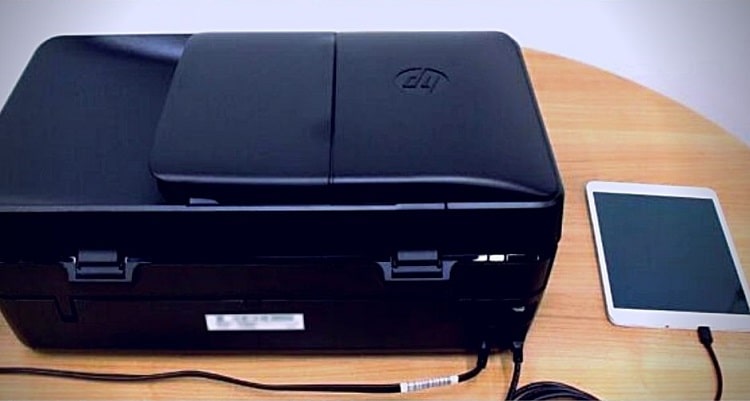
Most people assume that printing from a smartphone always requires a wireless printer and a stable network. That assumption stops a lot of people before they even try. The truth is, a USB cable connection is frequently more reliable and faster than Wi-Fi or Bluetooth alternatives — and it works even when your network doesn't. The catch is understanding what hardware and software you actually need. Once those two pieces are in place, the rest is straightforward.
This guide walks you through the whole process from the ground up. You'll find background on how the technology works, a step-by-step setup walkthrough, an honest comparison against wireless printing, the most common mistakes to avoid, and advice on keeping your setup working reliably over the long term. Whether you're trying this for the first time or you've been stuck on a problem for a while, you'll find clear answers here.
Contents
- Why USB Printing from Android Works the Way It Does
- New to This? USB Printing by Experience Level
- How to Print from Android Phone USB Cable: A Step-by-Step Walkthrough
- USB Cable vs. Wireless Printing: A Side-by-Side Look
- When USB Cable Printing Makes the Most Sense
- Mistakes That Stop You from Printing Successfully
- Taking Care of Your Cables and Connections
- Building a Reliable Mobile Printing Routine
- Frequently Asked Questions
Why USB Printing from Android Works the Way It Does
The Role of USB OTG Technology
When you plug your Android phone into a computer, your phone acts as the "device" — the computer is in control. Printing via USB flips that relationship. Your phone needs to become the "host," driving the printer rather than being driven by something else. The technology that makes this possible is called USB On-The-Go, commonly abbreviated as OTG. You can read the technical background on Wikipedia's USB On-The-Go page if you're curious, but the practical version is simple: OTG lets your phone control external hardware like printers, keyboards, and USB drives through a standard cable connection.
Not every Android phone supports OTG. Most phones manufactured in the last five or six years do, but some older and budget models don't include it. You can check your phone's spec sheet on the manufacturer's website, or download a free OTG checker app from the Google Play Store to confirm. If your phone doesn't support USB OTG, cable printing from that device simply isn't possible — but wireless alternatives remain open to you.
How the Phone and Printer Actually Communicate
The physical cable is only half of the equation. Your phone also needs software that knows how to send print commands in a language your printer understands — typically PostScript or PCL (Printer Command Language). Some Android phones include a built-in print service that handles this translation automatically. Others need a third-party app, such as PrintHand, or the printer manufacturer's own dedicated app.
This translation layer is critical. Without it, your phone and printer are essentially speaking different languages — they're connected but not communicating. That's why simply plugging in a cable and hoping for the best rarely produces results. The right app is just as important as the right cable. Fortunately, the right apps are free and widely available.
Which Printers Are Compatible
Laser printers from major brands like HP, Canon, Brother, and Epson tend to have the strongest app support for Android USB printing. Cheaper inkjet models sometimes lack the driver support needed for third-party apps to detect them. If you're buying a new printer and mobile printing is important to your workflow, checking the manufacturer's Android compatibility list before purchasing is worth doing. Most manufacturer websites list compatible devices and apps clearly in the support section.
New to This? USB Printing by Experience Level
If You're Just Starting Out
If this is your first attempt at printing from an Android phone, start with the simplest possible approach: download your printer manufacturer's official app. HP Smart, Canon PRINT Inkjet/SELPHY, Epson iPrint, and Brother iPrint&Scan are all free, well-maintained, and designed to guide you through the connection process with minimal technical knowledge required.
You'll also need the right cable. Most modern Android phones use USB-C, while most printers have a USB-B port (the square-shaped one). A USB-C to USB-B cable is usually what you need — if your phone has Micro-USB, you'll need a Micro-USB OTG adapter plus a standard USB-A to USB-B cable. Once you have the cable and the app, open the app first, then connect the cable. Most manufacturer apps walk you through printer detection automatically.
Tip: If the app doesn't detect your printer right away after connecting, toggle your phone's screen off and back on — some apps rescan for hardware when the screen wakes.
If You're More Comfortable with Tech
If you've done mobile printing before and want more control over settings, third-party apps like PrintHand offer broader printer compatibility — over 1,600 models — and more granular options for paper size, print quality, and color management. PrintHand is a solid choice when your printer isn't covered by an official app, particularly for older or less common models.
Advanced users might also want to know about Mopria Print Service, a standard built into many modern Android phones that supports hundreds of certified printers natively. Mopria works over Wi-Fi, not USB, but knowing about it gives you a fast wireless fallback when cable printing isn't convenient. USB and wireless methods aren't in competition — having both available makes you more flexible in any environment.
How to Print from Android Phone USB Cable: A Step-by-Step Walkthrough
What You'll Need
Before connecting anything, make sure you have these items ready:
- An Android phone that supports USB OTG (most phones from the last five years do)
- A USB data transfer cable — USB-C to USB-B for most setups, or USB-C to USB-A if your printer has a Type-A port
- A USB OTG adapter if your phone uses Micro-USB
- A print app installed and ready — manufacturer app or PrintHand
- A printer with an accessible USB host port, powered on and not in sleep mode
The Setup Process
Start by installing and opening your chosen print app before you connect any cables. This matters because some apps only scan for hardware at launch or when a USB event is detected. If the app isn't running, it may miss the connection entirely.
Next, plug one end of the cable into your printer's USB port. Plug the other end into your phone — using your OTG adapter if needed. Your phone will likely show a notification in the status bar indicating that a USB device is connected. Tap that notification and make sure the USB mode is set to "File Transfer" or "PTP" rather than "Charging only." Some print apps require one of these modes to communicate with the connected printer.
Open your document, photo, or file in the print app. Tap the print option, which is usually found in the app's share menu or a dedicated print button. The app should list your printer as a detected device. If your printer doesn't appear, double-check that both ends of the cable are fully seated — a partially inserted connector is the single most common cause of failed detection.
Once your printer appears, set your preferences: paper size, orientation, number of copies, color or black and white. Then tap Print. Most printers begin within a few seconds of receiving the print command.
Running a Test Print
After your first successful setup, run a quick test print to confirm everything is working as expected. For HP printer owners, our guide on how to print a test page on an HP printer walks through that process in detail. A successful test print tells you that your cable, app, and printer are all communicating correctly before you attempt anything more important. If the test fails, you'll know early and can troubleshoot without the pressure of a deadline.
Warning: A failed first print almost never means broken hardware — it's almost always a cable or app setting that needs a one-time adjustment.
USB Cable vs. Wireless Printing: A Side-by-Side Look
Neither USB cable printing nor wireless printing is universally better. They serve different needs well. Understanding where each method excels helps you choose the right one for your situation — and helps you appreciate why knowing both is more useful than defaulting to one.
| Factor | USB Cable Printing | Wireless Printing (Wi-Fi / Bluetooth) |
|---|---|---|
| Connection reliability | High — physical connection, no signal drops | Variable — depends on network strength |
| Setup complexity | Moderate — requires correct cable and app | Low to moderate — requires network configuration |
| Print speed | Fast — direct data transfer | Slightly slower on congested or weak networks |
| Works without internet or Wi-Fi | Yes — fully offline | Local Wi-Fi only; some features require internet |
| Printer compatibility | Wide — most USB printers supported | Depends on printer's wireless capability |
| Requires physical cable | Yes | No |
| Ideal environment | Offices, high-security settings, no-Wi-Fi locations | Home use, multi-device households, convenience |
The table illustrates that USB cable printing wins on reliability and offline capability, while wireless wins on convenience and flexibility across multiple devices. If your printing needs are mostly casual — photos, occasional documents at home — wireless is probably more natural for your workflow. If you're printing sensitive records, working in a place without Wi-Fi, or need consistent output with no network variables, USB cable is the more dependable choice.
When USB Cable Printing Makes the Most Sense
Printing Without a Network Available
The clearest argument for USB cable printing is any setting where Wi-Fi simply isn't there. Workshops, rural offices, temporary workspaces, and many small business environments often have limited or unreliable wireless coverage. In those situations, USB gives you a clean, direct path from phone to printer. You don't need to join a network, enter a password, or troubleshoot signal strength. You need a cable and the right app — that's it.
Printing Sensitive or Private Documents
Wireless printing sends data across a network, and while most home networks are reasonably secure, some people prefer not to transmit personal or professional documents over Wi-Fi at all. A USB cable keeps the data entirely on a closed, physical connection. For financial records, legal paperwork, or medical documents, that added layer of privacy is worth considering. No network means no network interception risk, however small.
Everyday Phone Printing Tasks
Some of the most practical reasons to print from your Android phone are also the most ordinary: grabbing a coupon before it expires, printing a confirmation email, or pulling up a text conversation you need on paper. Our guides on how to print coupons from your phone and how to print copies of text messages cover those specific tasks in detail. USB cable printing handles all of them just as smoothly as wireless — and without the setup overhead if you're already connected.
High-Volume or Time-Sensitive Jobs
When you need to print a large batch of documents quickly and you're physically sitting next to your printer, USB is typically the fastest route available. Direct cable transfers don't compete with other devices on a shared network. For photo printers and professional-grade printers in particular, that can translate into noticeably faster job completion and fewer paused or interrupted print queues.
Mistakes That Stop You from Printing Successfully
Using a Charge-Only Cable
This is the most frequently overlooked problem. Many USB cables — including ones that come bundled with cheaper accessories — are designed only to carry power. They don't transmit data. If you grab a cable from a drawer without checking, there's a meaningful chance it's charge-only. Your phone will charge when connected to the printer's USB port, which makes the cable seem fine. But the app won't detect the printer because no data is moving through the cable.
Always use a cable explicitly rated for data transfer, or use the cable that shipped with your phone or tablet. Those are almost always full-function data cables. If you're not sure about a cable you already own, a two-dollar data cable from any electronics retailer is worth buying just to rule this out.
Connecting Before the App Is Open
Plugging in the cable before opening your print app is a common misstep. Some apps only scan for connected USB devices at startup or when a USB event fires. If the app isn't running when you connect the cable, it may never register that a printer is there. Get the app open and ready first, then connect the cable.
Pro insight: If no app is detecting your printer, open your phone's Developer Options and confirm that USB OTG is enabled — some Android builds disable it by default as a battery-saving measure.
Ignoring the Phone's USB Mode Setting
Android shows a USB mode notification every time you plug something in. If that mode is set to "Charging only," your phone won't expose the USB data interface to the connected device. Pull down the notification shade, tap the USB connection notification, and switch it to "File Transfer" (MTP) or "PTP." Some apps require one mode specifically; if one doesn't work, try the other.
Skipping Printer Error Diagnosis
If your printer shows an error light or error message on its display, it won't accept print jobs regardless of how the cable or app is configured. Deal with the printer's error state first. For HP owners dealing with persistent errors, our guide on how to fix an HP printer in error state covers the most common causes and the steps to clear them before attempting to print again.
Taking Care of Your Cables and Connections
Checking Your Cable Regularly
USB cables wear out — especially at the points where the cable meets the connector. Bending stress over time causes internal wire breaks that are invisible from the outside but cripple the data connection. If your USB printing works sometimes and fails other times without any other obvious cause, the cable is the first thing to replace. It's inexpensive and takes the variable out of your troubleshooting equation immediately.
Look for fraying near either connector, bent or pushed-in pins, or any kinking in the cable itself. A cable that shows any of these signs should be replaced. Coiling cables loosely rather than wrapping them tightly extends their life considerably.
Keeping Ports Clean and Clear
Lint and dust accumulate in phone charging ports and printer USB ports over time, and even a small amount of debris can prevent a solid electrical connection. A short burst from a can of compressed air is the safest way to clean both. Hold the can upright to avoid releasing propellant liquid, and use short controlled bursts. Avoid inserting anything metallic into your phone's port — port damage is an expensive repair that cleaning with the wrong tool can cause.
Maintaining Print Quality
USB printing itself doesn't affect output quality, but your printer's condition does. If prints are coming out faded, streaky, or uneven, the problem is almost certainly the printer's ink cartridges or print head rather than anything about the cable connection. Our guide on how to make your printer print darker explains the most common causes of faded output and practical ways to address them without immediately buying replacement ink. Running the printer's built-in nozzle cleaning cycle — usually accessible through the control panel or manufacturer's app — also helps maintain consistent output over time.
Building a Reliable Mobile Printing Routine
Keep Your Apps Updated
Print apps receive regular updates that add support for new printer models, patch bugs, and improve USB detection reliability. If a setup that used to work stops working after a phone software update, check whether the print app itself has an available update. Outdated apps are a surprisingly common source of sudden compatibility breakdowns. Enable automatic updates for your print app, or check manually every month or two.
Store a Dedicated Cable with Your Printer
If USB cable printing is part of your regular workflow, keep one designated cable stored with the printer itself. Label it with a piece of tape — something as simple as "PRINTER" written in marker is enough. Pair it with an OTG adapter if your phone needs one. Keeping this kit in one place means you're not scrambling to find compatible hardware when you need to print something quickly. The two minutes you spend organizing this once will save you frustration every single time after that.
Treat USB as a Reliable Backup
Even if wireless printing is your preferred day-to-day method, knowing that USB cable printing works gives you a dependable fallback. Routers fail, networks get congested, and printer Wi-Fi modules occasionally malfunction. Having a cable and the knowledge to use it means a network problem never has to mean a printing problem. Think of USB printing not as a lesser alternative, but as a parallel option that covers situations wireless simply can't.
Expand What You Print from Your Phone
Once your USB cable printing setup is working reliably, you'll likely realize your Android phone is capable of handling more printing tasks than you expected. From a free printable you found online to a receipt, a boarding pass, or a photo you want to frame — all of it flows through the same setup you just built. The USB cable method that prints a PDF works equally well for images, web pages, and documents from any app that shares to your print app.
Frequently Asked Questions
Can any Android phone print via USB cable?
Most Android phones manufactured in the last five or six years support USB OTG, which is required for USB cable printing. However, some older and budget devices don't include it. You can check your phone's spec sheet on the manufacturer's website or download a free OTG checker app from the Play Store to confirm before buying a cable.
Do I need a special cable to print from my Android phone via USB?
You need a cable that supports data transfer, not just charging. The cable that came with your phone is almost always a data cable. You'll also need the right connector type for your printer — most printers use USB-B (the square port), so a USB-C to USB-B cable is the most common choice for modern Android phones. If your phone has Micro-USB, add a USB OTG adapter.
Which app is best for printing from Android via USB?
Start with your printer manufacturer's official app — HP Smart, Canon PRINT, Epson iPrint, and Brother iPrint&Scan are all free and well-supported. If your printer model isn't listed in a manufacturer app, PrintHand is a strong third-party option that supports over 1,600 printer models and offers detailed print settings.
Why isn't my printer being detected after I connect the cable?
The three most common causes are: a charge-only cable with no data transfer capability, the print app not being open when the cable was connected, or the phone's USB mode being set to "Charging only" instead of "File Transfer." Check these in order — swapping the cable for a known data cable is usually the quickest way to rule out the most common culprit.
The right cable, the right app, and thirty seconds of setup — that's genuinely all that stands between your Android phone and a printed page.



About Chris & Marry
Chris and Mary are a couple with a shared background in graphic design and print production who have spent years working with printers across creative and professional contexts — from art printing and photo output to label production and professional document work. Their combined experience evaluating printer performance, color accuracy, and paper handling across inkjet and laser platforms gives them a practical, hands-on perspective on what makes a printer worth buying. At ShopChrisAndMary, they cover printer reviews, buying guides, and recommendations for artists, photographers, and professional users.
Time to get FREE Gifts. Or latest Free printers here.
Disable Ad block to reveal all the info. Once done, hit a button below