Can your standard inkjet printer actually produce crisp white text on dark fabric or colored substrates using transfer paper — or does that require specialty hardware you don't own? The answer is more accessible than most crafters assume, and knowing how to print white text transfer paper correctly separates clean, professional results from wasted materials and repeated frustration. White pigment simply does not exist in standard CMYK inkjet cartridges, which forces you to work around this limitation through one of three established workflows: light-colored transfer paper that uses negative space, white-toner laser printing systems, or DTF (direct-to-film) printing with a white underbase layer applied first.
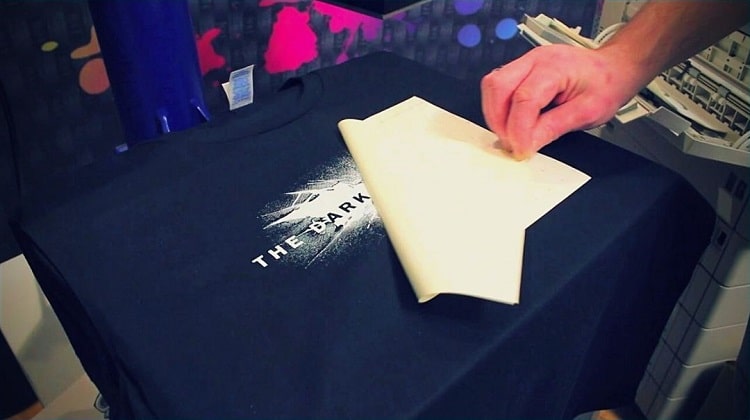
Your choice of transfer paper type — light or dark — fundamentally determines which method applies to your setup, and making this distinction clearly before purchasing supplies saves you significant time, money, and wasted test prints. Light transfer paper relies on the garment or substrate's own base color to stand in for white, while dark transfer paper uses an opaque white coating layer to deliver solid coverage over any dark background. If you work with a variety of paper and fabric transfer projects, our guide on how to print on iron-on transfer paper covers the core mechanics that underpin every transfer paper workflow.
The techniques in this guide apply across a wide range of applications — custom apparel, tote bags, craft labels, decorative fabric art, and specialty paper goods. Each method carries defined hardware requirements and practical trade-offs, and aligning your existing equipment with the correct approach is the decision that determines your outcome before you even press print.
Contents
- Understanding How Transfer Paper Handles White
- White Text on Transfer Paper: Separating Fact from Fiction
- Where White Text on Transfer Paper Truly Shines
- From First Transfer to Expert Technique: How to Print White Text on Transfer Paper
- Mistakes That Ruin White Text Transfers
- Building a Reliable White Text Workflow
- Fast Fixes That Improve Your White Text Results Immediately
Understanding How Transfer Paper Handles White
Transfer paper does not behave like standard printing stock, and understanding its mechanics is the essential starting point for any successful white text project. The paper itself is a carrier medium — it holds transferred ink or toner temporarily before heat and pressure bond it permanently to the target substrate. White cannot be printed as an ink layer on a standard inkjet system because the CMYK color model generates white by leaving the paper substrate unprinted, relying entirely on the paper's own surface reflectance to represent it. On colored or dark substrates, that assumption breaks down completely, and any unprinted area becomes transparent rather than white.
Light Transfer Paper vs. Dark Transfer Paper
Light transfer paper is designed for white or pale-colored garments and substrates. When you use it on a white shirt, the base color of your target material shows through any unprinted areas — meaning the shirt itself becomes your "white ink." This works brilliantly on pale backgrounds but fails entirely on dark fabrics, because the unprinted transfer area becomes transparent during heat application, revealing the dark background beneath your text. Dark transfer paper, by contrast, has an opaque white or cream-colored coating built directly into the transfer layer. When heat-pressed onto a black or navy shirt, that coating blocks the dark color underneath and carries your full design — including every white element — as a solid, visible layer.
Why Standard Printers Cannot Print White Ink
According to Wikipedia's overview of inkjet printing, standard inkjet systems operate on a subtractive CMYK model that includes no white channel whatsoever. White is achieved through paper reflectance, not through any deposited pigment. Specialty white-ink printers — most commonly used in the textile and DTF industries — add a dedicated white channel, but these are commercial-grade systems that sit well outside the typical home or small-studio budget. This reality defines the entire strategy for producing white text on transfer paper: you either simulate white through your paper and substrate selection, or you invest in white-toner or DTF equipment specifically engineered for the task.
White Text on Transfer Paper: Separating Fact from Fiction
Misinformation about white text printing circulates widely in crafting communities, and acting on it costs you materials, time, and credibility in your finished products. Two myths in particular cause repeated failures for people who are new to this process, and correcting them upfront changes how you approach every project from the start.
Myth: Any Printer Can Print True White
This is the single most persistent misconception in the craft printing space, and it consistently leads beginners to buy the wrong supplies. A standard inkjet printer cannot produce true white ink output, period. Any tutorial telling you otherwise is either describing the negative space technique — leaving areas unprinted on light transfer paper — or referring to the opaque white coating already present on dark transfer paper. Neither method involves your printer depositing white pigment. If you need actual white as a positive printed layer, you need a white-toner laser printer, a DTF printer with a white channel, or a screen-printing setup — that is the complete and honest list of options available to you.
Myth: You Must Always Mirror Your Design
The mirroring requirement applies specifically to light inkjet transfer paper when pressing onto fabric — the transfer flips during application, so you must pre-flip the design to compensate. However, dark transfer paper for light garments often requires no mirroring because the design is printed on the top surface of the transfer film using a different bonding mechanism. Always read the manufacturer's specification sheet for your specific paper brand before printing. Applying an unnecessary horizontal flip to a design intended for dark transfer paper produces reversed text on every single press, and this exact mistake appears in online tutorials far more often than it should.
Where White Text on Transfer Paper Truly Shines
Knowing when to use white text transfers — not just how — determines whether you get results worth selling or wearing, versus something that looks like a test print. Certain project types are ideally suited to this technique, and targeting the right applications first builds your skill set efficiently and confidently.
Custom Apparel and Dark Fabric
Dark-fabric custom apparel is the primary use case driving most people toward white text transfer solutions. T-shirts, hoodies, tote bags, and canvas items in black, navy, charcoal, and deep jewel tones all require either the dark transfer paper approach or a DTF system with a white underbase layer. White text on dark fabric delivers maximum visual contrast, which is precisely what makes custom band merch, branded workwear, and event shirts look polished and intentional. If you want to explore the hardware that powers these workflows, our art and craft printer category covers the full range of machines suited to specialty transfer and fabric printing applications.
Art, Craft, and Mixed-Media Projects
Beyond apparel, white text transfers work effectively on wood, canvas panels, ceramic tiles (with appropriate transfer media), and dark-dyed fabric for quilting and home décor projects. The technique also appears frequently in scrapbooking and mixed-media art, where white text against dark patterned paper creates a layered, high-contrast aesthetic that digital printing handles better than hand-lettering in many situations. These applications typically allow more flexibility in paper choice because flat, rigid surfaces make heat application more controlled and consistent than soft fabric, which shifts and stretches under pressure.
Pro tip: For wood and other rigid surfaces, place a soft cotton cloth between your iron or heat press platen and the transfer sheet — hard surfaces concentrate heat unevenly and cause scorched edges that destroy fine text details.
From First Transfer to Expert Technique: How to Print White Text on Transfer Paper
The method you use depends directly on your hardware, target substrate, and production budget. The comparison table below summarizes all four main approaches so you can identify your correct path before committing to materials and test runs.
| Method | Hardware Required | Works on Dark Fabric? | True White Ink? | Cost Level |
|---|---|---|---|---|
| Light transfer paper (negative space) | Standard inkjet printer | No — light substrates only | No | Low |
| Dark transfer paper (opaque coating) | Standard inkjet or laser printer | Yes | No (coating provides white) | Low–Medium |
| White-toner laser system | Dedicated white-toner laser printer | Yes | Yes | High |
| DTF (direct-to-film) | DTF printer + powder shaker + curing unit | Yes | Yes (white underbase) | High |
Beginner: Light Transfer Paper with Negative Space
If you're starting out and working exclusively on white or light-colored garments, this is your entry point and requires no additional investment beyond your existing inkjet printer. Open your design file, set your text color to white, and place it against a colored or dark background element within the design itself — the colored surroundings print cleanly onto light transfer paper while the white text area remains as unprinted, open space. On a white shirt, that open space reads as crisp white text. Mirror your design horizontally before printing, set your print quality to maximum, and allow the ink to dry fully for at least five minutes before applying heat. This method has clear limits, but executed correctly on the right substrate, the results are entirely professional.
Advanced: White-Toner Laser and DTF Systems
White-toner laser printers — with OKI and Uninet being the most established brands in the craft and small-business segment — print a literal white toner layer onto transfer film, which then bonds to dark substrates as a fully opaque white deposit. This system produces genuinely solid white text on any colored background and supports full-color designs on dark fabric with white functioning as a true, printable ink color. DTF printing extends this further by printing a white underbase across the entire design footprint first, then depositing CMYK color layers on top of it. Both advanced systems require a heat press rather than a household iron for consistent, production-quality results. For closely related techniques applied to paper substrates, our guide on how to print white ink on black paper covers parallel methods that share much of the same logic.
Mistakes That Ruin White Text Transfers
Even with the correct equipment in place, the execution stage introduces multiple failure points that consistently trip up both beginners and experienced crafters working with an unfamiliar paper brand or substrate combination.
- Using the wrong paper type for your substrate: Light transfer paper on dark fabric produces a transparent, washed-out result every time — no amount of additional heat or pressure corrects this after the fact.
- Skipping the mirror step on inkjet light transfers: Your text looks correct on screen but applies in reverse to the fabric. Always confirm the mirroring requirement for your specific paper before printing a full sheet.
- Incorrect heat and pressure settings: Too low and the transfer doesn't bond; too high and you scorch the protective layer, distorting fine text edges and reducing sharpness — especially on smaller font sizes below 14pt.
- Hot-peeling a cold-peel paper: Many dark transfer papers require a cold peel, meaning you must wait until the transfer cools completely before removing the backing. Pulling the backing sheet while warm lifts ink from the fabric along with it.
- Printing on the non-coated side of the transfer sheet: Transfer paper has a printable coating on one side only. Printing on the reverse produces ink that won't transfer and can smear across your print head.
- Using draft or economy print mode: Low-resolution output makes fine text appear pixelated after transfer. Always print at the highest available quality setting with transfer paper loaded as a specialty media type in your driver.
Building a Reliable White Text Workflow
Consistency in white text transfers comes from treating the process as a repeatable system rather than a series of individual experiments. Once you establish a working parameter set for your printer, paper brand, heat source, and substrate, document every variable and repeat it exactly each time — variance in any single step introduces variance in your results.
Design File Setup and Color Mode
Work in RGB color mode when preparing files for inkjet transfer systems — most consumer printers interpret RGB source files more accurately than converted CMYK files through their internal rendering pipeline. Set your white text as pure RGB white (255, 255, 255) and verify there is clear contrast between the text and any surrounding design elements that will print. Use vector text rather than rasterized text wherever your software allows, because vector edges remain perfectly sharp at any scale and don't soften or aliase when resized before printing. Export at 300 DPI minimum as a PNG with a transparent background, and confirm your file dimensions match your intended print output size before sending to the printer.
Printer Settings and Media Profiles
Load your transfer paper as a specialty, heavy, or photo media type in the printer driver — this adjustment reduces ink volume and extends drying time relative to the paper's lower absorption rate compared to standard copy stock. Disable automatic color correction and photo enhancement features in the driver before printing, because these algorithms attempt to compensate for white areas by subtly adding color casts, which is precisely the opposite of what you need for clean white space. Always print a test layout on plain copy paper first to verify your dimensions, mirroring, and text size before committing an entire transfer sheet — this one habit eliminates the most common source of wasted materials in any studio workflow.
Fast Fixes That Improve Your White Text Results Immediately
If your current transfers are inconsistent, patchy, or softer than expected, these targeted adjustments deliver immediate improvement without requiring new equipment or a complete workflow overhaul.
- Switch to a reputable transfer paper brand: Generic transfer paper varies significantly in coating consistency. Brands like Avery, Siser, and Neenah produce predictable, well-documented results — generic alternatives frequently have uneven coatings that cause patchy adhesion on fine text and thin strokes.
- Increase font weight for small text sizes: Text below 12pt transfers poorly on fabric because fine strokes compress during pressing. Use a bold or semi-bold weight at small sizes to maintain legibility and edge sharpness after the transfer completes.
- Pre-press your fabric for five seconds before applying the transfer: This step removes residual moisture and flattens surface wrinkles, both of which improve adhesion uniformity and prevent the micro-bubbles that degrade crisp text edges.
- Always use a Teflon sheet or silicone-coated parchment over the transfer: Direct contact between the heat platen and the transfer surface creates glossy hot spots and uneven pressure points. A protective sheet distributes heat evenly and preserves the transfer's surface finish and color accuracy.
- Test your peel timing even on hot-peel papers: Even papers labeled hot-peel benefit from 15–20 seconds of partial cooling before you pull the backing. Rushing this step tears fine details and separates thin strokes — particularly on serif fonts — from the substrate.
Key Takeaways
- Standard inkjet printers cannot deposit true white ink — your method depends on using light transfer paper for pale substrates, dark transfer paper for dark fabrics, or white-toner and DTF systems for full white-channel capability.
- Selecting the correct transfer paper type for your target substrate is the single most consequential decision in any white text project — no technique or setting adjustment compensates for the wrong paper choice after the fact.
- Documenting your printer settings, paper brand, heat parameters, and peel timing — then repeating them exactly — is what separates consistent professional results from unpredictable, run-to-run variance.
- Small targeted adjustments — pre-pressing fabric, using bold font weights at small sizes, printing at maximum quality, and always using a protective sheet — produce measurably sharper white text transfers without any additional equipment investment.



About Chris & Marry
Chris and Mary are a couple with a shared background in graphic design and print production who have spent years working with printers across creative and professional contexts — from art printing and photo output to label production and professional document work. Their combined experience evaluating printer performance, color accuracy, and paper handling across inkjet and laser platforms gives them a practical, hands-on perspective on what makes a printer worth buying. At ShopChrisAndMary, they cover printer reviews, buying guides, and recommendations for artists, photographers, and professional users.
Time to get FREE Gifts. Or latest Free printers here.
Disable Ad block to reveal all the info. Once done, hit a button below