Over 90% of professional photographers still print physical copies of their work — and in 2026, the gap between a mediocre print and a gallery-worthy one comes down almost entirely to which printer is sitting on your desk. If you're a Mac user, you've got an extra layer to think about: driver compatibility, AirPrint support, and how well the printer plays with macOS's built-in color management tools. The good news is that the best photo printers for Mac have never been better, and this guide cuts through the noise so you can find the right one for your workflow fast.
Whether you're a working photographer printing client proofs, a hobbyist who wants to frame your best shots, or a creative professional who needs fine art output on thick media, there's a printer on this list built for you. We've dug into ink systems, print widths, speed, software ecosystems, and real-world Mac compatibility to give you honest, spec-backed picks. And if you're still weighing options beyond this category, our Best Color Laser Printer for Mac guide covers the laser side of the Mac printing world.
The printers on this list range from compact all-in-ones to wide-format professional machines capable of 13×19" prints. All of them work seamlessly with macOS — no hunting for drivers, no workarounds. We've organized this as a photo printer deep-dive, so let's get into it.
Contents
- Best Choices for 2026
- In-Depth Reviews
- Canon PIXMA PRO-200S — Best Overall
- Canon imagePROGRAF PRO-300 — Best for Fine Art
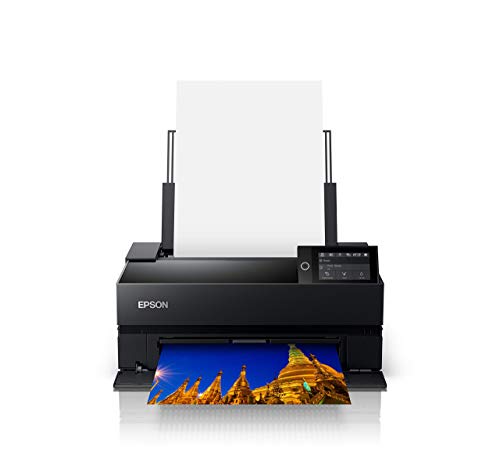
- Epson SureColor P700 — Best Professional 13" Printer
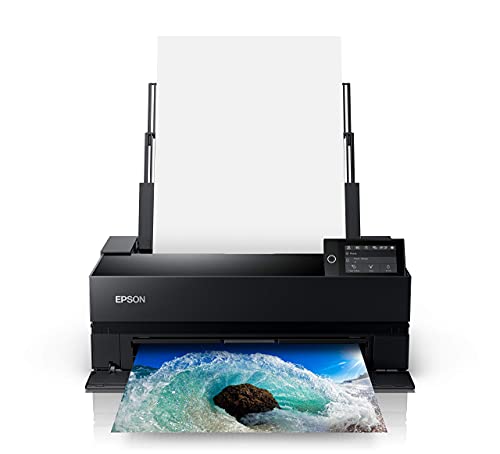
- Epson SureColor P900 — Best Wide-Format Pro
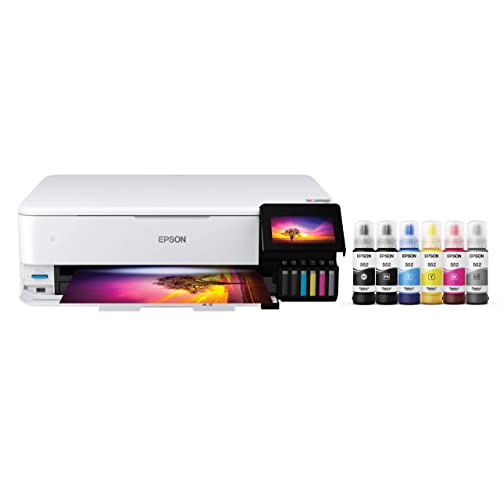
- Epson EcoTank ET-8550 — Best Value All-in-One
- Epson Expression Photo HD XP-15000 — Best Budget Wide-Format
- Epson Expression Photo XP-970 — Best Compact All-in-One
- What to Look For When Buying
- Frequently Asked Questions
- Next Steps
Best Choices for 2026
- #PreviewProductRating
- Bestseller No. 1
 Rating:

- Bestseller No. 2
 Rating:
 - Bestseller No. 3
 Rating:
 - Bestseller No. 4
 Rating:
 - Bestseller No. 5
 Rating:
 - Bestseller No. 6
 Rating:
 - Bestseller No. 7
 Rating:
In-Depth Reviews
1. Canon PIXMA PRO-200S — Best Overall Photo Printer for Mac 2026
The Canon PIXMA PRO-200S is the printer that checks every box for Mac users who want professional-quality output without stepping into full-blown production territory. It runs on an 8-color dye-based ink system that delivers the kind of vibrant, saturated colors that make landscape and portrait photography absolutely sing on photo paper. Dye inks don't have the archival longevity of pigment-based systems, but they produce a wider, brighter gamut — and for prints you're framing or gifting rather than archiving for decades, that trade-off is completely worth it.
Speed is one of the PRO-200S's genuine standout qualities. A bordered A3+ print comes out in 90 seconds flat, and an 8×10 is done in 53 seconds. That's not just a marketing number — it means you can run a test print, evaluate it, make adjustments in your Mac's color profile, and print again without losing your momentum. The 3.0" color LCD makes on-printer adjustments easy without reaching for your MacBook every time. Borderless printing covers sizes from 3.5"×3.5" all the way up to 13"×19", giving you a huge range of output formats from a single machine. AirPrint and Wi-Fi connectivity mean your Mac connects without any driver headaches.
Setup on macOS is straightforward — Canon's Print Studio Pro plugin integrates directly into the Mac print workflow, and the printer shows up reliably via AirPrint for quick jobs. If you shoot a lot and print a lot, the speed and color vibrancy of the PRO-200S will make you reach for it constantly. This is our top overall pick for 2026 for good reason.
Pros:
- 8-color dye ink produces exceptionally vibrant, wide-gamut color output
- Fast print speeds — A3+ in 90 seconds, 8×10 in 53 seconds
- Borderless printing up to 13×19" across a huge media range
- Smooth macOS integration with AirPrint and Canon Print Studio Pro
- 3.0" color LCD for easy on-printer navigation
Cons:
- Dye-based inks have shorter archival life than pigment systems
- Ink costs can add up with frequent large-format printing
2. Canon imagePROGRAF PRO-300 — Best for Fine Art Printing
If you're printing fine art — gallery prints, limited-edition reproductions, portfolio pieces on cotton rag paper — the Canon imagePROGRAF PRO-300 is the machine you want. It uses a 10-color LUCIA PRO pigment ink set that includes a dedicated Chroma Optimizer to eliminate bronzing and produce deep, consistent blacks. Pigment ink on fine art media is in a completely different league from dye-based output when archival permanence matters, and the PRO-300 handles everything from glossy photo paper to thick fine art stock with equal competence.
Canon's Nozzle Recovery System is a practical innovation that addresses one of the most frustrating aspects of professional inkjet printing: clogged nozzles from infrequent use. The system automatically detects and compensates for blocked nozzles, keeping output consistent even if your printer sits idle between projects. Skew Correction ensures media feeds straight every time, which is critical when you're printing on expensive paper. The PRO-300 also supports Canon's Professional Print & Layout software, which is genuinely excellent for Mac users who need precise color management, soft proofing, and borderless output across custom media sizes.
The footprint is smaller than you'd expect for a 13"-wide printer, making it viable for a desk setup rather than requiring its own dedicated table. If you're a Mac user doing serious fine art or photography work and you need prints that will hold up for decades on archival paper, the PRO-300 is the definitive choice. Take a look at our Best 13×19 Printer guide if you want a broader comparison across this format category.
Pros:
- 10-color LUCIA PRO pigment ink with Chroma Optimizer for zero bronzing
- Excellent archival permanence on fine art and photo media
- Nozzle Recovery System prevents quality issues from infrequent use
- Compact footprint for a professional 13"-wide printer
- Canon Professional Print & Layout software is best-in-class for Mac
Cons:
- Higher upfront cost than dye-based alternatives
- Print speeds are slower than the PRO-200S on glossy media
3. Epson SureColor P700 — Best Professional 13" Printer for Mac
The Epson SureColor P700 represents Epson's A-game in the desktop professional segment, and it shows. The new UltraChrome PRO10 ink set with Violet is a genuine leap forward — adding violet as a dedicated channel expands the color gamut significantly, particularly in the blue-purple range that photographers have historically struggled to reproduce accurately. If you shoot skies, flowers, fabric, or anything where saturated cool tones matter, the P700's Violet channel is a meaningful real-world difference, not just a spec sheet bullet point.
One of the most practical features of the P700 is its dedicated nozzles for both Photo Black and Matte Black inks. On older systems, switching between these ink types required a purge cycle that wasted ink and added minutes to your workflow. With the P700, you eliminate that entirely — no switching, no waste, no waiting. The 10-channel MicroPiezo AMC printhead delivers outstanding consistency across long print runs, and Epson's Precision Core technology keeps dot placement tight. On Mac, the P700 pairs with Epson's Print Layout software, which handles ICC profiles and soft proofing exactly the way professional photographers expect.
Print quality on premium media is simply excellent. Gradients are smooth, shadow detail is well-preserved, and highlight rendering is accurate. At 13" wide with borderless support, you've got a machine that handles everything from 4×6 snapshots to full-bleed panoramas. It's a serious tool for a serious workflow, and Mac compatibility is seamless right out of the box.
Pros:
- UltraChrome PRO10 with Violet delivers an exceptionally wide color gamut
- Dedicated nozzles for Photo Black and Matte Black — no switching needed
- 10-channel MicroPiezo AMC printhead for consistency and accuracy
- Excellent Mac software integration with Epson Print Layout
- Handles a wide range of specialty media types
Cons:
- Individual ink cartridges are an ongoing cost
- Larger footprint than all-in-one alternatives
4. Epson SureColor P900 — Best Wide-Format Pro for Mac
Step up to 17"-wide output and the Epson SureColor P900 becomes the professional standard. This is the printer that working photographers, fine art studios, and print shops reach for when they need large-format output with no quality compromises. It shares the same UltraChrome PRO10 ink with Violet as the P700, but scales it to 17" — which means you're printing at full exhibition size from your Mac without touching a production lab. That's a workflow transformation, not just an upgrade.
Everything that makes the P700 excellent is amplified here. The 10-channel MicroPiezo AMC printhead operates at the same level of precision across the wider media path. Dedicated Photo Black and Matte Black nozzles eliminate ink-switching downtime. And the P900 adds roll paper support, which is essential if you're producing panoramic prints or running multiple copies of large prints without manually feeding sheets. The footprint is substantial — plan for dedicated desk or cart space — but that's the trade-off for 17"-wide professional output.
On Mac, the P900 connects via Wi-Fi, Ethernet, or USB, and Epson's driver package and Print Layout software install cleanly on current macOS versions. Color management is exceptional, with ICC profiles available for virtually every major paper brand. If you're producing work for sale, exhibition, or client delivery and you need the absolute best quality at large format, the P900 is where you land. According to Wikipedia's overview of inkjet printing technology, modern pigment-based inkjet printers can achieve archival ratings of 100+ years on proper media — and the P900 with UltraChrome PRO10 is a prime example of that capability.
Pros:
- 17"-wide output handles exhibition and large-format print sizes
- UltraChrome PRO10 with Violet for the widest color gamut in class
- Roll paper support for panoramas and batch large-format printing
- No Photo/Matte Black switching — dedicated nozzles for both
- Full Mac compatibility with Ethernet, Wi-Fi, and USB
Cons:
- Significant footprint — needs dedicated space
- Higher price point than 13"-wide alternatives
- Ink costs at 17" scale up compared to smaller printers
5. Epson EcoTank Photo ET-8550 — Best Value All-in-One Photo Printer
The Epson EcoTank Photo ET-8550 flips the economics of photo printing completely upside down. Traditional cartridge printers cost less to buy and more to operate. The ET-8550 costs more upfront, but then you're printing 4×6 photos for about 4 cents each instead of 40 cents with traditional cartridges — that's a 10x cost reduction that pays back the premium quickly if you print with any regularity. The six-color Claria ET Premium ink system fills from refillable tanks, and those tanks hold enough ink to produce thousands of prints before you need to think about replenishment.
Print quality is genuinely impressive for a consumer-tier machine. The high-accuracy printhead delivers smooth gradients and accurate skin tones on photo paper, and the borderless printing support goes all the way up to 13×19". That's wide-format output from what is fundamentally a value-positioned printer. It also includes scanning and copying, a 4.3" color touchscreen, auto duplex printing, and Ethernet connectivity — making it far more capable than a single-purpose photo printer. A 4×6 photo prints in as fast as 15 seconds, which is genuinely fast for a dye-based system at this price tier. Specialty media support includes cardstock, CDs/DVDs, and stock up to 1.3mm thick.
For Mac users who print regularly — family photos, event prints, art projects, greeting cards — the ET-8550 is the smartest money you can spend. The initial cost is higher than a budget photo printer, but the ongoing cost is dramatically lower, and the quality holds up well. If you're comparing against cartridge-based alternatives at similar price points, the math is simply not close over a one-year horizon.
Pros:
- Ultra-low per-print cost — about 4 cents per 4×6 vs. 40 cents for traditional cartridges
- Borderless printing up to 13×19" — impressive for a consumer all-in-one
- Includes scanner and copier for full productivity
- Supports specialty media including CDs/DVDs and thick cardstock
- Fast — 4×6 photo in 15 seconds
Cons:
- Higher upfront cost than traditional cartridge photo printers
- Ink quality not at the level of dedicated professional pigment printers
- Larger physical footprint than single-function printers
6. Epson Expression Photo HD XP-15000 — Best Budget Wide-Format Photo Printer
The Epson Expression Photo HD XP-15000 is the entry point to wide-format photo printing for Mac users who want 13×19" output without a professional-tier price tag. It runs a 6-color Claria Photo HD ink system that includes red and gray inks — the red expands the gamut for warm tones and saturated colors, while the dedicated gray ink produces the smooth, nuanced black-and-white prints that photographers actually care about. Most sub-$300 photo printers have neither, which is why the XP-15000 punches above its price point.
Borderless prints up to 13×19" look genuinely impressive on quality photo paper, with smooth gradations and accurate color rendering. The 6-color system handles a wide variety of subject matter well — landscapes, portraits, product shots, and artwork all come out with consistent quality. Wi-Fi connectivity and AirPrint support mean your Mac finds it instantly, and Epson's driver package is well-maintained for current macOS versions. Amazon Dash Replenishment support means you can set it to auto-reorder ink before you run out, which is a genuinely useful convenience feature for regular users.
This is not a printer for photographers who need professional archival output or fine art reproduction — for that, you want the P700 or PRO-300. But if you're printing photos for home display, gifts, creative projects, or presentations, and you want the quality that 13×19" wide-format delivers without the professional price, the XP-15000 is the most practical choice at this tier. It's also worth knowing that if you're interested in how wide-format printing compares to plotter-style output for other projects, our Best Plotter Printer guide covers that territory.
Pros:
- Affordable entry point to 13×19" wide-format photo printing
- 6-color ink with dedicated Red and Gray for wider gamut and B&W quality
- Borderless printing up to 13×19" — genuinely impressive output
- AirPrint and Wi-Fi for seamless Mac connectivity
- Amazon Dash Replenishment for automatic ink reordering
Cons:
- Not archival-grade — dye inks fade faster than pigment over time
- No scanner or copier — single-function only
- Slower than professional alternatives on large formats
7. Epson Expression Photo XP-970 — Best Compact All-in-One Photo Printer
The Epson XP-970 is the printer you want when desk space is limited but you're not willing to give up photo quality. It's a compact all-in-one — print, scan, copy — with a 6-color Claria Photo HD ink system that delivers smooth gradations and accurate skin tones in a machine that fits comfortably in a home office or studio corner. Borderless printing goes up to 11×17", which covers most common photo sizes without stepping into wide-format territory. For most hobbyist and enthusiast shooters, 11×17" is as large as they realistically print, which makes the XP-970's output size more than sufficient.
Speed is one of the XP-970's genuine strengths for a compact unit. A 4×6 photo prints in as fast as 11 seconds — faster than most comparably priced all-in-ones. That speed, combined with the compact form factor and built-in scanner, makes the XP-970 a genuinely versatile home studio tool. Wi-Fi and AirPrint connectivity keep Mac setup simple and reliable. The Claria Photo HD inks handle both warm and cool tones well, and the dedicated gray cartridge improves black-and-white output significantly compared to 4-color systems.
If you need a scanner for digitizing prints or documents alongside your photo printing workflow, the XP-970 delivers that in a single, space-efficient package. It's the most practical pick for users who want quality, versatility, and a small footprint — without paying professional-tier prices. For those curious about the broader Mac printing ecosystem, our How to Print on Mac guide is a useful companion read for getting the most out of any of these printers.
Pros:
- Compact all-in-one with print, scan, and copy in a small footprint
- Fast — 4×6 photo in as little as 11 seconds
- 6-color Claria Photo HD inks with dedicated gray for B&W quality
- Borderless printing up to 11×17"
- AirPrint and Wi-Fi for easy Mac connectivity
Cons:
- Maximum print size of 11×17" — no 13×19" wide-format output
- Dye-based inks — not archival-grade for long-term display
- Ink cost per print is higher than EcoTank alternatives
What to Look For When Buying a Photo Printer for Mac
Ink System: Dye vs. Pigment
This is the single most important decision you'll make when choosing a photo printer, and it splits cleanly based on what you're printing. Dye-based inks — used by the Canon PRO-200S, EcoTank ET-8550, XP-15000, and XP-970 — produce vivid, saturated colors with a slightly higher color gamut ceiling. They're ideal for photos destined for framing, gifts, events, and anywhere that visual impact matters more than multi-decade longevity. The trade-off is fade resistance: dye prints are typically rated for 25–50 years under glass, which is fine for most use cases but falls short of museum standards.
Pigment-based inks — used by the Canon PRO-300 and both Epson SureColor models — offer superior archival permanence, often rated at 100+ years on acid-free media. They also handle matte and fine art papers better, with richer blacks and less surface gloss variation. If you're selling prints, submitting to galleries, or producing work for permanent installation, pigment is the right call. The PRO-300 and P700/P900 represent the best of this category for Mac users in 2026.
Print Width and Media Compatibility
Most of the printers on this list print up to 13×19" (A3+), which is the standard wide-format desktop photo size. The Epson P900 goes wider at 17", and the XP-970 tops out at 11×17". Think about the largest print you realistically need — buying a 17"-wide printer when you only ever print 8×10s is money spent on capacity you won't use. Beyond width, check media compatibility: thick fine art papers (300gsm+), roll paper, CD/DVD printing, and cardstock all require specific hardware support. The ET-8550 and professional SureColor models handle specialty media best.
macOS Compatibility and Software
All seven printers on this list are confirmed macOS-compatible in 2026, with AirPrint support across the board. But the software ecosystem matters beyond basic connectivity. Canon's Professional Print & Layout software and Epson's Print Layout application both offer dedicated ICC profile management, soft proofing, and precise color matching that integrate directly with Mac workflows. If you're color-managing your images in Lightroom or Capture One, you'll want a printer whose software supports custom profile loading — all of the professional-tier options here do. For the consumer all-in-ones, standard macOS print dialogs work reliably without needing third-party software.
Total Cost of Ownership
The sticker price is only the beginning. Calculate your cost per print before you commit. A printer that costs $300 with expensive cartridges can end up costing more over two years than a $600 printer with efficient ink usage. The EcoTank ET-8550 is the standout value play here — 4 cents per 4×6 photo is genuinely transformative for high-volume users. Professional pigment printers like the P700 and P900 use large individual cartridges that cost more per unit but deliver consistent quality that avoids reprints. Factor in your monthly print volume, typical print sizes, and how long you plan to keep the printer when comparing actual costs. Also worth considering: if you're comparing photo printing to other output types like specialty label printing, our Best 8×10 Photo Printer guide covers the most popular format in depth.
Frequently Asked Questions
Which photo printer works best with Mac in 2026?
The Canon PIXMA PRO-200S is our top overall pick for Mac users in 2026. It combines an 8-color dye ink system, fast print speeds, and seamless macOS integration via AirPrint and Canon's Print Studio Pro plugin. For professional fine art or archival work, the Canon imagePROGRAF PRO-300 or Epson SureColor P700 are the better choices due to their pigment-based ink systems.
Do I need special drivers to use these printers with Mac?
No special setup is required for most of these printers. All seven models on this list support AirPrint, which means your Mac detects and connects to them automatically over Wi-Fi without manual driver installation. For advanced features like ICC profile management and soft proofing, you'll want to install the manufacturer's optional software (Canon's Professional Print & Layout or Epson's Print Layout), but basic printing works out of the box.
What's the difference between dye and pigment ink for photo printing?
Dye-based inks produce more vibrant, saturated colors and typically have a wider color gamut — ideal for vivid photography and prints meant for display over years rather than decades. Pigment-based inks offer superior archival permanence (often 100+ years on acid-free media), better performance on matte and fine art papers, and richer blacks. Choose dye for everyday photo printing; choose pigment for fine art, gallery work, or anything you need to last 50+ years without fading.
Is the Epson EcoTank ET-8550 worth the higher upfront cost?
Yes, if you print photos regularly. The ET-8550 prints a 4×6 photo for about 4 cents versus 40 cents with traditional cartridges. That 10x cost difference means the higher purchase price pays for itself relatively quickly for anyone who prints more than a few dozen photos per month. It also includes scanning, copying, and wide-format output up to 13×19", making it one of the most capable all-in-one photo printers at any price tier.
Can these printers handle thick fine art paper and specialty media?
The professional-tier printers — Canon PRO-300, Epson SureColor P700, and Epson SureColor P900 — handle the widest range of specialty media, including thick cotton rag papers, baryta, and other fine art stocks. The EcoTank ET-8550 also supports media up to 1.3mm thick, CD/DVDs, and cardstock. The consumer all-in-ones (XP-970 and XP-15000) are more limited to standard photo papers and light specialty stocks.
How do I get the best color accuracy when printing from a Mac?
Color accuracy on Mac starts with calibrating your monitor and using a color-managed workflow in your editing software (Lightroom, Capture One, Photoshop, etc.). From there, use ICC profiles specific to your printer and paper combination — Canon and Epson both provide downloadable profiles for their media, and most third-party paper brands publish profiles for popular printers. In your print dialog, make sure you're letting the printer driver manage colors (not your application) or vice versa — never both simultaneously, as that double-processes the color data and produces inaccurate output.
Buy on Walmart
- Canon PIXMA PRO-200S Professional 13" Wireless Inkjet Photo — Walmart Link
- Canon imagePROGRAF PRO-300 Wireless Color Wide-Format Printe — Walmart Link
- Epson SureColor P700 13-Inch Printer,Black — Walmart Link
- Epson SureColor P900 17-Inch Printer,Black — Walmart Link
- Epson EcoTank Photo ET-8550 Wireless Wide-format Color All-i — Walmart Link
- Epson Expression Photo HD XP-15000 Wireless Color Wide-Forma — Walmart Link
- Epson Expression Photo XP-970 Wireless Color Photo Printer w — Walmart Link
Buy on eBay
- Canon PIXMA PRO-200S Professional 13" Wireless Inkjet Photo — eBay Link
- Canon imagePROGRAF PRO-300 Wireless Color Wide-Format Printe — eBay Link
- Epson SureColor P700 13-Inch Printer,Black — eBay Link
- Epson SureColor P900 17-Inch Printer,Black — eBay Link
- Epson EcoTank Photo ET-8550 Wireless Wide-format Color All-i — eBay Link
- Epson Expression Photo HD XP-15000 Wireless Color Wide-Forma — eBay Link
- Epson Expression Photo XP-970 Wireless Color Photo Printer w — eBay Link
Next Steps
- Check current prices on your top two picks — printer prices fluctuate frequently, and a sale can make a higher-tier model the obvious choice.
- Download the manufacturer's ICC profiles for your preferred paper brand before your first print session — Canon and Epson both offer free downloads on their support pages.
- Order a sample pack of photo papers from a specialty supplier to test your printer on different media before committing to a large paper stock purchase.
- Calibrate your monitor with a hardware calibrator if you're serious about color accuracy — even a great printer can't compensate for a poorly calibrated display.
- Compare your shortlist against our Best 13×19 Printer guide if wide-format output is a priority, or the Best 8×10 Photo Printer guide if that's your most common print size.



About Chris & Marry
Chris and Mary are a couple with a shared background in graphic design and print production who have spent years working with printers across creative and professional contexts — from art printing and photo output to label production and professional document work. Their combined experience evaluating printer performance, color accuracy, and paper handling across inkjet and laser platforms gives them a practical, hands-on perspective on what makes a printer worth buying. At ShopChrisAndMary, they cover printer reviews, buying guides, and recommendations for artists, photographers, and professional users.
Time to get FREE Gifts. Or latest Free printers here.
Disable Ad block to reveal all the info. Once done, hit a button below