You're browsing through a local print shop's website, comparing prices on custom postcards, and the per-card cost keeps climbing. Then it hits you — what if you just printed them yourself? A good postcard printer at home means you control the quality, the timing, and the cost per print. But with dozens of options on the market in 2026, picking the right one takes some homework.
Whether you need a compact dye-sub printer for 4x6 photo postcards or a wide-format inkjet that handles cardstock up to 13x19 inches, the right machine depends on how often you print, what media you use, and your budget for ink. We've tested and reviewed the top photo printers available right now so you don't have to guess.
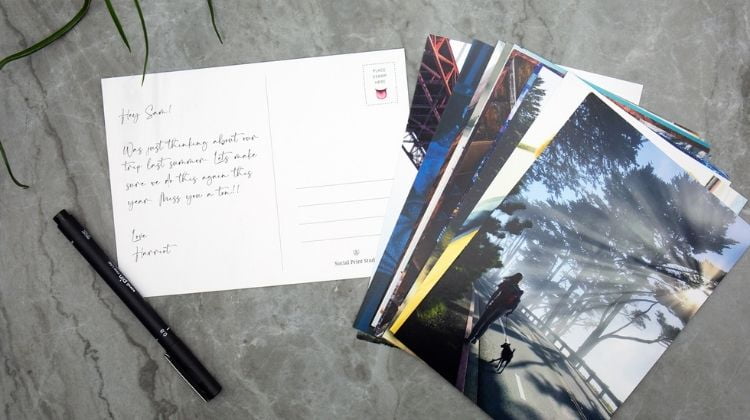
This guide covers seven of the best postcard printers for 2026 — from budget-friendly bundles to professional wide-format machines. We break down each one with honest pros, cons, and a clear verdict so you know exactly what you're buying before you click "Add to Cart."
Contents
Our Top Picks for 2026
- #PreviewProductRating
- Bestseller No. 1
 Rating:

- Bestseller No. 2
 Rating:
 - Bestseller No. 3
 Rating:
 - Bestseller No. 4
 Rating:
 - Bestseller No. 5
 Rating:
 - Bestseller No. 6
 Rating:
 - Bestseller No. 7
 Rating:
Product Reviews
1. Canon Selphy CP1500 Photo Printer Bundle — Best Overall Postcard Printer
The Canon Selphy CP1500 bundle is the easiest recommendation we can make for someone who wants to print professional-looking postcards at home without any fuss. Dye-sublimation technology (a printing method that transfers solid dye onto paper using heat) gives you results that rival a photo lab — vibrant colors, smooth gradients, and prints that resist water, fingerprints, and fading. The bundle includes 108 sheets of KP-108 photo paper, three full-size color ink cartridges, and a Tudak microfiber cleaning cloth. You're set from day one.
Setup takes about ten minutes. Connect over Wi-Fi and you can print directly from your smartphone or tablet using Canon's free app. The Selphy CP1500 is compact enough to slide into a laptop bag, which makes it a surprisingly solid travel companion for photographers and crafters. Print size is fixed at 4x6 inches — the standard postcard size — so if you need larger formats, this isn't your machine. But for postcard-specific printing, it's hard to beat.
Print speed is around 47 seconds per card, which is fast enough for small batches. Each print comes out dry to the touch immediately, ready to write on and mail. If you're building a scrapbook or creating a homemade scrapbook with custom photo inserts, the Selphy produces inserts that look every bit as good as store-bought prints.
Pros:
- Complete bundle — paper, ink, and cleaning cloth included
- Dye-sub prints are water-resistant and fingerprint-resistant
- Wireless printing from smartphones and tablets
- Compact and portable — fits in a bag
- Prints are dry immediately after output
Cons:
- Fixed 4x6 inch print size only — no larger format options
- Replacement paper/ink kits cost more per print than EcoTank alternatives
- No scanning or copying functionality
2. Epson PictureMate PM-400 Wireless Compact Color Photo Printer — Best Compact Inkjet Postcard Printer
The Epson PictureMate PM-400 is a dedicated photo printer built specifically for 4x6 and 5x7 inch prints — making it a natural postcard workhorse. Borderless printing means your images go edge-to-edge with no white margins, exactly what you want on a postcard. The PM-400 uses Epson's six-color Claria Photo HD ink system, which produces smooth color transitions and accurate skin tones. If you're printing portrait-style postcards or greeting cards, the color accuracy here is excellent.
The printer is lightweight and compact, so it won't dominate your desk. Wireless connectivity lets you print from your phone, tablet, or computer without plugging in a cable. You can also print directly from SD cards or USB drives — handy if you shoot with a dedicated camera and want to skip the computer entirely. Just note: the PM-400 is designed exclusively for Epson genuine cartridges. Third-party or refilled cartridges can cause poor print quality or damage the printhead, so factor that into your running costs.
Print quality on glossy postcard paper is sharp and consistent. Colors pop without looking oversaturated. At 5760 x 1440 dpi (dots per inch — the measure of print resolution), detail in photos comes through clearly. If you've ever dealt with Epson printer error states, rest assured the PM-400 is relatively trouble-free when you stay with genuine Epson media and ink.
Pros:
- Prints borderless 4x6 and 5x7 photos — both standard postcard sizes
- Six-color Claria Photo HD inks for accurate, vivid colors
- Compact and lightweight design
- Prints from SD card, USB drive, or wirelessly
- Strong color accuracy for portraits and landscapes
Cons:
- Genuine Epson cartridges required — no third-party ink compatibility
- Per-print cost higher than EcoTank models
- No scanner or copier function
3. HP Sprocket Studio Plus 4x6 Wireless Instant Photo Printer — Best for Creative Postcards and On-the-Go Printing
The HP Sprocket Studio Plus is built for people who want more than just a plain photo print. Premium dye-sublimation technology produces waterproof, smudge-proof, tear-resistant 4x6 prints that hold up in the mail and in your hands. The bundle includes 118 sheets of photo paper and three ink cartridges — you're ready to print a lot of postcards right out of the box. What makes this one stand out is the companion editing app, which lets you add stickers, filters, frames, and text overlays before printing. That's a real bonus if you're making personalized holiday postcards, party invites, or artsy mailer cards.
Print speed is fast — you get a dry-to-the-touch 4x6 print almost instantly, which is useful when you're printing a batch of 50+ postcards for an event or mailing campaign. The wireless connection works reliably, and the app interface is clean and intuitive even if you're not particularly tech-savvy. The machine itself is compact enough for a bookshelf or countertop without taking up much space.
The print quality is vibrant and punchy — colors are bold and saturated, which is exactly what you want for postcards that need to grab attention in the mail. If you also print creative projects like custom decals with your inkjet printer, you'll appreciate how versatile the Sprocket Studio Plus is for short-run creative work.
Pros:
- Comes with 118 sheets and 3 cartridges — great value bundle
- Waterproof, smudge-proof, tear-resistant prints
- Editing app with stickers, frames, and filters
- Fast output — prints are dry immediately
- Compact and easy to set up
Cons:
- Limited to 4x6 inch format only
- App is required for full feature access — less useful without a smartphone
- Replacement paper/ink bundles are a recurring cost
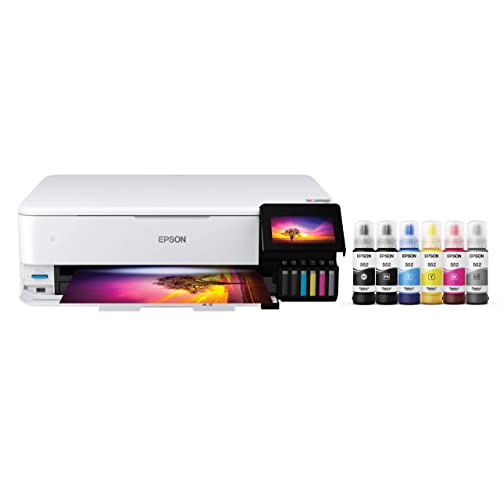
4. Epson EcoTank Photo ET-8550 Wireless Wide-Format All-in-One — Best for High Volume and Large-Format Postcards
If you print postcards in volume — or you want the flexibility to print oversized 5x7, A5, or even 13x19 inch mailer formats — the Epson EcoTank Photo ET-8550 is the machine to own in 2026. Its ink tank system (refillable reservoirs instead of cartridges) dramatically cuts your per-print cost. Epson estimates 4x6 photos at roughly 4 cents each versus 40 cents with traditional cartridges. For a small business sending hundreds of promotional postcards per month, that difference adds up fast.
The six-color Claria ET Premium ink system delivers lab-quality output with smooth gradients and sharp detail. Print speed is impressive too — a 4x6 photo in as fast as 15 seconds. The ET-8550 also handles thick media, including cardstock up to 1.3 mm thick, which is exactly the weight range used for premium postcards. The 4.3-inch color touchscreen makes navigation intuitive, and built-in Ethernet plus Wi-Fi give you flexible connectivity options in a home office or studio setup.
Beyond postcard printing, the ET-8550 doubles as a scanner and copier — useful if you're designing marketing materials or running a small creative business. Auto 2-sided printing saves paper on document work. Wide-format support up to 13x19 inches opens the door for poster prints, art prints, and oversized greeting cards that no compact dye-sub printer can produce. If you care about understanding paper thickness and how it affects print quality, the ET-8550's generous media support means you have a lot of room to experiment with premium cardstocks.
Pros:
- Ultra-low running cost — about 4 cents per 4x6 photo
- Handles cardstock up to 1.3 mm thick — ideal for premium postcards
- Wide-format printing up to 13x19 inches
- Six-color Claria ET Premium inks for vibrant, accurate color
- All-in-one: prints, scans, and copies
- Fast: 4x6 photo in ~15 seconds
Cons:
- Larger footprint — not as compact as dedicated photo printers
- Higher upfront cost than entry-level options
- Initial ink fill required before first use
5. HP Envy Photo 7855 All-in-One Photo Printer — Best Budget-Friendly All-in-One
The HP Envy Photo 7855 is a versatile all-in-one that punches above its price class for postcard printing. It handles paper sizes from 3x5 inches all the way up to legal-size 8.5x14 — so you can print standard postcards, oversized greeting-card formats, and everything in between. Wireless printing, scanning, and copying are all built in, and it works with Alexa voice commands if you're embedded in the Amazon smart home ecosystem.
HP's Instant Ink subscription service is compatible with the 7855, which can significantly lower your monthly ink cost if you print regularly. Print quality on glossy photo paper is good — colors are accurate and text is sharp. It's not going to match the six-color dye-sub output of the Selphy or the ET-8550 at maximum settings, but for everyday postcard printing and batch mailing projects, it performs reliably. Setup is straightforward, and the HP Smart app makes wireless printing from mobile devices simple.
If you've ever struggled with HP printer issues, the 7855 has a solid track record for reliability. Knowing how to fix an HP printer error state is useful background, but most users run this machine for months without problems. The dual paper input trays let you keep postcard stock loaded in one tray and plain paper in the other — a practical feature for a busy home office.
Pros:
- Wide paper size range: 3x5 up to 8.5x14 inches
- All-in-one: print, scan, copy
- Compatible with HP Instant Ink subscription
- Alexa voice control support
- Dual paper input for mixed media
Cons:
- Photo quality not as vivid as dye-sub or 6-color EcoTank printers
- Ink cost can be high without the Instant Ink subscription
- Slower print speed than the EcoTank ET-8550
6. Epson Expression Photo XP-970 Wireless Color Photo Printer — Best for Large-Format Postcard Prints
The Epson Expression Photo XP-970 is the choice for anyone who wants to push postcard printing beyond the standard 4x6 format. Borderless photo printing up to 11x17 inches opens the door for large promotional mailers, art postcards, and oversized greeting cards that make a real impression. The six-color Claria Photo HD inks handle smooth gradients and accurate skin tones across the full print range — from a compact 4x6 to a sprawling tabloid-size sheet.
Print speed is fast for a consumer inkjet: a 4x6 photo in as little as 11 seconds. That's comparable to the ET-8550 and significantly quicker than many inkjet photo printers in this price range. The XP-970 connects wirelessly and supports printing from smartphones, tablets, and USB drives. Like all Epson photo printers, it's designed to work exclusively with Epson genuine cartridges — factor that into your cost-per-print calculation before you buy.
Build quality is solid and the compact footprint is reasonable given the print width it supports. If you're already invested in the Epson ecosystem and need a step up from the PM-400 in terms of print size, the XP-970 is the natural upgrade. It's a particularly good fit for small businesses, photographers, and creatives who need studio-quality output at home without the EcoTank's larger physical footprint.
Pros:
- Prints borderless photos up to 11x17 inches
- Six-color Claria Photo HD inks — smooth, vibrant output
- Fast: 4x6 photo in ~11 seconds
- Compact footprint relative to its print width
- Wireless + USB drive printing
Cons:
- Genuine Epson cartridges required — no third-party alternatives
- No scanner or copier functionality
- Running costs higher than EcoTank models
7. Epson Expression Premium XP-7100 Wireless Color Photo Printer — Best for Home Office and Productivity
The Epson Expression Premium XP-7100 is the all-rounder on this list — a compact machine that handles stunning postcard photos and handles serious home office workloads. The 30-page auto document feeder (ADF) means you can scan or copy a stack of documents hands-free, which is genuinely useful if your postcard business involves processing client orders or contracts alongside your printing workflow. Auto 2-sided printing on all media types saves paper on document runs.
Photo quality is excellent. The XP-7100 uses Epson's Claria Premium inks to produce sharp, vibrant photos with accurate colors and deep blacks. Borderless printing delivers clean edge-to-edge results on postcard paper. Multiple media feed options let you load different paper types simultaneously — keep postcard stock in one tray and plain paper in another. Wireless connectivity is fast and stable, and the printer supports printing from smartphones, tablets, and computers with equal ease.
The XP-7100 is the right choice if you're running a home office that doubles as a small print studio. You get the productivity features — ADF, duplex, multiple trays — without sacrificing photo output quality. As with all Epson photo systems, using genuine Epson cartridges is non-negotiable for maintaining print quality and warranty coverage. If you're new to color management and want to understand how ink interacts with different paper weights, our guide on measuring paper thickness is a useful starting point.
Pros:
- 30-page ADF for hands-free scanning and copying
- Auto 2-sided printing across all media
- Multiple media feeds for mixed paper loading
- Excellent photo quality with Claria Premium inks
- Compact footprint for a full-featured all-in-one
Cons:
- Genuine Epson cartridges required
- Per-print cost higher than EcoTank models
- Not designed for wide-format printing beyond standard sizes
Choosing the Right Postcard Printer: A Buying Guide
Before you buy, ask yourself three questions: How often will you print? What size postcards do you need? And how much are you willing to spend on ink over time? Your answers will point you to the right machine faster than any spec sheet.
Print Technology: Dye-Sub vs. Inkjet
There are two main print technologies across this list, and they work very differently.
- Dye-sublimation (dye-sub) — uses heat to transfer solid dye into the paper surface. Prints are waterproof and smudge-proof right out of the machine. Canon Selphy CP1500, HP Sprocket Studio Plus, and HP Sprocket Studio use this method. Best for 4x6 postcards that need to survive the mail without lamination.
- Inkjet — sprays microscopic ink droplets onto paper. Can print any size within the machine's range, and supports a wider variety of media including thick cardstock. Epson EcoTank ET-8550, XP-970, XP-7100, PictureMate PM-400, and HP Envy 7855 all use inkjet. Better for versatility and large-format work.
According to Wikipedia's overview of dye-sublimation printers, dye-sub output naturally resists water and UV fading because the dye is fused into the paper rather than sitting on top. That's a meaningful advantage for postcards that travel through the mail.
Print Size and Media Support
Most postcards are 4x6 inches — the size supported by every printer on this list. But if you want to go bigger, your options narrow quickly:
- 4x6 and 5x7 only: Canon Selphy CP1500, HP Sprocket Studio Plus, Epson PictureMate PM-400
- Up to 8.5x14: HP Envy Photo 7855
- Up to 11x17: Epson Expression Photo XP-970, Epson Expression Premium XP-7100
- Up to 13x19: Epson EcoTank Photo ET-8550
For premium cardstock postcards, also check media thickness support. The ET-8550 handles up to 1.3 mm thick — far beyond what most consumer printers accept. If you're working with heavy cardstock, that matters. See our post on designing and printing your own business cards for more on how media thickness affects output quality on thicker stock.
Running Cost: Ink and Paper
The sticker price on a printer is only part of what you'll spend. Ink cost per print varies dramatically:
- Dye-sub bundles (Selphy, Sprocket): roughly 20–30 cents per print when you factor in replacement paper/ink kits
- Standard inkjet cartridges (PM-400, XP-970, XP-7100, HP Envy 7855): varies by cartridge size and yield — typically 15–35 cents per 4x6
- EcoTank ET-8550: approximately 4 cents per 4x6 — by far the lowest running cost on this list
If you're printing 50+ postcards per week, the EcoTank's upfront cost pays for itself within a few months. For occasional printing — a few dozen postcards for a holiday mailing — a dye-sub bundle printer makes more sense because you're not constantly buying and storing large ink bottles.
All-in-One vs. Dedicated Photo Printer
Dedicated photo printers (Selphy CP1500, PictureMate PM-400, Sprocket Studio Plus) do one thing well: print photos. They're compact, fast, and purpose-built. If postcard printing is all you need, these are the cleanest choices.
All-in-one printers (EcoTank ET-8550, HP Envy 7855, XP-7100) add scanning and copying. If your home or office needs a general-purpose printer that also handles postcards well, an all-in-one eliminates the need for multiple devices. The XP-7100's auto document feeder is especially useful for small business workflows. If you're also exploring other printing projects, check out our full rundown of the best sublimation printers for 2026 — sublimation is another high-quality method for creating custom photo merchandise and printed mailers.
Frequently Asked Questions
What is the best printer for printing postcards at home in 2026?
The Canon Selphy CP1500 bundle is the best all-around choice for printing postcards at home. It uses dye-sublimation technology for waterproof, professional-quality 4x6 prints, comes with paper and ink included, and connects wirelessly to your smartphone. For higher volume or larger formats, the Epson EcoTank ET-8550 is the best long-term investment.
Can I print postcards on a regular inkjet printer?
Yes. Most inkjet printers on this list — including the HP Envy 7855, Epson XP-970, and Epson XP-7100 — can print on postcard-weight cardstock as long as the paper fits within the printer's media size and thickness specifications. Check your printer's manual for maximum media thickness before loading heavy cardstock. The Epson EcoTank ET-8550 handles the widest range of media thickness at up to 1.3 mm.
What size is a standard postcard for printing?
The standard US postcard size is 4x6 inches, which qualifies for First Class postcard postage rates at the US Postal Service. Oversized postcards can be up to 6x11 inches but require letter-rate postage. All seven printers on this list support 4x6 printing. Larger format options are available on the Epson XP-970 (up to 11x17) and Epson EcoTank ET-8550 (up to 13x19).
Is dye-sublimation or inkjet better for postcard printing?
Dye-sublimation is better for postcards that need to be waterproof and fingerprint-resistant straight out of the printer — no lamination required. The prints are dry immediately and handle mail conditions well. Inkjet offers more flexibility in media size, paper type, and running cost, and modern photo inkjet printers like the Epson EcoTank ET-8550 produce output that rivals dye-sub in color accuracy. For pure 4x6 postcard work, dye-sub wins on durability. For versatility and lower cost at volume, inkjet wins.
How much does it cost to print postcards at home?
Cost per print ranges from about 4 cents (Epson EcoTank ET-8550 using refillable ink tanks) to 25–35 cents (standard cartridge-based inkjet or dye-sub kits). At retail print shops, a 4x6 postcard typically costs 40–60 cents each. Printing at home with the right equipment saves money at any volume, and the savings compound quickly if you're doing regular batch mailings of 100 or more cards.
Can postcard printers print on thick cardstock?
Some can. The Epson EcoTank ET-8550 handles specialty media up to 1.3 mm thick, which covers most premium cardstock grades. Standard consumer photo printers like the Canon Selphy and HP Sprocket are limited to the paper stock sold in their branded kits. If you're printing on heavy custom cardstock, the EcoTank ET-8550 or the Epson XP-970 are your best bets on this list.
Buy on Walmart
- Canon Selphy CP1500 Photo Printer Bundle (Black) with KP-108 — Walmart Link
- Epson PictureMate PM-400 Wireless Compact Color Photo Printe — Walmart Link
- HP Sprocket Studio Plus 4x6 Wireless Instant Photo Printer, — Walmart Link
- Epson EcoTank Photo ET-8550 Wireless Wide-format Color All-i — Walmart Link
- HP Envy Photo 7855 All in One Photo Printer with Wireless Pr — Walmart Link
- Epson Expression Photo XP-970 Wireless Color Photo Printer w — Walmart Link
- Epson Expression Premium XP-7100 Wireless Color Photo Printe — Walmart Link
Buy on eBay
- Canon Selphy CP1500 Photo Printer Bundle (Black) with KP-108 — eBay Link
- Epson PictureMate PM-400 Wireless Compact Color Photo Printe — eBay Link
- HP Sprocket Studio Plus 4x6 Wireless Instant Photo Printer, — eBay Link
- Epson EcoTank Photo ET-8550 Wireless Wide-format Color All-i — eBay Link
- HP Envy Photo 7855 All in One Photo Printer with Wireless Pr — eBay Link
- Epson Expression Photo XP-970 Wireless Color Photo Printer w — eBay Link
- Epson Expression Premium XP-7100 Wireless Color Photo Printe — eBay Link
Match the printer to how often you print — buy the dye-sub for occasional mail-worthy postcards, and buy the EcoTank the moment volume starts making ink cost matter.



About Chris & Marry
Chris and Mary are a couple with a shared background in graphic design and print production who have spent years working with printers across creative and professional contexts — from art printing and photo output to label production and professional document work. Their combined experience evaluating printer performance, color accuracy, and paper handling across inkjet and laser platforms gives them a practical, hands-on perspective on what makes a printer worth buying. At ShopChrisAndMary, they cover printer reviews, buying guides, and recommendations for artists, photographers, and professional users.
Time to get FREE Gifts. Or latest Free printers here.
Disable Ad block to reveal all the info. Once done, hit a button below