Have you ever wondered why some stickers look completely invisible on a bottle or phone case — like the design was painted directly onto the surface? That effect comes from clear sticker paper, and mastering how to print on clear sticker paper is far more approachable than most tutorials make it sound. For anyone serious about art and craft printing, this material is one of the most versatile substrates you can run through a home printer, and the results speak for themselves.
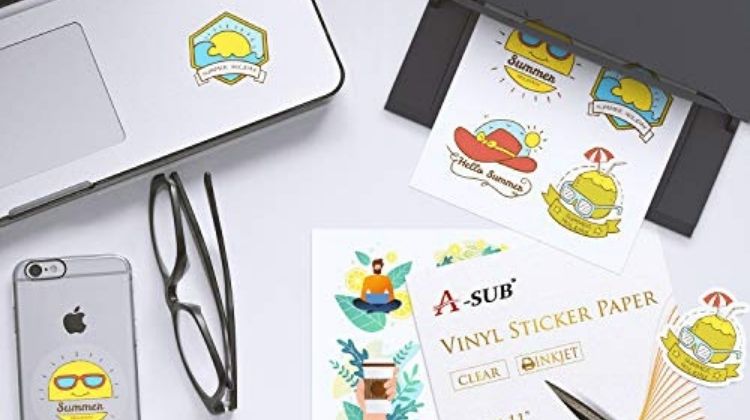
The key to great results comes down to three things: choosing the right paper for your printer type, adjusting your settings to compensate for the non-porous surface, and giving your prints enough time to cure before you handle them. Skip any one of those steps and you'll end up with smeared ink, washed-out color, or stickers that peel at the edges within days.
This guide covers every stage — what clear sticker paper is actually good for, how inkjet and laser printers compare on this material, how to keep your prints looking sharp over time, and the mistakes that trip up even experienced crafters. Work through each section and you'll have a reliable process you can repeat every time.
Contents
Creative Ways to Use Clear Sticker Paper
Clear sticker paper isn't just a novelty substrate. Once you learn how to print on it reliably, you'll find it solving problems that regular white label stock simply can't address. The transparent backing changes everything about how your finished design reads on a surface.
Product Labels with a Premium Look
For anyone selling handmade products — candles, soaps, jars of jam, skincare items — clear sticker paper produces the "no-label" look that premium brands pay designers to achieve. The label's background disappears against the container, letting the product's color or texture show through while your printed design takes center stage. The effect reads as upscale even when printed on a home inkjet. The key is designing with a transparent background in your graphics software (use PNG format, never JPEG), and setting your printer to its highest photo-quality mode before you hit print.
Decals, Crafts, and Custom Art
Clear sticker paper excels at window clings, laptop decals, planner stickers, and decorative overlays. Because there's no white border, your design appears to float directly on the surface it's applied to. If you've already explored making decals with an inkjet printer, you'll find that switching to clear sticker paper eliminates the background entirely and gives your work a cleaner, more intentional finish. Pair it with a cutting machine and you get perfectly shaped stickers with no visible edge whatsoever.
Photo Transfers and Artistic Applications
Photographers and mixed-media artists use clear sticker paper to layer printed images onto glass, wood, ceramic, or fabric. The transparent base lets the material beneath show through, creating a depth and texture effect that opaque paper can't replicate. Print your image at the highest DPI your printer supports — 1200 DPI or higher for photo-quality results — and the output will carry enough detail to impress even on a non-paper surface. This technique is particularly striking on raw wood or frosted glass, where the substrate's character bleeds through the design.
Inkjet vs. Laser — Knowing the Real Tradeoffs
Before you load a sheet of clear sticker paper, you need to confirm your printer can handle it correctly. Using the wrong paper type for your machine is the single most common reason prints fail on this material — and it can damage your printer in the process.
| Feature | Inkjet Printer | Laser Printer |
|---|---|---|
| Color vibrancy | Excellent — rich, saturated output | Good, slightly less vivid |
| Drying / cure time | 15–30 minutes minimum | Immediate (toner fuses via heat) |
| Smear resistance | Lower until fully cured | High right out of the machine |
| Paper compatibility | Inkjet-specific clear paper only | Laser-specific clear paper only |
| Best use case | Crafts, photos, detailed artwork | High-volume or moisture-exposed prints |
| Typical hardware cost | Lower | Higher |
Why Most Crafters Choose Inkjet
Inkjet printers dominate home crafting setups for practical reasons. The color output is richer, the hardware is more affordable, and inkjet-compatible clear sticker paper is available at most craft stores and online retailers. The main limitation is cure time — liquid ink sits on the glossy, non-absorbent surface longer before it fully sets. Allow at least 20 minutes before handling, laminating, or stacking your prints. In humid conditions, some inks need a full hour. Rushing this step is where most beginners ruin an otherwise perfect sheet.
When Laser Printing Makes Sense
Laser printers make sense when you're printing in volume or need prints that resist moisture immediately after output. The toner fuses to the surface through heat, making it durable within seconds of the sheet leaving the machine. The firm rule here is non-negotiable: you must use laser-compatible clear sticker paper — not inkjet paper. According to Wikipedia's overview of laser printing, the heat-based fusing process that makes toner so durable is also what makes incompatible substrates a genuine hazard to the fuser unit. Check your paper's packaging before loading a single sheet. If you're also interested in long-lasting sticker output by a different route, making waterproof stickers with a Silhouette CAMEO covers another reliable approach worth knowing.
Keeping Your Clear Sticker Prints Looking Sharp
Printing successfully is only half the job. Clear sticker paper — especially inkjet output — is more vulnerable than most crafters expect. Without protection, even a well-printed sheet can degrade within weeks of application.
Sealing and Laminating
The most effective thing you can do for longevity is apply a clear laminate over your prints before cutting or applying them. Laminating pouches or adhesive laminate sheets designed for sticker use add a physical barrier against moisture, UV exposure, and surface abrasion. Match your laminate finish to your design intent — matte laminate over a matte print, glossy over glossy — for a consistent look. If your stickers will be applied to surfaces that get wet, laminating is not optional. Water bottles, outdoor equipment, and anything handled frequently need this layer.
A faster alternative for larger batches is a spray sealant — clear acrylic in matte or gloss finish. Apply two light coats, allowing 15 minutes between them. Hold the can about 12 inches from the surface and move in steady, overlapping passes. This method gives you more control over the final sheen and works well when you're sealing large sheets before cutting individual stickers.
Storage Before Application
Store unlaminated printed sheets flat, away from direct sunlight and humidity. Stacked inkjet prints can offset — ink transfers from one sheet's face to the adjacent sheet's backing — if they're stored together too soon. Use a sheet of parchment paper as a separator between prints if you need to stack them before laminating. Keep your stash of blank clear sticker paper in its original packaging to prevent the printable coating from picking up dust or moisture, both of which degrade print adhesion.
The Mistakes That Ruin Clear Sticker Prints
Most printing failures with clear sticker paper trace back to a small number of avoidable errors. Knowing these in advance saves you material, time, and frustration.
Wrong Printer Settings
Using the default "plain paper" mode is the most reliable way to get poor results on clear sticker paper. Plain paper settings instruct the print head to move quickly and lay down less ink — exactly the opposite of what a non-absorbent surface needs. Switch your printer to photo paper or glossy photo mode and select the highest quality setting available. This slows the print head, increases ink layering, and produces visibly richer color on surfaces that don't absorb ink the way plain paper does.
Handling Prints Too Soon
Touching an inkjet print before it's fully cured smears it — usually beyond recovery. Even when the surface feels dry after a few minutes, the ink hasn't fully bonded to the coating. Set your prints aside on a flat, clean surface with the printed side facing up. Don't flip them, stack them, or run them through a cutting machine until the cure time has elapsed. This single habit eliminates the most common complaint among people learning how to print on clear sticker paper for the first time.
Ignoring Paper Orientation
Clear sticker paper has a printable side and a backing side. Loading it backwards produces a faint, blurry image that won't adhere correctly and smears at the slightest touch. The printable side is typically the glossy or coated face — that's the surface the print head needs to contact. Most manufacturers mark it on the packaging, but if you're unsure, run a test print on a small corner of a sheet before committing to a full page.
Using the Wrong Design Format
Saving your artwork as a JPEG introduces compression artifacts that are nearly invisible on white paper but obvious on a clear background. On clear sticker paper, those compression artifacts show up as blocky discoloration or soft edges where sharp lines should be. Always export your design as a PNG with a transparent background. This is the one formatting rule with no exceptions — it applies whether you're designing in Canva, Adobe Illustrator, or any other tool.
Frequently Asked Questions
Can any inkjet printer print on clear sticker paper?
Most standard inkjet printers handle clear sticker paper without issue, but you need to use inkjet-specific clear paper — not laser-compatible varieties. Check that your paper packaging confirms inkjet compatibility before loading it. Set the printer to photo or glossy photo mode for the best color output on the non-absorbent surface.
Do I need to laminate my clear sticker prints?
Laminating is strongly recommended for any sticker that will be applied to surfaces exposed to moisture, frequent handling, or sunlight. Inkjet prints in particular benefit from lamination since the ink sits on the surface rather than absorbing into the substrate. For decorative use on dry indoor surfaces, lamination is optional but still extends the life of your prints significantly.
What DPI should I use when printing on clear sticker paper?
Use the highest DPI your printer supports — ideally 1200 DPI or higher for detailed designs and photos. Higher DPI means more ink passes and finer detail, which matters on clear paper where the design stands alone without a white background to mask imperfections. For simple text or bold graphics, 600 DPI is sufficient.
Can I print photos on clear sticker paper?
Yes, and the results can be striking — especially when applied to glass or other textured surfaces where the substrate shows through. Use photo mode in your printer settings and the highest available print quality. Export your photo as a PNG rather than a JPEG to avoid compression artifacts that become visible against a transparent background.
How do I stop ink from smearing on clear sticker paper?
The solution is patience. Allow inkjet prints to cure for at least 20 to 30 minutes on a flat, undisturbed surface before handling them. In humid conditions, extend that to 60 minutes. Applying a spray sealant or laminate after curing adds a durable protective layer that makes the finished sticker resistant to both smearing and moisture.
Is clear sticker paper waterproof?
The paper itself is water-resistant, but inkjet ink printed onto it is not waterproof until it's sealed. Without a laminate or topcoat, water can reactivate the ink and cause smearing or color bleed. Laser-printed clear sticker paper is more inherently moisture-resistant due to the heat-fused toner, but even laser prints benefit from a protective laminate for heavy-use applications.
Can I use inkjet clear sticker paper in a laser printer?
No — this is a firm incompatibility. Inkjet clear sticker paper is coated for liquid ink absorption and will not tolerate the heat generated by a laser printer's fuser. Loading inkjet paper into a laser printer can melt the coating, jam the machine, and potentially damage the fuser unit permanently. Always match your paper type to your printer type.
Key Takeaways
- Always match your clear sticker paper to your printer type — inkjet paper for inkjet, laser paper for laser — and set your print quality to photo or glossy mode for the richest results.
- Give inkjet prints at least 20 to 30 minutes to cure on a flat surface before handling, cutting, or stacking them.
- Design in PNG format with a transparent background to eliminate compression artifacts that show up clearly against a clear substrate.
- Laminate or seal your finished prints whenever they'll face moisture, friction, or sunlight — this single step dramatically extends how long your stickers last.



About Chris & Marry
Chris and Mary are a couple with a shared background in graphic design and print production who have spent years working with printers across creative and professional contexts — from art printing and photo output to label production and professional document work. Their combined experience evaluating printer performance, color accuracy, and paper handling across inkjet and laser platforms gives them a practical, hands-on perspective on what makes a printer worth buying. At ShopChrisAndMary, they cover printer reviews, buying guides, and recommendations for artists, photographers, and professional users.
Time to get FREE Gifts. Or latest Free printers here.
Disable Ad block to reveal all the info. Once done, hit a button below