Last summer, a friend of ours printed a full set of vacation photos — only to peel each one off the tray and find a half-inch white border running around every single image. She'd done everything right, she thought. The right paper, the right printer, the right file. But nobody had told her that learning how to print borderless requires a specific combination of settings that most printers don't apply automatically. It's a small detail that makes an enormous difference, especially when you're printing photos, greeting cards, or artwork where every millimeter counts.
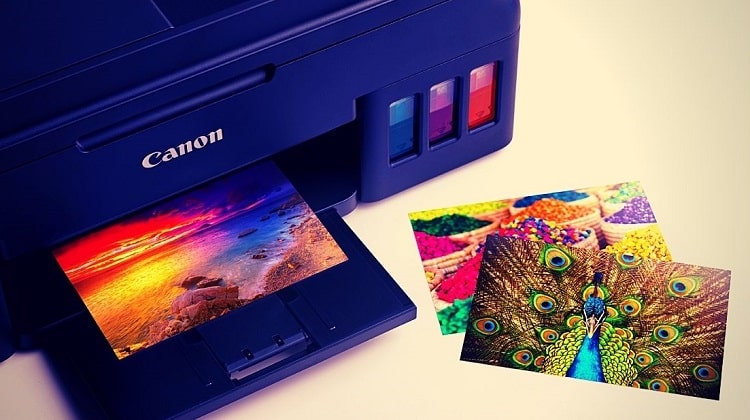
Borderless printing isn't just for professionals. Whether you're printing postcards, scrapbook layouts, or wall art, knowing how to configure your printer correctly will save you time, paper, and a lot of frustration. This guide covers everything — which printers actually support true borderless output, the driver settings that make or break the result, and the paper choices that hold it all together.
If you're also exploring other specialty print projects, our guide on how to print on glossy paper shares many of the same principles around media handling and driver setup. But for now, let's focus on getting those edges exactly right.
Contents
What People Get Wrong About Borderless Printing
The Margin Setting Myth
A lot of people assume that borderless printing is just a matter of setting all margins to zero in their word processor or design app. It sounds logical. But it doesn't work that way in practice.
Setting document margins to zero tells your software to use the full printable area — but every printer has a hardware margin, a physical limit to how close the print heads can travel to the paper's edge. On most standard inkjet printers, that minimum margin is somewhere between 3mm and 25mm depending on the model. Typing "0" in the margin box won't override the hardware. The printer simply ignores the instruction and applies its own minimum.
True borderless output requires a dedicated mode inside your printer driver. When that mode is active, the printer intentionally overprints slightly beyond the paper edge. The excess ink is absorbed by an internal pad. That process is why borderless printing is a hardware capability — not a software preference.
Not Every Printer Supports Borderless
This is probably the biggest misconception of all. Many entry-level and office-class inkjets simply don't support borderless output, regardless of what settings you apply. They're designed for documents. Their feed mechanisms and absorber pads aren't built for edge-to-edge printing.
According to Wikipedia's overview of inkjet printing, consumer photo printers are engineered with tighter tolerances and larger absorber pads specifically to handle borderless demands. Office-class models skip those components to keep costs down.
Before spending an afternoon troubleshooting settings, check your printer's specification sheet. Look for "borderless printing" or "full-bleed printing" in the supported features list. If it's absent, your options are to trim your prints manually after the fact — or upgrade to a printer built for photo output.
The Right Printer and Paper for Edge-to-Edge Results
Which Printers Are Built for Borderless
Photo inkjet printers are the most reliable choice for borderless output. Canon PIXMA, Epson EcoTank, and HP ENVY photo lines all list borderless printing as a standard feature across multiple paper sizes. These printers are designed with the absorber pads, precise feed rollers, and driver support that borderless mode requires.
If you work frequently on creative projects — custom cards, art prints, scrapbook pages — you'll want to explore options from a dedicated art and craft printer category. These models handle a wider variety of media sizes and surface types while maintaining edge-to-edge color accuracy.
Laser printers are a different story entirely. Most cannot print borderless at all. The fusing process and paper path design make full-bleed output mechanically impractical. A handful of high-end color laser models offer near-borderless results, but true edge-to-edge laser printing remains rare and expensive. For photo or craft work, stick with inkjet.
Paper Size and Type Considerations
Even on printers that support borderless mode, not every paper size triggers it. Most photo inkjets support borderless output on a specific set of sizes. Common supported sizes include 4×6, 5×7, and 8×10 photo paper. Letter (8.5×11) and A4 support varies by model — check your printer's manual before assuming.
The paper type matters just as much as the size. Coated photo papers — glossy, matte, lustre — handle borderless ink deposition well. Plain copy paper absorbs ink too quickly at the edges and produces washed-out, ragged results. Here's how common paper types compare:
| Paper Type | Borderless Suitability | Edge Ink Absorption | Best Use Case |
|---|---|---|---|
| Glossy Photo Paper | Excellent | Low — ink sits on surface coating | Photos, postcards, product shots |
| Matte Photo Paper | Excellent | Medium — controlled absorption | Art prints, portraits, text-heavy designs |
| Semi-Gloss / Lustre | Good | Low to Medium | General photo printing, everyday use |
| Card Stock | Fair — printer-dependent | Medium to High | Greeting cards, invitations |
| Plain Copy Paper | Poor | High — ink bleeds at edges | Not recommended for borderless |
| Iron-On Transfer Paper | Variable | Very Low | Fabric transfers, crafts |
If you're working with transfer media for craft projects, our post on how to print on iron-on transfer paper covers the handling quirks of that particular substrate in more detail.
How to Print Borderless: A Step-by-Step Setup Guide
Finding the Borderless Option in Your Driver
The borderless setting almost never lives in your word processor or image editor. It lives in your printer driver. Here's a general process that works across most photo inkjet printers:
- Open the document or image you want to print.
- Go to File → Print, then click Printer Properties or More Settings — the label varies by application.
- In the driver dialog, navigate to the Page Setup or Main tab.
- In the paper size selector, choose a size that explicitly includes borderless — for example, "4×6 Borderless" or "Letter Borderless." If the borderless variant doesn't appear, the size may not be supported on your model.
- Confirm the borderless toggle is enabled. On Epson drivers, look for a checkbox labeled "Borderless." On Canon, look for "Borderless Printing" in the Page Setup panel.
- Set the media type to match the paper you're using. This controls ink volume and drying behavior.
- Print a test page on plain paper before committing to your specialty stock.
On Windows, if you're printing photos directly through the built-in Photos app, our guide on how to print photos in Windows 10 walks through the print dialog in detail, including exactly where driver settings are accessed.
Sizing Your Image for Zero-Border Output
Your image needs to be sized to accommodate the printer's bleed zone. When borderless mode is active, the print area expands 1–3mm beyond the paper edge on each side. If your image doesn't extend far enough to fill that zone, a thin white sliver will still appear at the edge — which defeats the purpose.
Size your image 1–3mm larger than the paper dimensions on every side before printing. For a 4×6 print, that means working with a canvas closer to 4.12×6.12 inches. Most photo editors let you specify canvas size with bleed in mind. Set it before you start designing, not after.
For postcards and greeting cards, the same sizing logic applies. Our guides on how to print postcards and how to print half fold greeting cards both cover layout setup and sizing for those specific formats, where edge accuracy is especially important.
Avoiding the Most Common Borderless Printing Mistakes
Understanding the Bleed Area
The bleed area is the zone beyond the actual paper edge where the printer deposits ink during borderless mode. If your image has a continuous background that extends fully to the edge, bleed is invisible. But if you have a subject, text, or design element close to the edge, part of it may get trimmed — or worse, the printer's overprint zone may clip it.
Three zones to know:
- Bleed area: 1–3mm beyond the paper edge — ink goes here, but this zone is cut off
- Trim line: the actual paper edge
- Safe zone: 4–5mm inside the trim line — keep all important content here
Any text, logo, or critical design detail that falls outside the safe zone is at risk of being clipped. This is especially relevant for scrapbook layouts and custom cards where decorative borders or captions sit near the edges. Our guide on how to print digital scrapbook paper easily goes into layout setup for exactly this kind of project.
Ink Smearing and Drying Time
Borderless printing deposits more ink near the paper edges than standard mode, because the printer is running past the physical boundary. That extra ink needs time to dry. Stack your prints immediately after printing and you risk smearing the edges — the last area to fully cure.
A few habits that help:
- Let each print air dry for at least 60–90 seconds before stacking or handling.
- Use photo paper matched to your ink type — dye-based inks need coated surfaces; pigment inks are more forgiving but still benefit from proper media.
- If your driver offers a print speed setting, slower passes give ink more time to settle between head passes.
- Avoid touching the print surface right off the tray. The edges dry last, and finger oils can streak the surface coating.
Smearing is less of a concern with pigment-based inks, which are more water-resistant and faster to stabilize. If you're using a dye-based inkjet — common in consumer photo printers — give your prints extra breathing room before handling.
Making Borderless Printing Part of Your Regular Workflow
Saving Driver Presets
If you print borderless regularly, saving a named driver preset is one of the best habits you can build. Most printer drivers from Canon, Epson, and HP let you save a complete configuration — paper type, size, quality level, and borderless toggle — under a single name. One click loads everything.
The process varies slightly by driver, but generally:
- Configure all settings in the printer driver dialog exactly as you want them.
- Look for a Save Settings, Add Preset, or Custom Settings option — often at the bottom or top of the driver panel.
- Give it a descriptive name: "4x6 Glossy Borderless" or "Letter Matte Borderless."
- Select that preset on your next print job. All settings load instantly.
This small habit also prevents a common mistake: forgetting to re-enable borderless mode after printing a standard document. Without a preset, it's easy to let the driver reset to defaults and end up with unexpected borders on your next photo run.
Borderless Printing for Art and Craft Projects
For craft-focused printing — custom stickers, handmade cards, scrapbook inserts, or fabric transfers — borderless output often makes the difference between a polished finished piece and one that looks incomplete. A clean, unbroken edge on a sticker or a decorative print signals intentional design. A white border on the same piece signals a settings oversight.
When printing stickers on clear sticker paper, borderless mode is especially valuable since any visible margin breaks the illusion of the design. Our article on how to print on clear sticker paper covers the full handling process for that media. The driver settings that work for photo paper generally transfer well to clear sticker stock — the key variable is always matching the media type setting in the driver to the surface you're actually loading.
A few final pointers for art and craft borderless work:
- Run a test print on plain copy paper first to verify positioning before loading specialty stock.
- If your driver offers "expand" versus "minimum margins" in borderless mode, start with "minimum" to reduce how much of your image gets trimmed at the edge.
- For prints with heavy ink coverage — dark or saturated backgrounds — run a nozzle check before your print run. Partially clogged nozzles produce uneven coverage that shows most obviously at the edges.
- Keep a log of settings that produce good results — paper brand, media type setting, quality level — so you can reproduce them reliably without guesswork.
Consistent borderless results come from treating your setup as a repeatable process, not a one-time configuration. Once you've found a combination that works for a specific paper and job type, document it. You'll be glad you did the next time you're printing a batch of custom pieces under a deadline.
Frequently Asked Questions
Can any inkjet printer print borderless?
No. Only inkjet printers that specifically list borderless or full-bleed printing as a supported feature can do it reliably. Most office and document-focused inkjets lack the absorber pads and mechanical tolerances needed. Check your printer's spec sheet before assuming the feature is available.
Why do I still see white edges even with borderless mode turned on?
The most common cause is an image that isn't sized to extend into the bleed zone. Your image canvas needs to be 1–3mm larger than the paper size on all sides. If the image stops exactly at the paper boundary, the bleed zone goes unfilled and a sliver of white remains at the edge.
Does borderless printing use more ink than standard printing?
Yes, slightly. In borderless mode, the printer overprints beyond the paper edge to ensure full coverage, which means some ink is deposited on the internal absorber pad rather than on the paper. Over time, heavy borderless use fills the absorber pad faster — some printers will alert you when it needs replacement or resetting.
Can I print borderless from a phone or tablet?
It depends on the printer and the app you're using. Some manufacturer apps — like Epson iPrint or Canon PRINT — expose borderless settings when printing from a mobile device. Generic OS print dialogs on Android and iOS often don't surface those options. Check your printer's companion app for the most complete set of borderless controls.
What is the difference between "borderless" and "full bleed" printing?
They refer to the same concept. "Borderless" is the term used in consumer printer drivers. "Full bleed" is the term used in professional print design and publishing. Both describe printing that extends to all four edges of the paper with no white margin. The underlying technique — overprinting into a bleed zone — is identical.
Getting a true borderless print isn't about fighting your printer — it's about understanding how it actually works, then giving it exactly what it needs.



About Chris & Marry
Chris and Mary are a couple with a shared background in graphic design and print production who have spent years working with printers across creative and professional contexts — from art printing and photo output to label production and professional document work. Their combined experience evaluating printer performance, color accuracy, and paper handling across inkjet and laser platforms gives them a practical, hands-on perspective on what makes a printer worth buying. At ShopChrisAndMary, they cover printer reviews, buying guides, and recommendations for artists, photographers, and professional users.
Time to get FREE Gifts. Or latest Free printers here.
Disable Ad block to reveal all the info. Once done, hit a button below